Personal Care Products: The Health Risks, Disproportionate Impacts, and Outdated Legislation of the Cosmetics Industry

Eye Shadow Makeup
Monday, October 18, 2021

What products did you use this morning as you got ready for your day? Shampoo? Soap? Deodorant? Makeup? Likely at least one of these, along with other personal care products. The Environmental Working Group found that women in the United States use an average of 12 personal care products each day, and men an average of six. And, while many of the chemicals in these products likely pose minimal risk, some chemicals found in personal care products have been linked to cancer, reproductive harm, and other health problems. Further, women of color face disproportionate impacts. On average, women of color use more beauty products than white women, and the beauty products they use disproportionately expose them to hazardous ingredients.


Natural Resources in Outer Space
Asteroid
Wednesday, October 13, 2021

Renewed interest in outer space has brought new sources of investment and technology. Last year witnessed 110 orbital launches, tied for the highest annual number since the early 2000s. Increased activity in outer space will accelerate potential environmental effects; for instance, space mining could lead to natural resources being extracted from the moon, Mars and other planets, and asteroids. The primary environmental issues include debris, pollution of earth’s atmosphere, and biological or nuclear contamination.

In this month’s issue of ELR—The Environmental Law Reporter, Scot W. Anderson, Julia La Manna, and Korey J. Christensen discuss the legal framework surrounding development of natural resources in outer space. The authors provide an overview of space mining regulations generally, and examine regulatory efforts to mitigate environmental issues.

Incorporating Environmental Justice Into Hazard Mitigation Plans
River Flood
Monday, October 4, 2021

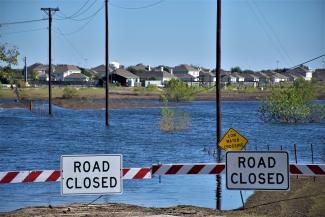
Despite popular belief, natural hazards are not “great equalizers.” Environmental burdens fall disproportionately on marginalized groups. These inequities stem from legacies of racial injustice and systemic income disparities that have caused certain neighborhoods to have both poor infrastructure and limited access to financial resources, creating greater threats from hazard-related damage and difficulty with recovery efforts.

Climate Action Strategy Workshops and the Need for More Language Accessibility
Spanish Spoken Here Sign
Monday, September 27, 2021

This summer, the Miami-Dade County’s Office of Resilience conducted a series of workshops inviting the community’s input into the drafting of the county’s climate action strategy plan. These workshops were held to offer community members the opportunity to comment on local policy measures as well as shape the direction of current and future policymaking by offering suggestions and ideas. Rather than simply checking off boxes for expectations of citizen engagement by local government, the stated goal of these workshops is to produce an accessible avenue for community members from all identities, especially those that have historically faced discrimination, to take the lead on local climate adaptation and mitigation efforts. In accomplishing this goal, language accessibility is a key consideration to ensure effective citizen engagement and maximized impact.

Protecting the Planet by Protecting Intellectual Property—A Clear Connection
Supreme Court Building
Monday, September 20, 2021

Environmental lawyers “don’t know a lot about intellectual property,” but IP is “about promoting and protecting ideas that we’re depending on to protect our planet,” said Brad Marten, Managing Partner of Marten Law LLP and moderator of the Environmental Law Institute’s fifth GreenTech webinar held May 13. Consequently, in 2021, IP and environmental law “couldn’t be more related” as the world looks to electric vehicles, clean energy, and other technological innovations to advance sustainability, Marten added.

Charting a Course to Net Zero: Louisiana Seeks Comment on Draft Climate Documents
Wind Turbines
Wednesday, September 15, 2021

In Louisiana and elsewhere around the United States, climate change is a common topic of conversation these days. With record heat, drought, wildfires, hurricanes, and flooding, this summer has brought home the reality of climate impacts, and revealed the country’s general lack of preparedness for this new normal. As evidenced by Hurricane Ida, Louisianans are increasingly facing serious consequences resulting from more extreme weather events and sea-level rise. Department of Health and Human Services Secretary Xavier Becerra summed things up in his recent remarks establishing a new Office of Climate Change and Health Equity, “Louisiana is being pummeled.”

Six Priority Recommendations for Improving Conservation Under the ESA
Tiger
Wednesday, September 8, 2021

In this month’s issue of ELR—The Environmental Law Reporter, Alejandro Camacho, Melissa Kelly, and Ya Wei-Li discuss challenges to effective implementation of the Endangered Species Act (ESA) and present concrete recommendations to improve the Act. The authors distilled these recommendations from workshops that featured a variety of perspectives across the conservation community.

New Model Policy Bolsters Compost Use and Infrastructure
Compost
Wednesday, September 1, 2021

A new model compost procurement policy developed by the Environmental Law Institute and the Natural Resources Defense Council could help municipalities around the country in their efforts to divert food scraps and other organic materials from their landfills and incinerators and, in so doing, realize myriad economic and environmental benefits.

Here’s How Digital Technologies Are Advancing Environmental Justice
Smokestack Air Pollution
Wednesday, August 25, 2021

For Environmental Law Institute President Scott Fulton, the inability of the United States’ environmental policies and programs to bestow benefits across communities of color and the disadvantaged stands as a major shortcoming of our environmental protection system to date. But, as discussed at ELI’s 7th GreenTech webinar, on “Technology and Environmental Justice,” the explosion of monitoring technologies, big data, expanded analytical abilities, and other technologies raises the possibility, albeit with caveats, that those developments can help solve long-standing environmental justice (EJ) challenges. Discussing the issues during the July 29, 2021, webinar were the following featured experts: White House Council on Environmental Quality (CEQ) Senior Director for EJ, Dr. Cecilia Martinez; California EJ Alliance (CEJA) Green Zones Program Manager, Tiffany Eng; Tennessee State University (TSU) Associate Professor Dr. David Padgett; Chesapeake Bay Foundation (CBF) EJ Staff Attorney, Taylor Lilley; and ELI Visiting Scholar LeRoy C. (Lee) Paddock.