Justice Thomas’s Ship Comes In
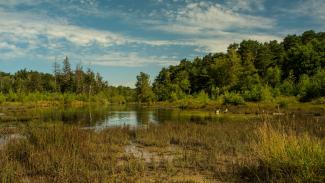
Wetland marsh
Friday, April 8, 2022

In 1970, amendments to the Federal Water Pollution Control Act introduced state “Water Quality Certifications” into federal environmental law. This provision, recodified as Section 401 of the Clean Water Act in 1972, provides that states have the opportunity to review applications for any “federal license or permit to conduct any activity” which may result in any discharge to the waters of the United States, and to certify that any such discharge will comply with, among other things, state water quality standards for such waters.


The “Land Ethic” Resonates Today
Tree growth rings
Wednesday, March 23, 2022

When was environmental law first recognized as a field worthy of endeavor? Legal academies began teaching courses in the new laws as they were propounded a half century ago, but the field existed earlier. It could be found, if only in fragments, in some law schools and engineering schools and colleges of agriculture, mining, and forestry. And there were repositories of environmental professionals in the government’s land bureaus and extension services.

Acting Now for the Future We Want
Mountains landscape
Thursday, March 17, 2022

On January 1, I was welcomed as ELI’s new president. I’m extraordinarily excited and deeply honored to lead this remarkable organization. It is special for me because I began my legal career at the Institute many years ago, an experience that shaped some of my core values around integrity and impact. I continue to be inspired by ELI’s mission and I’m delighted to be back, working with this wonderful group of people and our partners.

The World Needs ELI at Its Creative Best
Leaf
Thursday, February 17, 2022

This column is indeed my “closing statement.” This past January, I officially stepped down from my role as president to take up residence with my wife in Rome. I will continue working with the Institute from Europe on a part-time basis, primarily supporting ELI’s international portfolio. The balance of my time will be devoted to working with the consultancy Sustainability Frameworks.

Carbon, Capture, and Storage: History, Current State, and Obstacles for the Future (Part 2)
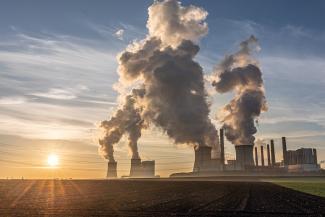
Oil Industry
Monday, January 3, 2022

Part 1 of this two-part blog series explored the history and current use of carbon, capture, and storage (CCS). Part 2 discusses the policy challenges that limit CCS use and how these policies can be improved to expand it.

The biggest question is: if CCS can reduce carbon dioxide emissions so drastically, why isn’t everyone implementing it?

Carbon, Capture, and Storage: History, Current State, and Obstacles for the Future (Part 1)
Oil Industry
Monday, December 27, 2021

Avoiding the worst effects of climate change—including drought, food insecurity and unprecedented migration—means limiting global temperature rise to 2°C (the Paris Agreement sets a more ambitious 1.5°C goal). A number of technologies are being pursued to help solve the climate crisis including carbon capture and storage (CCS).

Key Opportunities for Governance in the International Guidelines on Natural and Nature-Based Features for Flood Risk Management
Wetlands
Monday, November 22, 2021

The International Guidelines on Natural and Nature-Based Features for Flood Risk Management, published by the U.S. Army Corps of Engineers, NOAA, the Environment Agency of the United Kingdom, Rijkawaterstaat, and the World Bank in September 2021, was celebrated with a virtual launch party underlining the exciting opportunity for progress.

Climate Adaptation at the Local, State, and Federal Levels
Chicago
Wednesday, November 10, 2021

How prepared is the United States to adapt to climate change? To answer this question, on a recent People Places Planet Podcast episode, “Is the U.S. Government Ready for the Climate Crisis? Examining Federal, State, and Local Climate Adaptation,” Staff Attorney Cynthia Harris spoke with three climate experts: Dr.

As AI Proliferates, Environmental Protection Hopes and Fears Rise
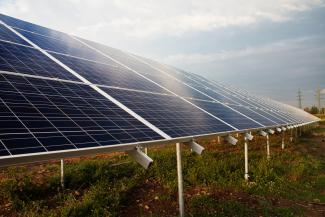
Solar Panels
Wednesday, October 20, 2021

In recent years, Artificial Intelligence (AI) applications have rapidly become more sophisticated and widespread, “even as legal and regulatory frameworks struggle to keep up.” Moreover, AI’s often-overlooked environmental implications are simultaneously “sweeping and quite complicated,” and for all of its promise to help improve the environment, AI could in fact cause environmental harm. With those framing remarks, Andrew Tutt, a Senior Associate with the law firm Arnold & Porter, opened a February 18 webinar on “Environmental Applications & Implications of Artificial Intelligence,” the third in ELI’s GreenTech series running through 2021.