Leveraging Federal Relief Funds to Create Healthier Schools

Apple on stack of books
Wednesday, June 9, 2021

As summer approaches, school systems throughout the United States are planning for in-person and hybrid learning next fall. Since the beginning of the pandemic, Congress has appropriated $190 billion to assist those efforts; the recent American Rescue Plan Act alone provides around $122 billion for PK-12 public education.


The Reclamation Project: Engaging Community for 15 Years Through Participatory Eco-Art
Reclamation Project installation of mangrove propagules
Thursday, May 20, 2021

I was introduced to mangroves early in my childhood during family trips to Bear Cut in Key Biscayne, Florida—the same plants that grew in my family’s hometown on the northern coast of Cuba. In 2003, I first used mangrove imagery in my artwork as a metaphor for the immigrant. I imagined the mangrove propagules floating along the water and setting root on a sandbar. Little by little they would grow alongside each other, capture sediment, create land, and build new habitats. Like immigrants in a community who come together to support one another, the roots of each mangrove tree come together to create a formidable structure that protects against the dangers of storm surge.

Stewarding Natural Resources for Intergenerational Well-Being Through the Endangered Species Act
Head of bald eagle
Friday, May 14, 2021

Climate change and environmental degradation not only pose visible threats to the well-being of millions today, but also present hazards to future generations—challenging the principle of intergenerational equity. Intergenerational equity, a concept that calls for fairness and justice between generations, requires that past, present, and future generations share the Earth’s resources in a fair and equitable manner. Related to this is the concept of intergenerational well-being, which calls on present generations to live and govern in a way that will allow future generations to live healthy and complete lives.

Lifting up Gulf Voices: A Snapshot of Gulfport, MS Resident and Community Advocate Alanderia Whitlock
Alanderia Whitlock, Gulfport, MS resident.
Saturday, January 26, 2019
Alanderia Whitlock is a journalist and community activist from Gulfport, Mississippi, who recently founded Gulf Voices, a social media platform for residents of the Gulf Coast. Through Gulf Voices, Alanderia seeks to help members of her community actively engage in the restoration processes and other social justice initiatives.
Redeveloping Brownfields in Disadvantaged Communities Should Be the Least Controversial, Most Actionable Proposal in Biden’s Infrastructure Plan
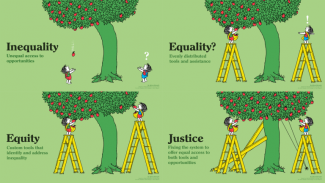
Definitions of equity and justice
Monday, April 12, 2021

President Joseph Biden’s March 30 announcement to spend $2 trillion fighting climate change, decarbonizing the economy, and creating jobs did not lack detail—the White House “summary” ran 25 pages with 79 subheadings, each containing numerous subproposals. Among these big ideas about offshore wind development, digital grid infrastructure, and green job training programs is a proposal that could have come from any administration over the last five decades: redeveloping blighted industrial properties to improve outcomes for distressed, disadvantaged communities.

Toward a New Generation of Environmental Justice Policy
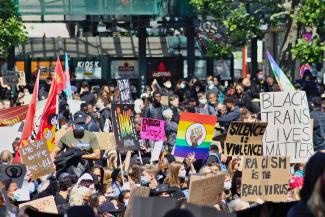
Black Lives Matter protest
Thursday, March 25, 2021

Environmental justice (EJ) in federal policy to date has mostly involved conducting more public participation—a “process without substance,” as EJ pioneer Charles Lee puts it. In this month’s issue of ELR—The Environmental Law Reporter, Lee offers a road map for government agencies to effectively address EJ issues by developing an understanding of disproportionate impacts based on rigorous, holistic data, and operationalizing this analysis with a spectrum of policy actions.

Deepwater Horizon Aftermath: Chronic Medical Conditions Still At Issue in Federal Courts
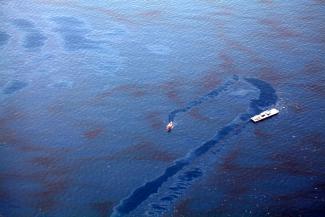
Oil cleanup Deepwater Horizon
Thursday, March 11, 2021

The Deepwater Horizon exploded in the Gulf of Mexico more than 10 years ago. Yet hundreds of individuals across the Gulf coast are still battling BP in court for damages related to a host of ailments arising from exposure to oil, dispersants, or both. A recent order out of the Northern District of Florida (N.D. Fla.) granting BP’s summary judgment motion as to one set of plaintiffs may be a sign of things to come. Regardless of this ruling, the sheer volume of these cases may occupy dockets for months or years.

Presidential Administrations and Environmental Justice
United States Capitol building
Wednesday, January 20, 2021

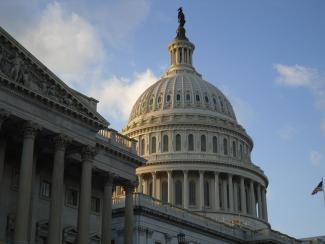
President Donald Trump’s policies appear to be at odds with the environmental justice (EJ) movement, but little work has been done to test their true impact. Trump proposed or completed rollbacks of nearly 100 environmental regulations, repeatedly rejected calls for action on climate change, and continuously sought to cut funding for the U.S. Environmental Protection Agency, including for environmental justice. These regressive policies seem likely to harm poor and minority communities most, especially following what many saw as promising progress under President Barack Obama. But how are these policy changes actually impacting the cause of EJ? How can we assess actual progress toward EJ’s multifaceted goals?