No Trespassing: The U.S. Environmental Movement’s Long History of Exclusion
road closed
Monday, July 27, 2020

In recent years, scholars, journalists, and activists have drawn attention to the sexist, racist, classist, and homophobic attitudes that surround the U.S. environmental movement. Though the movement’s problematic aspects may come as a surprise to some, the exclusionary nature of mainstream contemporary environmentalism is no accident. The crusade to address the nation’s environmental issues was designed this way from the outset.
Getting to the Meat of the Matter
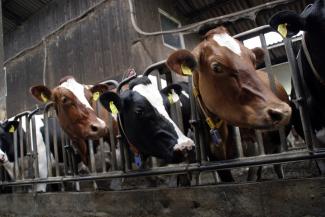
confined cows
Tuesday, June 16, 2020

The coronavirus pandemic is affecting a variety of industries, from travel to retail to restaurants. But perhaps the hardest-hit are meat and poultry processing plants, which have been experiencing outbreaks throughout the United States. In April, President Trump issued an Executive Order declaring these plants “critical infrastructure” to make sure they stay open, and the number of cases in these plants continued to rise in the days and weeks that followed. According to the Midwest Center for Investigative Reporting, as of June 15 there have been over 25,000 reported positive cases tied to meatpacking facilities in at least 235 plants in 33 states, and at least 90 reported worker deaths at 39 plants in 24 states.

New Executive Environmental Waiver—What Does It Do?
highway
Monday, June 8, 2020

On June 4, President Trump signed an Executive Order entitled “Accelerating the Nation’s Economic Recovery from the COVID-19 Emergency by Expediting Infrastructure Investments and Other Activities.” The Order notes that in his March 13 declaration of a national emergency related to the pandemic, the President had invoked “national security” under the National Emergencies Act, 50 U.S.C. 1601 et seq., and “an emergency of nationwide scope” under the Stafford Act, 42 U.S.C. 5191(b).

The Proverbial Fork In The Road: NEPA’s Uncertain Future
Wednesday, May 27, 2020

Heralded in 1970 as the nation’s “environmental Magna Carta,” the National Environmental Policy Act’s (NEPA’s) future seems uncertain. As Trump Administration initiatives threaten to diminish and perhaps even dismantle aspects of NEPA, an article in the May issue of ELR—The Environmental Law Reporter chronicles how this merely continues NEPA’s unfortunate trajectory, examining how the courts, the U.S.

Show Me! Laying the Foundation for the Next Generation of Environmental Peacebuilding
Wednesday, May 6, 2020

As documented by the New Security Beat, environmental peacebuilding has grown dramatically as a field in recent years. Across the security, development, and diplomatic communities, there is increased recognition that disputes related to natural resources and the environment can escalate to violence, fund armed conflict, and provide an incentive for peace spoilers.

What Judges Are Saying About Climate Science
U.S. Supreme Court Building
Wednesday, April 22, 2020

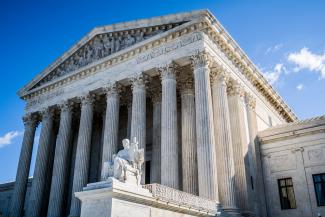
It’s amazing how quickly humanity’s concern can shift when circumstanc­es demand it, and the coronavirus pandemic has riveted our attention. Even today, Earth Day, talking about anything else risks seeming detached or indifferent to the enormous suffering, disruption, and dislocation that the COVID-19 vi­rus has unleashed on the world. But I need to alert you to a new ELI report analyzing the other major challenge that will be waiting for us on the other side of our current crisis, one that, like the pandemic, is deeply informed by science.

Turning A Blind Eye to Drinking Water Risks
bathroom sink dispensing brown colored water
Wednesday, April 8, 2020

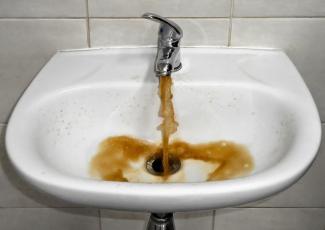
Drinking water contamination in Flint, Michigan, has garnered nationwide attention, but it is neither isolated, nor a primarily urban problem. As Madeline Kane explains in the April issue of ELR—The Environmental Law Reporter, a hidden water crisis is straining thousands of smaller communities that share Flint’s risk factors—shrinking populations, social marginalization, and deficient funds.

Earth Day 1970: A Look Back at Student Activism and Freedom of the Press
1970s
Wednesday, April 1, 2020

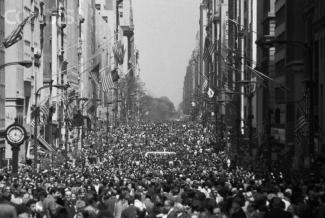
It is now half a century since the first Earth Day. Not only did I help run our school’s “teach in” in 1970, it is also 50 years since my entrance into environmental journalism. A first-person history may help to affirm the importance of the environmental protections that soon followed, as well as of a robust student press to push today’s issues.