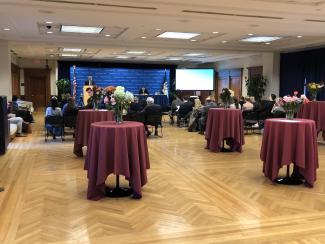
Environmental Public Interest Litigation Could Be Instrumental in Protecting China’s National Parks

Panda
Wednesday, March 11, 2020

With its vast land and sea territory spanning 9.6 million square kilometers (3.7 million square miles), China is one of 17 mega-biodiversity countries in the world. It is home to nearly 10% of all plant species and 14% of all animals on earth. Protecting China’s uniquely rich biodiversity is therefore paramount to the country itself and to the entire world.
Citizen Science & Environmental Agency Programs in the United States
NPS photo
Monday, March 9, 2020

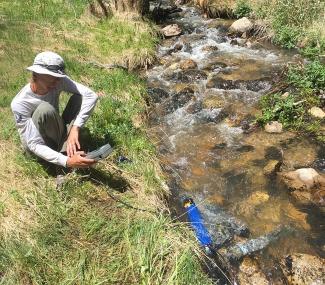
Citizen science—the gathering of environmental data by non-professionals—has taken root across the United States and internationally. However, much of this activity has focused on public awareness and education; the connection to government agencies is less publicized.

At the request of EPA, ELI is investigating how state, tribal, and local environmental agencies are using citizen science in their work. We have found a tremendous diversity of approaches, from programs organized and led by government to cases in which agencies are the end-users of information gathered by others such as community groups. We have also found some areas in which contributions by members of the public could be of great value to state or local environmental programs.

2019 Year in Review: Environmental Compliance & Enforcement
Monday, February 3, 2020

Since 2015, ELI has served as Secretariat for the International Network for Environmental Compliance and Enforcement (INECE). Now a month into the new year, we thought it was an opportune time to look back at INECE’s accomplishments from 2019, reflect on key developments pertaining to environmental compliance and enforcement, and share some news for 2020.

Water Act Rule Poses Challenges for States
wetland habitat
Monday, January 27, 2020

On January 23, 2020, EPA and the U.S. Army Corps of Engineers released a final Navigable Waters Protection Rule to redefine “waters of the United States” (WOTUS). This new rule repeals a Reagan-era definition rule and adopts an even more limited definition of the waters of the United States that are subject to the federal Clean Water Act.

2020 Environmental Law and Policy Annual Review Winners Announced
Wednesday, January 15, 2020

Each year, the Environmental Law and Policy Annual Review (ELPAR)—a collaboration between Vanderbilt University Law School (VULS) and ELI—identifies articles that propose innovative law and policy approaches to pressing environmental problems. This year's awardees propose creative approaches to a range of cutting-edge environmental issues:

Portable Electronic Devices in Hazardous Areas
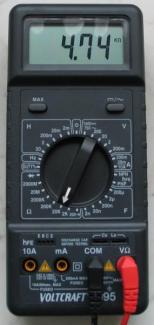
Digital Multimeter
Monday, January 13, 2020

There are plenty of blog posts stating portable electronic devices (PEDs) and industrial settings don’t mix, but most are about distracted working: PED use is unsafe because employees are distracted and unfocused and accidents can happen. That’s not this post. Instead, I want to talk about the legal and safety challenges that pose liabilities when PEDs are intentionally used as part of the work environment—especially within designated hazardous environments.

The Shot Clock, the DH, and NEPA
Friday, December 6, 2019

On the surface, the 24-Second Shot Clock, the Designated Hitter, and the Council on Environmental Quality (CEQ) NEPA regulations do not have much in common. But bear with me.

In 1954, the National Basketball Association (NBA) faced a problem—teams leading late in games would hold on to the ball, literally for minutes on end, in an effort to preserve their advantage. Ball-handling wizards like Bob Cousy could dribble out the clock, forcing the defense to chase him around in futility or commit a foul. The games got boring. NBA executives decided to install a shot clock to make their product fast-paced and exciting. The rest, as they say, is history.

Celebrating a Pathfinder in International Environmental Law—Festchrift for Professor Edith Brown Weiss
Wednesday, December 4, 2019

On the bright, late autumn afternoon of November 19, over 100 people gathered at Georgetown University Law Center for a half-day forum on “Modernizing International Environmental Law” in celebration of Prof. Edith Brown Weiss. Co-sponsored by the Environmental Law Institute, the Georgetown Environmental Law Review, and the Georgetown Environmental Law and Policy Program, the symposium was more than a tribute to a famous scholar and beloved teacher. The presentations, panels, video calls, lively discussions, and reception portrayed a pathfinder with a strong moral compass and deep conviction—such that all of us felt inspired and motivated to continue in her footsteps.