
Vibrant Environment
All | Biodiversity | Climate Change and Sustainability | Environmental Justice | Governance and Rule of Law | Land Use and Natural Resources | Oceans and Coasts | Pollution Control
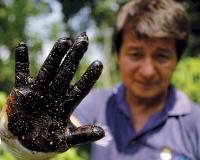
I was in the 10th grade when I first heard about the ecological and human health disaster caused by petroleum extraction in Ecuador. A film festival in my hometown showed Crude, a documentary that details the impact of abandoned oil fields near Lago Agrio and the accompanying legal battle. Local populations whose livelihoods and health were allegedly harmed by careless corporate and government actions had been fighting to hold Texaco accountable for cleanup and compensation since 1993. The film, however, focused on several key characters that became involved in the case many years later. There were lawyers (Steven Donzigner and Pablo Fajardo), a corporation (Chevron, which acquired Texaco in 2001), celebrities (including Sting), and a young and charismatic Presidente (Rafael Correa of Ecuador).
At a time when environmental challenges are rising to the forefront of global conversation, it is more important than ever to think creatively about solving the world’s most pressing environmental crises. Academics are a key source of new ideas, yet all too often they talk among themselves, and their ideas are not vetted with policymakers, let alone adopted in the law and policy arena. To help bridge the gap between academic scholarship and environmental policymaking, each year, Vanderbilt University Law School (VULS) students and ELI staff select some of the best articles in the legal environmental scholarship from the previous year.
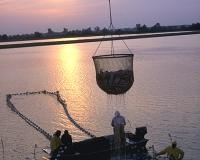
This past January, NOAA released a landmark final rule (referred to here as the Gulf Plan) establishing a permitting and regulatory framework for offshore aquaculture—fish farming—in federal waters in the Gulf of Mexico. Since the Gulf Plan is the first rule to enable aquaculture in federal waters (3-200 miles offshore), the environmental and economic outcomes are uncertain. This ruling—the product of over a decade of research and revision—has become the subject of intense criticism from both environmental organizations and proponents of offshore aquaculture. NOAA lauds the ruling as a long-overdue policy to create economic growth and meet demands for sustainable seafood. At the same time, some environmentalists predict increased pollution and fish disease, fishermen fear price drops, and potential investors think the regulation is overly complex.
By David Roche
It all starts as mountain rock.
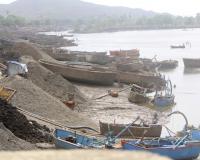
That rock erodes from wind and rain and time, getting transported down rivers all the way to the sea, where it accretes onto beaches and into other sediments. That is the origin story of sand. Once that sand is on a beach, or off the coast, or on an inland shore, it is transported through a natural cycle that replenishes the resource over geologic time.
Or rather, that is the way it is supposed to work.
By Teresa Chan
Note: This blog was cross-posted from ELI's Gulf-specific website, where you can find information on everything you need to know about Gulf restoration.
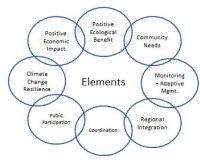
In June, the ELI Gulf Team released a survey on priorities for Gulf restoration in the wake of the Deepwater Horizon oil spill. It was designed to understand what elements our partners and collaborators think are most important to good restoration projects. We started with a list of eight project elements:

By Jay Austin
While all eyes are on the challenge to EPA’s Clean Power Plan, currently being briefed in the D.C. Circuit, other forms of climate litigation are slowly gaining traction in courts around the country. In Oregon, where I live, a group of young plaintiffs have invoked the “atmospheric trust” theory in their attempt to compel the state government to regulate greenhouse gases; similar state-law actions are pending in Colorado, Massachusetts, Pennsylvania, and Washington. The Oregon youths have brought an even more ambitious suit against the entire federal government, alleging that its long history of climate change inaction amounts to a violation of their fundamental constitutional rights.

ELI notes with sadness the passing of Nicholas Clinch on June 15, 2016. Nick was an inspiration to his friends on the ELI Board during his tenure as a director from 1980 to 1986. He brought insights from his experience as a former Sierra Club Foundation executive director, former American Alpine Association president, author, and a legendary expedition leader who made profound contributions to American mountaineering.

As the head of a U.K.-based multinational’s Safety, Health, Environmental, and Sustainability function (and a former temporary resident of England), my fascination with the Brexit outcome has been marginally greater than, oh I don’t know . . . that of a Manhattan-based owner of a Scotland golf course. In fact, on the “morning after,” I was in a quaint Cambridge, U.K., hotel room preparing my remarks for a panel discussion later that day on the prospects for governments, financial institutions, and industry to collectively "rewire" our economy and promote sustainable growth.
By David Roche
Climate change and sea-level rise are reshaping the coastline along the Gulf of Mexico. Land is being lost at an alarming rate, especially in Louisiana, where subsidence is compounding the effects of sea-level rise. Across the Gulf Coast, communities are increasingly vulnerable as the seas rise, land subsides, saltwater intrudes, and marshes retreat. In the face of such monumental change, it is essential for communities to plan and adapt.
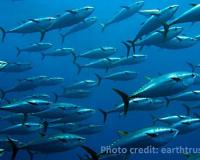
The 2016 Resumed Review Conference relating to the Conservation and Management of Straddling Fish Stocks and Highly Migratory Fish Stocks (UNFSA) took place at U.N. Headquarters in Manhattan from May 23-27, 2016. The outcome document serves as an example of the challenges and limitations of international ocean governance.
In the years since the 2010 Resumed Review Conference, there has been positive news in the field of international conservation of the marine environment. Chile, Palau, and the United States have created new Marine Protected Areas (MPAs) in their Exclusive Economic Zones. In early 2015, representatives of 104 nations began drafting a legally enforceable international treaty, which is still under negotiation, for the protection of biodiverse areas beyond national jurisdiction (ABNJ). The treaty would limit unregulated activities on the High Seas and lead to the creation of a global MPA network.