
Vibrant Environment
All | Biodiversity | Climate Change and Sustainability | Environmental Justice | Governance and Rule of Law | Land Use and Natural Resources | Oceans and Coasts | Pollution Control
By ELR Staff
Pres. Barack Obama made a number of promises related to environmental justice when he hit the 2008 campaign trail: he said he would strengthen the EPA Office of Environmental Justice, expand the environmental justice small grants program, and empower minority communities to respond to health threats. For the most part, he delivered.

Never in my nearly thirty years as an environmental journalist have I seen such doom and gloom. And that era has seen a lot of doom and gloom, starting with the worldwide drought that made “Planet of the Year” in Time magazine in 1988 and continuing through predictions of global Armageddon from industrial pollutants and the dregs of an advanced society.
By Adam Schempp
Water is fundamental to life, but it is not always bountiful. Many communities around the country already face water scarcity issues, whether such scarcity is due to a history of shortages, a present crisis, or growing concerns over the longevity of supplies. Accommodating population growth, and realizing the benefits from new development, only adds to the challenge in water-stressed areas.

By Meera Gajjar
It’s time to take the fight against wildlife trafficking from the jungles to the judges. The National Whistleblower Center (NWC) recently launched its Global Wildlife Whistleblower Program, and it is now seeking attorneys who are ready to join the vanguard by representing wildlife whistleblowers. This means helping whistleblowers develop effective reports and qualify for rewards under U.S. laws.

Communities throughout the United States are experiencing a variety of conditions associated with a changing climate—hotter summers and heat waves, droughts, intense storms and flooding, increased average precipitation and humidity, and more severe wildfires. Alongside potentially far-reaching environmental and economic impacts, these conditions have direct and indirect effects on human health. In recent years, scientists have begun to shed light on important climate-related health effects that occur indoors, where people spend the vast majority of their time.

With all the national-level news surrounding the new administration’s approach to environmental protections, it can be easy to lose track of the important roles that state and local governments have in pushing forward plans and policies for environmental protection and resilient communities. Working on ELI and UNC’s floodplain buyouts project and stumbling upon a book from the ELI archives refreshed my excitement and understanding of the various levels on which we can push for environmental action.
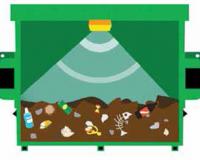
Imagine the dumpsters behind restaurant row in your community signaling their hauling company to come pick them up because they are full and about to overflow, or their food is rotting and about to stink up the neighborhood. Such are the promises for waste management of new “smart technologies,” based on sensors, radio frequency identification (RFID) tags, big data, and social networks.
In a series of executive orders, the president has requested that agencies review several environmental protection rules, and if deemed necessary, repeal or modify rules to better facilitate economic growth. One such rule, the Clean Water rule, also known as the Waters of the U.S. rule (WOTUS), has been in the crosshairs of industry for some time.

By ELR Staff
When it comes to the global commons, President Donald Trump has made his stance on climate change policy pretty clear. What will be his views on ocean policy? Certainly, given the impact of climate change on ocean acidification, last month’s Executive Order on energy independence was not good news for ocean health. But there are a multitude of marine and coastal issues that the Trump Administration will have to face.
By David Roche
What happens when environmental laws are not enforced? That question is usually reserved for countries that lack sufficient rule of law. In fact, one of ELI’s core missions is to support rule of law all over the world.
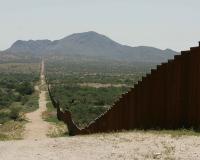
But, in one limited case, the problem hits a little closer to home. The border wall proposed by the Trump Administration would be exempt from most environmental laws.