Tribal Regulation of Single-Use Plastics
Monday, April 29, 2019

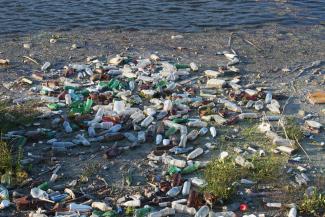
The world is waking up to the growing problem of plastic waste contaminating our ocean and terrestrial environments. Local governments—lauded as laboratories of innovation—have begun enacting bans and fees on single-use plastics, reducing the amount entering the waste stream in the first place. Businesses are stepping up; national and multinational governance bodies are adopting laws cutting down on the manufacture and distribution of single-use plastics. In the United States, California, the District of Columbia, Hawaii, and Maine have initiated statewide restrictions, while Oregon and Washington are considering similar measures.
Youth Activism and Climate Change: A European Perspective
Wednesday, April 24, 2019

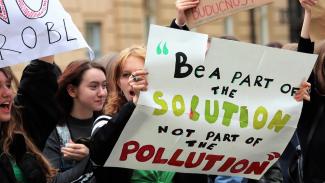
Following the recently granted extension, the United Kingdom (U.K.) will soon trigger Article 50, officially “Brexitting” from the European Union (EU), a decision that will fundamentally change the U.K. and the wider EU. Protesters—many of them young—have mobilized in London, in Westminster, and across the U.K. to express concern about how this move out of the EU will affect their future. Nearly 6 million people, dominated by young voices, have signed a petition to revoke Article 50. Similarly, students and youth worldwide have joined “climate strikes” in a unified call for concerted action on global climate change. Are these widespread protests a harbinger of social change and action on climate, driven by the younger generation?

Rule of Law in Climate Response and Energy Transformation
ELI 50th anniversary logo
Friday, April 19, 2019

When I was a child, my father would repeatedly remind me (and my siblings) to “turn off the lights—money doesn’t grow on trees”. Was it because he was concerned about the environment? No, not really—it was because we were relatively poor. But I am pretty good now about remembering to turn off the lights (and I get pretty annoyed when others don’t—especially when the lights are “supposed” to go off automatically but don’t).

Now, as the current chair of the ABA Section of Environment, Energy and Resources (SEER), I have the ability and privilege to oversee many exciting initiatives.

States Taking the Lead on Developing Clean Energy Policies
ELI 50th anniversary logo
Friday, April 12, 2019

States are continuing to make significant commitments to reduce greenhouse gas (GHG) emissions. Though the federal government is looking to roll back federal GHG reduction programs, states have a long history of taking the lead to design policies that meet their citizens’ environmental, health, and economic objectives and often look to build upon other states’ successes.

Changing Flood Insurance for a Changing Climate
Monday, April 8, 2019

The current flooding disasters in the Midwest, as well as the flooding consequences of Hurricanes Michael, Harvey, Irma, and Maria, have damaged thousands of U.S. homes and businesses over the last decade. The National Flood Insurance Program (NFIP), enacted by Congress in 1968, aims to minimize the risk of flood damage as well as reduce flood-related disaster recovery costs. This federally backed program provides insurance to property owners and renters, establishes building and land use requirements and floodplain management practices for local communities to qualify, and maps flood-risk areas to inform development decisions and insurance premiums. But the NFIP assumes that flood risks are static and change little over time, and the effects of climate change are challenging this assumption.

Environmental Justice and the Fight to Be Heard
Wednesday, April 3, 2019

Many nationally recognized environmental groups have adopted principles of equity and diversity into their missions over the past two decades, but the environmental justice movement and the marginalized groups that have historically driven the movement are often left out of the “mainstream” environmental discussion. Groups that lack political power such as people of color, people with disabilities, people of low income, the LGBTQ community, and women are often ignored by those with more social influence. Progress has certainly been made in recent years, but more opportunities exist to connect national-scale nonprofits to the groups who face the disproportionate effects of environmental degradation. This issue is highly important because the effects of environmental detriment disproportionally impact these minority groups, and is still a reality that many of these communities face every day. As such, it is essential to recognize that marginalized communities have had a significant impact on environmental policy, and it is imperative to continue to fight for more equitable conditions.

Trips to the Biotech Frontier: Episode 1
Wednesday, March 20, 2019

What comes to your mind when you hear the word “biotechnology?” Do you tend to think of genetically modified corn or lab-grown meat? Have you ever thought of bricks grown from bacteria or leather bags made from mushroom roots as biotechnology?

Genetically engineered food is one popular form of biotechnology, but the possible products of biotechnology are expanding rapidly beyond food and agriculture, transforming a variety of other industries, such as construction and clothing.

Here are four new and emerging applications of biotechnology that you might have never considered.

An Uncertain Future for California's Vehicle Emission Standards
Highway traffic
Monday, March 18, 2019

Last month, the Trump Administration formally ended talks with California over the federal government’s plans to freeze vehicle emissions standards and likely revoke the state’s long-standing authority to set its own standards under the Clean Air Act (CAA). The success of California in mitigating air pollution and reducing greenhouse gas (GHG) emissions under CAA §209—and that of the 15 states that have invoked waivers under §177—is now in question. And the Administration’s plan to end negotiations and move forward with its proposed Safer Affordable Fuel-Efficient Vehicles rule will most certainly lead to a heated, lengthy court battle.