Still Much We Do Not Know: Climate Uncertainty and Adaptive Management in the Gulf of Mexico
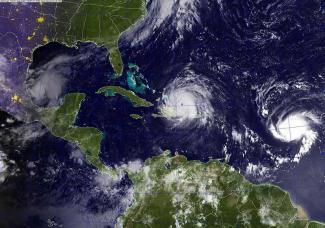
hurricane
Wednesday, September 30, 2020

The National Oceanic and Atmospheric Administration (NOAA) reported in August that this year’s Gulf of Mexico dead zone was unexpectedly small—in fact, the third-smallest ever measure in the 34-year record. Interestingly, this comes just two months after NOAA had forecasted a larger-than-average dead zone in early June. The cause of this shift appears to be Hurricane Hanna, whose large, powerful waves agitated the water column, disrupting algal accumulation in the Gulf.

Public Participation at a Distance: Engaging in Gulf Restoration Processes During the Pandemic
laptop
Tuesday, July 14, 2020

Public meetings are a fundamental component of many policymaking and planning processes, including the natural resource damage assessment (NRDA) process that aims to restore the Gulf of Mexico ecosystem and the permitting and environmental review procedures for individual projects.

Bouncing Back From Bonnet Carré: What Is Next for Impacted Fisheries?
Wednesday, October 23, 2019

The Gulf Coast region historically is known for producing more seafood than anywhere else in the continental U.S., both in volume and dollar value. However, since Hurricane Katrina in 2005 and the Deepwater Horizon oil spill in April 2010, fishing communities along the coast who depend upon healthy and vibrant marine habitats have experienced significant financial instability.

Fishing For Opportunity: A Perspective on Vietnamese Community Engagement in Gulf Restoration (Why I Participate in Gulf Restoration)
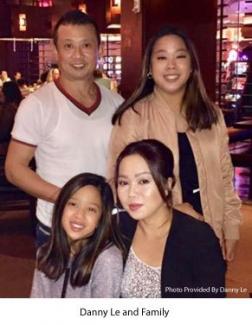
Danny Le and family
Monday, May 14, 2018

This conversation with Danny Le, BPSOS, is part of the ELI Gulf of Mexico team’s “Why I Participate in Gulf Restoration” blog series. The series aims to highlight the views of community members impacted by the BP oil spill, and provide a glimpse of some challenges and successes they face in getting involved in the restoration processes.

Pearls of Wisdom From a Mississippi Fisherman: A Conversation With Ryan Bradley (Why I Participate in Gulf Restoration)
Oyster & Pearl courtesy of Pixabay
Wednesday, February 28, 2018

Historically, the Gulf Coast region has produced more seafood than anywhere else in the continental U.S., both in volume and dollar value. Before the BP oil spill, in 2009, the Gulf seafood industry provided over 213,000 full- and part-time jobs. The oil spill has had a devastating impact on people working in the Gulf’s seafood industry. As a result of the BP oil spill, over 88,000 square miles of the Gulf’s federal waters—nearly 37%—were closed to fishing. There were also fishing closures in the state waters of Alabama (40% closed), Florida (2% closed), Louisiana (55% closed), and Mississippi (95% closed). Fishermen are still facing financial instability years after the spill, and have observed significant declines in landings and stock quality. Here, we highlight one Gulf fisherman’s perspective.

Deepwater Horizon: Four Years Later
Sunday, April 20, 2014

Four years ago today, on April 20, 2010, an explosion rocked the Deepwater Horizon mobile offshore drilling unit. Eleven crewmen lost their lives in the blast, and the rig burned for the next thirty-six hours. Then, 41 miles off the southeast coast of Louisiana, the Deepwater Horizon sank. At the wellhead, nearly a mile underwater in the Gulf of Mexico, the environmental disaster was just beginning. Oil gushed for the next three months, during which millions of barrels of oil mixed with millions of gallons of dispersant to contaminate more than 1,000 miles of coast.

A New Wave of Ocean Management: ELI Joins the Blue Halo Initiative as it Expands to Curacao and Montserrat
Wednesday, March 4, 2015

It’s been an exciting couple of weeks for ELI Ocean Program in the Caribbean. Last week on Curacao, the Ministry of Health and Environment on behalf of Curacao and the Waitt Institute signed a Memorandum of Understanding (MOU) agreeing to work together on Blue Halo Curacao.