A Picture (or a Tracking Tool) Can Say a Thousand Words: Deepwater Horizon Project Tracking
Wednesday, September 24, 2014


By ELI Ocean Program Staff

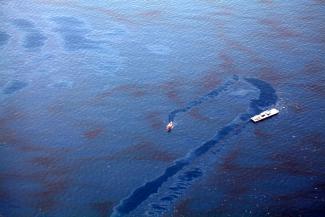
In the Gulf of Mexico region, 89 projects to date have been finalized for restoration and recovery in the wake of the Deepwater Horizon oil spill. These projects are funded under several different mechanisms, including the Natural Resource Damage Assessment process and the National Fish and Wildlife Foundation’s Gulf Environmental Benefit Fund. Over the coming years, hundreds if not thousands of projects will be finalized under these mechanisms, the RESTORE Act, and other processes.

Halting the Lionfish Invasion through Smart Law and Policy
Wednesday, August 6, 2014

It is an invasive species that is one of the most pressing threats to ocean ecosystems in the Caribbean and Gulf of Mexico. And my wife was wearing one on her ear.

My wife had just bought these beautiful earrings, made from the spines of the venomous red lionfish (Pterois volitans), from a studio in Rincon, Puerto Rico. Later that trip, we shared delicious empanadas con pez leon. The jewelry and the food share a common thread—using markets as a tool to control the raging lionfish invasion that is wreaking havoc on Caribbean and Gulf coral reef ecosystems.

Lifting up Gulf Voices: A Snapshot of Gulfport, MS Resident and Community Advocate Alanderia Whitlock
Alanderia Whitlock, Gulfport, MS resident.
Saturday, January 26, 2019
Alanderia Whitlock is a journalist and community activist from Gulfport, Mississippi, who recently founded Gulf Voices, a social media platform for residents of the Gulf Coast. Through Gulf Voices, Alanderia seeks to help members of her community actively engage in the restoration processes and other social justice initiatives.
Environmental Review in the Gulf: How Might Revised NEPA Regulations Impact Coastal Restoration?
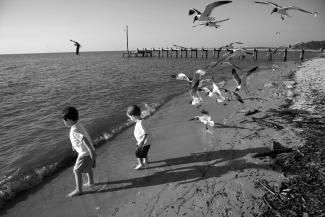
Children playing on Alabama Gulf Coast shoreline
Saturday, February 15, 2020
Last month, the Council on Environmental Quality (CEQ) proposed a rule that would considerably change the implementing regulations of the National Environmental Policy Act (NEPA) (ELI’s guide to the proposed regulations is available here). NEPA requires that major Federal actions undergo environmental review before being carried out. The review process involves examining environmental impacts and alternative actions, consulting interested parties, and identifying mitigation; and, while procedural in scope, it aims to ensure that environmental considerations are incorporated in government decisionmaking.
Deepwater Horizon Aftermath: Chronic Medical Conditions Still At Issue in Federal Courts
Oil cleanup Deepwater Horizon
Thursday, March 11, 2021

The Deepwater Horizon exploded in the Gulf of Mexico more than 10 years ago. Yet hundreds of individuals across the Gulf coast are still battling BP in court for damages related to a host of ailments arising from exposure to oil, dispersants, or both. A recent order out of the Northern District of Florida (N.D. Fla.) granting BP’s summary judgment motion as to one set of plaintiffs may be a sign of things to come. Regardless of this ruling, the sheer volume of these cases may occupy dockets for months or years.

Sediment Diversions: Big Projects Confront Land Loss in the Mississippi River Delta
Thursday, January 14, 2021

The Mississippi River Delta and Louisiana coastline are disappearing. Since the late 1920s, efforts to control the Mississippi through levees and dams have impeded its natural ability to deposit sediment downstream, contributing to large-scale land loss. It’s estimated that Louisiana’s coastal parishes lost roughly two thousand square miles of land between 1932 and 2016. As rising seas driven by climate change threaten to further consume the Gulf coast, there is an imperative to address the growing problem of shrinking landmass. Confronting this threat with a sense of urgency will allow for preservation of Louisiana’s communities, economies, and cultural resources into the future.

Gulf of Mexico Coastal Restoration Efforts: Fundamental or Fleeting?
Blog test image
Tuesday, November 10, 2020
A National Academy of Sciences (NAS) Committee on Long-Term Environmental Trends in the Gulf of Mexico has embarked on a new study to “assess the cumulative effects of multiple restoration projects” on the Gulf coast. As background research for the study, the Committee held a meeting with academics and practitioners to shed light on whether and how restoration projects might be impacted by both short- and long-term changes. The findings presented were dramatic and sobering, and further underscore the necessity of pursuing comprehensive efforts to mitigate greenhouse gas emissions to avoid the worst-case scenarios.