

Vibrant Environment
All
All | Biodiversity | Climate Change and Sustainability | Environmental Justice | Governance and Rule of Law | Land Use and Natural Resources | Oceans and Coasts | Pollution Control
By Kashaf Momin
By now, you have seen how biotech is transforming the food industry. You have also seen how it can revolutionize the construction and textile industries. In this final episode, we will explore biotechnology products you may find in your home in the near future.
The same platform used to brew hoppy beer without the hops, discussed in our last episode, is also transforming the fragrance business. In partnership with a Swiss perfume company, the bioscience firm Amyris synthetically produced patchouli, one of the essential oils that constitutes traditional perfume. This product, called CLEARWOOD®, was created using engineered yeast as its microbial platform, a more sustainable alternative to the costly and lengthy cultivation and extraction process of the patchouli plant. Meanwhile, Ginkgo Bioworks has designed its own aromatic oil....
By ELR Staff
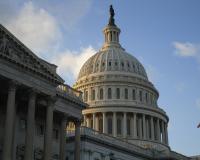
Climate policy has again risen to the top of the national agenda. Although the current Administration has taken actions such as withdrawing from the Paris Agreement or relaxing regulations on vehicle and power plant emissions, members of Congress are formulating progressive proposals to mitigate climate change, and states have taken ambitious steps to reduce carbon emissions. A carbon tax proposal has gained traction among conservative think-tanks and politicians, House Speaker Nancy Pelosi has formed a Select Committee on the Climate Crisis, and the Green New Deal has sparked a robust debate on pathways to a more sustainable future.
By ELR Staff
Climate policy has again risen to the top of the national agenda. Although the current Administration has taken actions such as withdrawing from the Paris Agreement or relaxing regulations on vehicle and power plant emissions, members of Congress are formulating progressive proposals to mitigate climate change, and states have taken ambitious steps to reduce carbon emissions. A carbon tax proposal has gained traction among conservative think-tanks and politicians, House Speaker Nancy Pelosi has formed a Select Committee on the Climate Crisis, and the Green New Deal has sparked a robust debate on pathways to a more sustainable future.

By Loyti Cheng, By Michael Comstock
PFAS is a catch-all term for the chemical compounds per- and polyfluoroalkyls (including PFOA, PFOS, and replacements such as GenX). Seemingly overnight, these substances have gone from something talked about mainly by environmental lawyers and advocates to something that the public is increasingly focused on. The reasons for this shift include EPA’s and the states’ move to regulate these substances, recent lawsuits targeting PFAS manufacturers, and a better understanding of the way these substances may persist in the environment and harm human health. Because the future costs and obligations regarding the cleanup of, and human exposure to, PFAS are uncertain and likely significant, they present a challenge for environmental attorneys and their clients when performing deal diligence and negotiating contracts.
By Loyti Cheng, By Michael Comstock
PFAS is a catch-all term for the chemical compounds per- and polyfluoroalkyls (including PFOA, PFOS, and replacements such as GenX). Seemingly overnight, these substances have gone from something talked about mainly by environmental lawyers and advocates to something that the public is increasingly focused on. The reasons for this shift include EPA’s and the states’ move to regulate these substances, recent lawsuits targeting PFAS manufacturers, and a better understanding of the way these substances may persist in the environment and harm human health. Because the future costs and obligations regarding the cleanup of, and human exposure to, PFAS are uncertain and likely significant, they present a challenge for environmental attorneys and their clients when performing deal diligence and negotiating contracts.

By C. Scott Fulton
I write this column on a plane returning from Beijing and an ELI convening called the China International Business Dialogue on Environmental Governance (CIBDEG). This is an innovative project brought to ELI by Leadership Council member Paul Davies of Latham’s London office. The heart of the idea is for ELI and a Chinese partner entity (the Policy Research Center on Environment and Economy (PRCEE)) to broker a conversation between Chinese regulators and multinational companies that are either trying to make a go of it in China or deeply reliant on supply chains that originate in China. This is a project in which I am personally involved, mainly because of my relationships with Chinese regulators from my days doing international work at EPA.
By Cynthia R. Harris
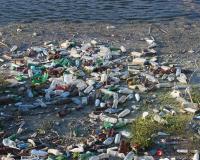
The world is waking up to the growing problem of plastic waste contaminating our ocean and terrestrial environments. Local governments—lauded as laboratories of innovation—have begun enacting bans and fees on single-use plastics, reducing the amount entering the waste stream in the first place. Businesses are stepping up; national and multinational governance bodies are adopting laws cutting down on the manufacture and distribution of single-use plastics. In the United States, California, the District of Columbia, Hawaii, and Maine have initiated statewide restrictions, while Oregon and Washington are considering similar measures.
By Cynthia R. Harris
The world is waking up to the growing problem of plastic waste contaminating our ocean and terrestrial environments. Local governments—lauded as laboratories of innovation—have begun enacting bans and fees on single-use plastics, reducing the amount entering the waste stream in the first place. Businesses are stepping up; national and multinational governance bodies are adopting laws cutting down on the manufacture and distribution of single-use plastics. In the United States, California, the District of Columbia, Hawaii, and Maine have initiated statewide restrictions, while Oregon and Washington are considering similar measures.
By Cynthia R. Harris
The world is waking up to the growing problem of plastic waste contaminating our ocean and terrestrial environments. Local governments—lauded as laboratories of innovation—have begun enacting bans and fees on single-use plastics, reducing the amount entering the waste stream in the first place. Businesses are stepping up; national and multinational governance bodies are adopting laws cutting down on the manufacture and distribution of single-use plastics. In the United States, California, the District of Columbia, Hawaii, and Maine have initiated statewide restrictions, while Oregon and Washington are considering similar measures.
By Cynthia R. Harris
The world is waking up to the growing problem of plastic waste contaminating our ocean and terrestrial environments. Local governments—lauded as laboratories of innovation—have begun enacting bans and fees on single-use plastics, reducing the amount entering the waste stream in the first place. Businesses are stepping up; national and multinational governance bodies are adopting laws cutting down on the manufacture and distribution of single-use plastics. In the United States, California, the District of Columbia, Hawaii, and Maine have initiated statewide restrictions, while Oregon and Washington are considering similar measures.