
Vibrant Environment
All
All | Biodiversity | Climate Change and Sustainability | Environmental Justice | Governance and Rule of Law | Land Use and Natural Resources | Oceans and Coasts | Pollution Control
By Miriam Aczel
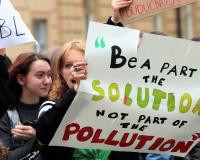
Following the recently granted extension, the United Kingdom (U.K.) will soon trigger Article 50, officially “Brexitting” from the European Union (EU), a decision that will fundamentally change the U.K. and the wider EU. Protesters—many of them young—have mobilized in London, in Westminster, and across the U.K. to express concern about how this move out of the EU will affect their future. Nearly 6 million people, dominated by young voices, have signed a petition to revoke Article 50. Similarly, students and youth worldwide have joined “climate strikes” in a unified call for concerted action on global climate change. Are these widespread protests a harbinger of social change and action on climate, driven by the younger generation?
By Miriam Aczel
Following the recently granted extension, the United Kingdom (U.K.) will soon trigger Article 50, officially “Brexitting” from the European Union (EU), a decision that will fundamentally change the U.K. and the wider EU. Protesters—many of them young—have mobilized in London, in Westminster, and across the U.K. to express concern about how this move out of the EU will affect their future. Nearly 6 million people, dominated by young voices, have signed a petition to revoke Article 50. Similarly, students and youth worldwide have joined “climate strikes” in a unified call for concerted action on global climate change. Are these widespread protests a harbinger of social change and action on climate, driven by the younger generation?
By Kashaf Momin
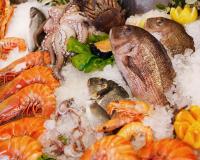
If you read Episode 1 of Trips to the Biotech Frontier, you know that biotechnology has far-reaching applications beyond genetically modified crops. But even within the food and agriculture industry, the industry is seeing the use of biotechnology in ways we may never imagined. In this episode, we will explore some of these new and emerging applications in food.
By Kashaf Momin
If you read Episode 1 of Trips to the Biotech Frontier, you know that biotechnology has far-reaching applications beyond genetically modified crops. But even within the food and agriculture industry, the industry is seeing the use of biotechnology in ways we may never imagined. In this episode, we will explore some of these new and emerging applications in food.

By Amy L. Edwards
When I was a child, my father would repeatedly remind me (and my siblings) to “turn off the lights—money doesn’t grow on trees”. Was it because he was concerned about the environment? No, not really—it was because we were relatively poor. But I am pretty good now about remembering to turn off the lights (and I get pretty annoyed when others don’t—especially when the lights are “supposed” to go off automatically but don’t).
Now, as the current chair of the ABA Section of Environment, Energy and Resources (SEER), I have the ability and privilege to oversee many exciting initiatives.
By Amy L. Edwards
When I was a child, my father would repeatedly remind me (and my siblings) to “turn off the lights—money doesn’t grow on trees”. Was it because he was concerned about the environment? No, not really—it was because we were relatively poor. But I am pretty good now about remembering to turn off the lights (and I get pretty annoyed when others don’t—especially when the lights are “supposed” to go off automatically but don’t).
Now, as the current chair of the ABA Section of Environment, Energy and Resources (SEER), I have the ability and privilege to oversee many exciting initiatives.

By Taylor Lilley, By Avital Li, By Jessica Foster
Lack of access to safe wastewater management infrastructure and improved sanitation is a global challenge that affects over 2 billion people worldwide. While large-scale wastewater treatment plants are common throughout the world, off-grid communities that exist outside of areas covered by centralized water infrastructure are often geographically isolated or economically marginalized, making these services not only unaffordable but inaccessible. In the absence of these networks, many communities have chosen to adapt. Although it is typically considered to be unlawful or illegitimate by their national governments, communities have begun to build decentralized systems to treat and reuse wastewater for agricultural purposes.
By Taylor Lilley, By Avital Li, By Jessica Foster
Lack of access to safe wastewater management infrastructure and improved sanitation is a global challenge that affects over 2 billion people worldwide. While large-scale wastewater treatment plants are common throughout the world, off-grid communities that exist outside of areas covered by centralized water infrastructure are often geographically isolated or economically marginalized, making these services not only unaffordable but inaccessible. In the absence of these networks, many communities have chosen to adapt. Although it is typically considered to be unlawful or illegitimate by their national governments, communities have begun to build decentralized systems to treat and reuse wastewater for agricultural purposes.
By Taylor Lilley, By Avital Li, By Jessica Foster
Lack of access to safe wastewater management infrastructure and improved sanitation is a global challenge that affects over 2 billion people worldwide. While large-scale wastewater treatment plants are common throughout the world, off-grid communities that exist outside of areas covered by centralized water infrastructure are often geographically isolated or economically marginalized, making these services not only unaffordable but inaccessible. In the absence of these networks, many communities have chosen to adapt. Although it is typically considered to be unlawful or illegitimate by their national governments, communities have begun to build decentralized systems to treat and reuse wastewater for agricultural purposes.
By Isabelle Smith
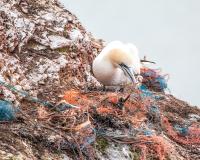
March 16, 2019; a young whale is found washed up on a beach in the Philippines. Autopsy reveals the whale died from “gastric shock” after ingesting 40kg of plastic rubbish including plastic bags and other disposable plastic products. Three weeks later, a pregnant sperm whale is found dead on a beach in Sardinia, Italy, more than two-thirds of her stomach filled with plastic waste.
These whales are the latest casualties of a growing worldwide plastic pollution problem.