
Vibrant Environment
All
All | Biodiversity | Climate Change and Sustainability | Environmental Justice | Governance and Rule of Law | Land Use and Natural Resources | Oceans and Coasts | Pollution Control
By Isabelle Smith
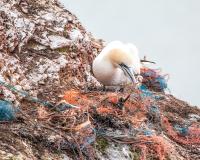
March 16, 2019; a young whale is found washed up on a beach in the Philippines. Autopsy reveals the whale died from “gastric shock” after ingesting 40kg of plastic rubbish including plastic bags and other disposable plastic products. Three weeks later, a pregnant sperm whale is found dead on a beach in Sardinia, Italy, more than two-thirds of her stomach filled with plastic waste.
These whales are the latest casualties of a growing worldwide plastic pollution problem.
By Isabelle Smith
March 16, 2019; a young whale is found washed up on a beach in the Philippines. Autopsy reveals the whale died from “gastric shock” after ingesting 40kg of plastic rubbish including plastic bags and other disposable plastic products. Three weeks later, a pregnant sperm whale is found dead on a beach in Sardinia, Italy, more than two-thirds of her stomach filled with plastic waste.
These whales are the latest casualties of a growing worldwide plastic pollution problem.
By Isabelle Smith
March 16, 2019; a young whale is found washed up on a beach in the Philippines. Autopsy reveals the whale died from “gastric shock” after ingesting 40kg of plastic rubbish including plastic bags and other disposable plastic products. Three weeks later, a pregnant sperm whale is found dead on a beach in Sardinia, Italy, more than two-thirds of her stomach filled with plastic waste.
These whales are the latest casualties of a growing worldwide plastic pollution problem.

By Carrie Jenks
States are continuing to make significant commitments to reduce greenhouse gas (GHG) emissions. Though the federal government is looking to roll back federal GHG reduction programs, states have a long history of taking the lead to design policies that meet their citizens’ environmental, health, and economic objectives and often look to build upon other states’ successes.
By Carrie Jenks
States are continuing to make significant commitments to reduce greenhouse gas (GHG) emissions. Though the federal government is looking to roll back federal GHG reduction programs, states have a long history of taking the lead to design policies that meet their citizens’ environmental, health, and economic objectives and often look to build upon other states’ successes.
By Dan Levy
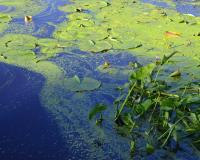
Widespread harmful algae bloom (HAB) outbreaks have profound negative impacts: threats to human health and safety, stress on ecological systems, diminished quality of life, and significant economic loss to water-based recreational and commercial activities. They occur due to decades worth of nitrogen and phosphorus nutrient runoff deposited into our freshwater lakes and water bodies. Now, excess nutrient runoff and human activity have contributed to an uncontrollable rise in HABs across the globe. This ongoing accumulation of nutrients into our shrinking freshwater supplies combined with warmer temperatures has turned these precious water bodies into petri dishes for harmful algae growth. Removing the overabundance of nutrients is essential to restoring these water bodies and preventing the growth of future HABs.
By Dan Levy
Widespread harmful algae bloom (HAB) outbreaks have profound negative impacts: threats to human health and safety, stress on ecological systems, diminished quality of life, and significant economic loss to water-based recreational and commercial activities. They occur due to decades worth of nitrogen and phosphorus nutrient runoff deposited into our freshwater lakes and water bodies. Now, excess nutrient runoff and human activity have contributed to an uncontrollable rise in HABs across the globe. This ongoing accumulation of nutrients into our shrinking freshwater supplies combined with warmer temperatures has turned these precious water bodies into petri dishes for harmful algae growth. Removing the overabundance of nutrients is essential to restoring these water bodies and preventing the growth of future HABs.
By Dan Levy
Widespread harmful algae bloom (HAB) outbreaks have profound negative impacts: threats to human health and safety, stress on ecological systems, diminished quality of life, and significant economic loss to water-based recreational and commercial activities. They occur due to decades worth of nitrogen and phosphorus nutrient runoff deposited into our freshwater lakes and water bodies. Now, excess nutrient runoff and human activity have contributed to an uncontrollable rise in HABs across the globe. This ongoing accumulation of nutrients into our shrinking freshwater supplies combined with warmer temperatures has turned these precious water bodies into petri dishes for harmful algae growth. Removing the overabundance of nutrients is essential to restoring these water bodies and preventing the growth of future HABs.
By ELR Staff
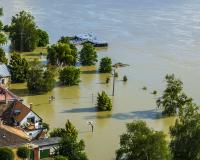
The current flooding disasters in the Midwest, as well as the flooding consequences of Hurricanes Michael, Harvey, Irma, and Maria, have damaged thousands of U.S. homes and businesses over the last decade. The National Flood Insurance Program (NFIP), enacted by Congress in 1968, aims to minimize the risk of flood damage as well as reduce flood-related disaster recovery costs. This federally backed program provides insurance to property owners and renters, establishes building and land use requirements and floodplain management practices for local communities to qualify, and maps flood-risk areas to inform development decisions and insurance premiums. But the NFIP assumes that flood risks are static and change little over time, and the effects of climate change are challenging this assumption.
By ELR Staff
The current flooding disasters in the Midwest, as well as the flooding consequences of Hurricanes Michael, Harvey, Irma, and Maria, have damaged thousands of U.S. homes and businesses over the last decade. The National Flood Insurance Program (NFIP), enacted by Congress in 1968, aims to minimize the risk of flood damage as well as reduce flood-related disaster recovery costs. This federally backed program provides insurance to property owners and renters, establishes building and land use requirements and floodplain management practices for local communities to qualify, and maps flood-risk areas to inform development decisions and insurance premiums. But the NFIP assumes that flood risks are static and change little over time, and the effects of climate change are challenging this assumption.