
Vibrant Environment
All
All | Biodiversity | Climate Change and Sustainability | Environmental Justice | Governance and Rule of Law | Land Use and Natural Resources | Oceans and Coasts | Pollution Control
By Isabelle Smith
As the global community faces the reality that a rapid reduction in greenhouse gas (GHG) emissions is urgently required, a new class of climate change litigation is emerging. But what impact are these proceedings having?
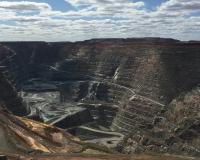
A recent case from New South Wales (NSW), Australia, has directly challenged development that is at odds with GHG emission reduction targets. Hailed as a “landmark decision” in climate litigation, the case represents the first time an Australian court has refused a coal mining development consent not only on the basis of unacceptable “planning, visual and social impacts,” but also to prevent a new source of GHG emissions.
By Isabelle Smith
As the global community faces the reality that a rapid reduction in greenhouse gas (GHG) emissions is urgently required, a new class of climate change litigation is emerging. But what impact are these proceedings having?
A recent case from New South Wales (NSW), Australia, has directly challenged development that is at odds with GHG emission reduction targets. Hailed as a “landmark decision” in climate litigation, the case represents the first time an Australian court has refused a coal mining development consent not only on the basis of unacceptable “planning, visual and social impacts,” but also to prevent a new source of GHG emissions.

By Kashaf Momin
What comes to your mind when you hear the word “biotechnology?” Do you tend to think of genetically modified corn or lab-grown meat? Have you ever thought of bricks grown from bacteria or leather bags made from mushroom roots as biotechnology?
Genetically engineered food is one popular form of biotechnology, but the possible products of biotechnology are expanding rapidly beyond food and agriculture, transforming a variety of other industries, such as construction and clothing.
Here are four new and emerging applications of biotechnology that you might have never considered.

By ELR Staff
Last month, the Trump Administration formally ended talks with California over the federal government’s plans to freeze vehicle emissions standards and likely revoke the state’s long-standing authority to set its own standards under the Clean Air Act (CAA). The success of California in mitigating air pollution and reducing greenhouse gas (GHG) emissions under CAA §209—and that of the 15 states that have invoked waivers under §177—is now in question. And the Administration’s plan to end negotiations and move forward with its proposed Safer Affordable Fuel-Efficient Vehicles rule will most certainly lead to a heated, lengthy court battle.
By ELR Staff
Last month, the Trump Administration formally ended talks with California over the federal government’s plans to freeze vehicle emissions standards and likely revoke the state’s long-standing authority to set its own standards under the Clean Air Act (CAA). The success of California in mitigating air pollution and reducing greenhouse gas (GHG) emissions under CAA §209—and that of the 15 states that have invoked waivers under §177—is now in question. And the Administration’s plan to end negotiations and move forward with its proposed Safer Affordable Fuel-Efficient Vehicles rule will most certainly lead to a heated, lengthy court battle.
By ELR Staff
Last month, the Trump Administration formally ended talks with California over the federal government’s plans to freeze vehicle emissions standards and likely revoke the state’s long-standing authority to set its own standards under the Clean Air Act (CAA). The success of California in mitigating air pollution and reducing greenhouse gas (GHG) emissions under CAA §209—and that of the 15 states that have invoked waivers under §177—is now in question. And the Administration’s plan to end negotiations and move forward with its proposed Safer Affordable Fuel-Efficient Vehicles rule will most certainly lead to a heated, lengthy court battle.

By Jonathan Cannon
In the early 1970s, I told my stepfather, a distinguished judge on the Maryland Court of Appeals, that I wanted to go to law school to study environmental law. He thought that was a silly idea. There wasn’t—and wouldn’t be—a separate field of environmental law. If I wanted to study administrative law with an emphasis on environmental applications, fine. But I was deluding myself to think there would be a new domain of law defined by the environmental issues of the day.

By Linda Breggin, By Anna Beeman
Interested in learning from leading scholars, policymakers, and practitioners about innovative policy proposals related to federal energy leasing, state preemption of local environmental initiatives, or free trade and enforcement of environmental laws? If so, you’ll want to attend the 12th annual Environmental Law and Policy Annual Review (ELPAR) conference on March 29, 2019, in Washington, D.C. The conference is free, and for those of you outside the D.C. area, it will also be available via webinar.
By Linda Breggin, By Anna Beeman
Interested in learning from leading scholars, policymakers, and practitioners about innovative policy proposals related to federal energy leasing, state preemption of local environmental initiatives, or free trade and enforcement of environmental laws? If so, you’ll want to attend the 12th annual Environmental Law and Policy Annual Review (ELPAR) conference on March 29, 2019, in Washington, D.C. The conference is free, and for those of you outside the D.C. area, it will also be available via webinar.
By Linda Breggin, By Anna Beeman
Interested in learning from leading scholars, policymakers, and practitioners about innovative policy proposals related to federal energy leasing, state preemption of local environmental initiatives, or free trade and enforcement of environmental laws? If so, you’ll want to attend the 12th annual Environmental Law and Policy Annual Review (ELPAR) conference on March 29, 2019, in Washington, D.C. The conference is free, and for those of you outside the D.C. area, it will also be available via webinar.