

Vibrant Environment
All
All | Biodiversity | Climate Change and Sustainability | Environmental Justice | Governance and Rule of Law | Land Use and Natural Resources | Oceans and Coasts | Pollution Control
By Helena Kilburn
Women have been leaders in every major movement, though their contributions all too often go unrecognized. The environmental movement is no exception. Women striving toward the betterment of this field have faced many challenges, but through skill and determination, they persevered. The environmental movement is over two centuries long with generations of women shaping policies and laws within the field. This blog features just a handful of the numerous women who paved the way for future environmentally conscious generations.

By ELR Staff
In 2018, the Council on Environmental Quality (CEQ) announced its intentions to revisit and revise its 40-year-old NEPA regulations, following Pres. Donald Trump’s call in Executive Order No. 13807 to modernize the environmental review and authorization process. CEQ issued an advanced notice of proposed rulemaking last June and is now expected to send its proposal to the White House shortly.
By ELR Staff
In 2018, the Council on Environmental Quality (CEQ) announced its intentions to revisit and revise its 40-year-old NEPA regulations, following Pres. Donald Trump’s call in Executive Order No. 13807 to modernize the environmental review and authorization process. CEQ issued an advanced notice of proposed rulemaking last June and is now expected to send its proposal to the White House shortly.

By Lynn L. Bergeson, By Lorentz Hansen
Many have argued that gender equality and women’s empowerment are essential to advancement in many areas of life, such as business, health, and education. This brief blog post posits that the field of sustainable development and environmental protection are no different. Gender equality and, more particularly, women’s empowerment, are critical to achieving sustainable development across the globe. It is not a one-size-fits-all proposition, and the gender differences and deeply rooted policies that perpetuate inequality differ from region to region.
By Lynn L. Bergeson, By Lorentz Hansen
Many have argued that gender equality and women’s empowerment are essential to advancement in many areas of life, such as business, health, and education. This brief blog post posits that the field of sustainable development and environmental protection are no different. Gender equality and, more particularly, women’s empowerment, are critical to achieving sustainable development across the globe. It is not a one-size-fits-all proposition, and the gender differences and deeply rooted policies that perpetuate inequality differ from region to region.
By Lynn L. Bergeson, By Lorentz Hansen
Many have argued that gender equality and women’s empowerment are essential to advancement in many areas of life, such as business, health, and education. This brief blog post posits that the field of sustainable development and environmental protection are no different. Gender equality and, more particularly, women’s empowerment, are critical to achieving sustainable development across the globe. It is not a one-size-fits-all proposition, and the gender differences and deeply rooted policies that perpetuate inequality differ from region to region.
By Helena Kilburn
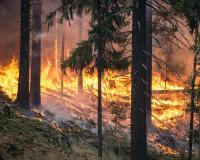
The 2018 wildfire season in California has been the state’s deadliest on record, and the 10 most deadly fires in California’s history occurred in the last four years. In a deviation from historic records, documentation of these recent fires show that their occurrence has become nearly year-round rather than seasonal. These fires pose extreme threats to 25 million acres of California’s wildlands, as well as to the 11 million people who live within the threatened area. In addition to intensifying climate change, faulty equipment and electric transmission from utility companies have contributed to the increase in wildfires in these high-risk regions. However, taking full monetary responsibility for these fires can lead to near or certain bankruptcy for the utility companies.
By Helena Kilburn
The 2018 wildfire season in California has been the state’s deadliest on record, and the 10 most deadly fires in California’s history occurred in the last four years. In a deviation from historic records, documentation of these recent fires show that their occurrence has become nearly year-round rather than seasonal. These fires pose extreme threats to 25 million acres of California’s wildlands, as well as to the 11 million people who live within the threatened area. In addition to intensifying climate change, faulty equipment and electric transmission from utility companies have contributed to the increase in wildfires in these high-risk regions. However, taking full monetary responsibility for these fires can lead to near or certain bankruptcy for the utility companies.

By Kashaf Momin
In the shadows of the Potomac River, the Anacostia River has long been known as D.C.’s forgotten river due to the effects of heavy pollution and neglect. With recent efforts to remediate the river, the Anacostia and its surrounding neighborhoods are a site of urban development and environmental gentrification.

Any self-respecting environmental lawyer knows, 2019 marks a major anniversary for environmental law: the Cuyahoga River fire of 1969. While we note the anniversary today, I doubt onlookers in Cleveland appreciated at the time that it would give rise to a five-decade era of environmental lawmaking.