
Vibrant Environment
All
All | Biodiversity | Climate Change and Sustainability | Environmental Justice | Governance and Rule of Law | Land Use and Natural Resources | Oceans and Coasts | Pollution Control
By ELR Staff
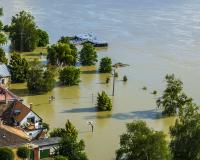
The current flooding disasters in the Midwest, as well as the flooding consequences of Hurricanes Michael, Harvey, Irma, and Maria, have damaged thousands of U.S. homes and businesses over the last decade. The National Flood Insurance Program (NFIP), enacted by Congress in 1968, aims to minimize the risk of flood damage as well as reduce flood-related disaster recovery costs. This federally backed program provides insurance to property owners and renters, establishes building and land use requirements and floodplain management practices for local communities to qualify, and maps flood-risk areas to inform development decisions and insurance premiums. But the NFIP assumes that flood risks are static and change little over time, and the effects of climate change are challenging this assumption.

By Kieren Rudge
Many nationally recognized environmental groups have adopted principles of equity and diversity into their missions over the past two decades, but the environmental justice movement and the marginalized groups that have historically driven the movement are often left out of the “mainstream” environmental discussion. Groups that lack political power such as people of color, people with disabilities, people of low income, the LGBTQ community, and women are often ignored by those with more social influence. Progress has certainly been made in recent years, but more opportunities exist to connect national-scale nonprofits to the groups who face the disproportionate effects of environmental degradation. This issue is highly important because the effects of environmental detriment disproportionally impact these minority groups, and is still a reality that many of these communities face every day. As such, it is essential to recognize that marginalized communities have had a significant impact on environmental policy, and it is imperative to continue to fight for more equitable conditions.
By Kieren Rudge
Many nationally recognized environmental groups have adopted principles of equity and diversity into their missions over the past two decades, but the environmental justice movement and the marginalized groups that have historically driven the movement are often left out of the “mainstream” environmental discussion. Groups that lack political power such as people of color, people with disabilities, people of low income, the LGBTQ community, and women are often ignored by those with more social influence. Progress has certainly been made in recent years, but more opportunities exist to connect national-scale nonprofits to the groups who face the disproportionate effects of environmental degradation. This issue is highly important because the effects of environmental detriment disproportionally impact these minority groups, and is still a reality that many of these communities face every day. As such, it is essential to recognize that marginalized communities have had a significant impact on environmental policy, and it is imperative to continue to fight for more equitable conditions.
By Kieren Rudge
Many nationally recognized environmental groups have adopted principles of equity and diversity into their missions over the past two decades, but the environmental justice movement and the marginalized groups that have historically driven the movement are often left out of the “mainstream” environmental discussion. Groups that lack political power such as people of color, people with disabilities, people of low income, the LGBTQ community, and women are often ignored by those with more social influence. Progress has certainly been made in recent years, but more opportunities exist to connect national-scale nonprofits to the groups who face the disproportionate effects of environmental degradation. This issue is highly important because the effects of environmental detriment disproportionally impact these minority groups, and is still a reality that many of these communities face every day. As such, it is essential to recognize that marginalized communities have had a significant impact on environmental policy, and it is imperative to continue to fight for more equitable conditions.
By Stephen R. Dujack
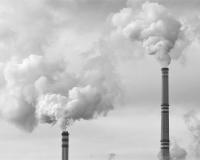
It was a half century ago that the federal government for the first time went to court “to close down a plant for polluting the air.” The quote is from the February 8, 1969, edition of the New York Times. The facility at issue was a chicken rendering plant in Bishop, Maryland, whose emissions were wafting into neighboring Delaware, thus allowing newly installed Attorney General John Mitchell — who would go on to play a major role in the Watergate scandal — to initiate the history-making suit.
By Stephen R. Dujack
It was a half century ago that the federal government for the first time went to court “to close down a plant for polluting the air.” The quote is from the February 8, 1969, edition of the New York Times. The facility at issue was a chicken rendering plant in Bishop, Maryland, whose emissions were wafting into neighboring Delaware, thus allowing newly installed Attorney General John Mitchell — who would go on to play a major role in the Watergate scandal — to initiate the history-making suit.

By Robert (Buzz) Hines
Not to dwell on the past, but I have been struck of late reading obituaries of certain leading figures in environmental law by a recurrent theme, which is essentially captured by the following quote: “This was an old-school environmentalist, when Republicans and Democrats all agreed the environment should be protected.”
By C. Scott Fulton
In the Summer of 2017, ELI undertook a special project in memory of our dear departed colleague Angus Macbeth. We did so with support, encouragement, and input from across the ELI community and the American College of Environmental Lawyers, and in cooperation with the Environmental Council of States. Angus was the friend of many, but was also one of the great leaders in environmental law, a former president of the college, and a long-time supporter of ELI.

By Isabelle Smith
As the global community faces the reality that a rapid reduction in greenhouse gas (GHG) emissions is urgently required, a new class of climate change litigation is emerging. But what impact are these proceedings having?
A recent case from New South Wales (NSW), Australia, has directly challenged development that is at odds with GHG emission reduction targets. Hailed as a “landmark decision” in climate litigation, the case represents the first time an Australian court has refused a coal mining development consent not only on the basis of unacceptable “planning, visual and social impacts,” but also to prevent a new source of GHG emissions.
By Isabelle Smith
As the global community faces the reality that a rapid reduction in greenhouse gas (GHG) emissions is urgently required, a new class of climate change litigation is emerging. But what impact are these proceedings having?
A recent case from New South Wales (NSW), Australia, has directly challenged development that is at odds with GHG emission reduction targets. Hailed as a “landmark decision” in climate litigation, the case represents the first time an Australian court has refused a coal mining development consent not only on the basis of unacceptable “planning, visual and social impacts,” but also to prevent a new source of GHG emissions.