The Year U.S. Financial Regulators Acknowledged Climate Change Risks

New York stock exchange building
Wednesday, July 28, 2021

Disclosure law in the United States is on the cusp of change. Significant shifts in the information investors expect to see in disclosures and how they use it are redefining what “material” is and changing disclosure obligations for companies. Federal financial regulators are also incorporating climate change risks into their work, adding pressure to improve climate-related disclosures.

A Rising Tide of Climate Accountability
Ocean wave
Monday, July 19, 2021

On May 26, Engine No. 1, an activist hedge fund owning 0.02% of ExxonMobil’s stock, led a shareholder revolt against the oil giant, ousting three of Exxon’s board members despite opposition from senior management. The change was part of a recent tide of losses for the global oil industry. Chevron’s shareholders also displayed an intolerance for corporate negligence toward climate change when they passed a resolution mandating the company to account for and cut down on Scope 3 emissions, which are released in the process of oil combustion. These emissions make up a far larger share of the company’s carbon footprint than emissions from operations and extraction. Together, these shareholders are jointly calling on the oil industry to adapt its business model to align with a decarbonized economy.

The U.K. Environment Bill: A Pending Opportunity for Significant Environmental Governance
Tower bridge in London
Wednesday, July 7, 2021

On January 31, the United Kingdom’s long and tumultuous departure from the European Union concluded with Brexit Day. This monumental, and by some, staunchly condemned, process ushered in a breadth of legal impacts, especially in regards to national environmental law and policy. EU directives previously served as the foundation for a large contingency of environmental standards, environmental protection regimes, conservation schemes, and enforcement and compliance in the U.K. Additional implications of Brexit include those at the intersection of agriculture and the environment, business and trade implications, sustainability efforts, chemical regulation, renewable energy development, the Paris Accord and other climate goals, and a variety of multinational treaties and directives. In short, the impacts on environmental governance were, and are, enormous and far-reaching.

Tribal Energy Project Development
windmills
Wednesday, June 30, 2021

The Tribal Energy Project, a U.S. Department of Energy (DOE) program, aims to advance renewable energy sufficiency on tribal lands through government assistance. This assistance is three-pronged, providing financial support, technical and legal assistance, and tribal education and training on renewable energies. The goal is to improve tribal economies by using land to create more sustainable energy pathways that bolster the tribal community and create jobs within tribal nations.

What We Learned From COVID-19: Opportunities for Reframing Environmental Law
Earth covered by COVID-19
Wednesday, June 16, 2021

Already under ever-increasing threats from climate change, the world faced another crisis in 2020: the COVID-19 pandemic. A public health emergency of this scale requires swift and effective policy action—but in many cases, the United States fell short, revealing ongoing failures to address systemic injustices exacerbated by the disease. In this month’s issue of ELR—The Environmental Law Reporter, members of the Environmental Law Collaborative, an affiliation of environmental law professors, examine the country’s legal responses to COVID-19, offering thoughts about pandemic ripple effects and their implications for environmental policy, as well as potential opportunities going forward. The article is excerpted from their book, Environmental Law, Disrupted, to be published by ELI Press later this year.

Building Partnerships to Implement Restoration Projects
Wetlands landscape
Monday, June 7, 2021

Effectively addressing the ever-evolving challenges for coastal communities is a daunting task, one that requires the coordinated effort of government, nongovernmental organizations, and corporations. In a time of limited resources and increased requirements for cost-sharing to obtain government funding for local projects, the support of all stakeholders is required if we are to effectively address community and environmental needs.

Tying the West’s Energy Knot: Challenges and Recommendations in Interstate Transmission Siting (Part 3)
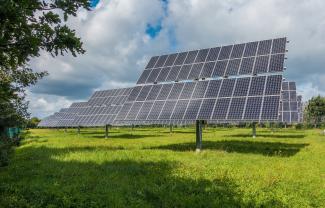
Solar voltaic system
Wednesday, June 2, 2021

Parts One and Two of this blog series covered the debate and regulatory framework regarding interstate electricity transmission. Part Three will conclude the series by identifying key challenges energy policymakers should expect to face regarding interstate transmission siting, and policy recommendations on how to mitigate them.