Microgrids, Distributed Energy, and Resilience
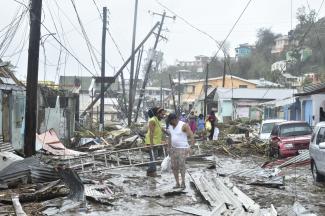
Destruction of the energy infrastructure on the island of Dominica, following Hu
Wednesday, January 31, 2018

Four months after Category 5 Hurricane Maria swept through Puerto Rico causing catastrophic damage, much of the island is still without power, food, and water. The storm knocked out power to almost all the commonwealth—homes, schools, hospitals, and other critical services and infrastructure were left without power. Even now, over one-third of the island is still without electricity, and many are left without access to food and running water.


Looking at Land Restoration as a Carbon Removal Solution
Restoration of forests is one promising approach to carbon dioxide removal.
Monday, January 29, 2018

With the Paris Climate Agreement’s goal to keep average global temperature from rising more than 2 degrees Celsius above pre-industrial levels, governments across the world are struggling to reduce carbon dioxide (CO2) emissions voluntarily and collectively. Some have described this challenge as a prisoner’s dilemma. Removing carbon from the atmosphere may be the key to escape.

Watson, Meet Eco
Could algorithms be used to automate environmental management? (Photo: Pixabay)
Wednesday, January 24, 2018

In a not-so-far-away future, environmental management will be done largely by algorithm. Here is how that could happen . . . .

In 2015, two graduates from Stanford business school, William Glass and Eden Kropski, founded a firm to produce and sell high-performance sportswear made entirely of synthetic fibers bioengineered from yeast microbes. The product was a runaway success and low-impact, but shipping it around the planet wasn’t.

Rethinking Reforestation: Degradation as a Carbon Source in Tropical Forests
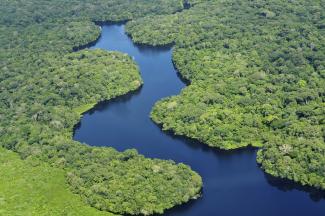
The Brazilian Amazon (Wikimedia Commons)
Monday, December 18, 2017

Tropical forest ecosystems are globally recognized for their carbon sequestration capacities. Past research has estimated that tropical forests on average sequester a net 1400 teragrams of carbon per year, the equivalent of taking approximately 1 billion passenger vehicles off the road. International governing bodies, national governments, and nonprofit organizations have attempted to capitalize on the carbon sequestration services provided by tropical forests in an increasingly carbon rich atmosphere. Programs such as REDD+ (Reducing Emissions from Deforestation and forest Degradation + enhancing forest carbon stocks) have resulted in significant expenditures of efforts and resources into developing frameworks for preserving tropical forests.

Carbon Capture and Sequestration: A Step Toward Deep Decarbonization?
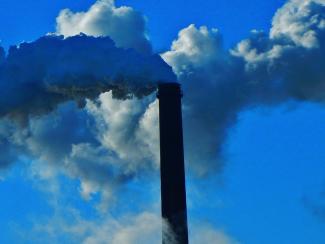
Coal power plant emissions (Pixabay).
Wednesday, December 6, 2017

Last month, Trump Administration officials attended the latest round of U.N. climate negotiations in Bonn, Germany, but they weren’t there to discuss reducing emissions. Rather, they touted the promises of nuclear energy, natural gas, “clean coal,” and carbon capture. This is not surprising, given the President’s views on climate policy and his decision to withdraw the United States from the Paris Agreement. But even had Trump decided otherwise, the current Agreement does not do enough to reduce the risk of catastrophic climate change.

This Ain’t Normal: Calculating the Social Costs of Carbon
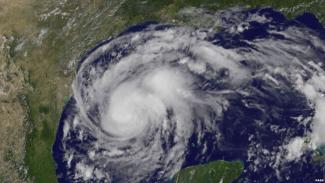
Hurricane Harvey, as viewed from space (Photo: NOAA).
Wednesday, October 18, 2017

While EPA under Administrator Scott Pruitt seeks to drastically reduce the social cost of carbon (SCC), insurers already know that 2017 delivered the most expensive Atlantic hurricane season ever for insurance companies. Beyond this year, since the 1980s, the annual average losses to insurers have risen, increasing over the last decade from $10 billion to about $50 billion. “Insurers are rightfully worried that, in the long term, climate change could devastate their industry,” reported the Los Angeles Times. While Texas, Florida, and Puerto Rico  flood, EPA recalculates, and insurance companies add up their costs.

Smart Tech, Dumb Design: Planned Obsolescence and Social Responsibility
Four Generations of iPhone (Photo: Yutaka Tsutano)
Wednesday, October 11, 2017

September 22 marked the beginning of fall, and for some, that means it’s officially apple-picking season. Coincidentally, this isn’t the only type of apple officially in season. September 22 also marked the release date of Apple’s iPhone 8. And it’s not too long until you have your pick of a new Apple product with the release of the iPhone X on November 3.

Oh, SNAP! D.C. Circuit Limits EPA’s Authority to Regulate HFCs
HFCs are powerful greenhouse gases (Photo: Wikimedia Commons).
Wednesday, September 13, 2017

On August 8, 2017, the D.C. Circuit held in Mexichem Fluor, Inc. v. EPA, No. 15-1328 (D.C. Cir. Aug. 8, 2017), that EPA overstepped its authority under the CAA when it banned the use of hydrofluorocarbons (HFCs) in products. HFCs were adopted as alternatives to ozone-depleting substances (ODSs) in the 1990s under the Montreal Protocol. Their adoption was encouraged through application of EPA's Significant New Alternatives Policy (SNAP) Program, which was created to help implement U.S.