Fossil Fuel Swap: New Study Shows ‘Overlooked’ Benefits of Switching From Coal to Gas
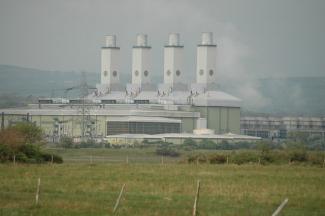
Deeside Power Station - a natural gas station in Wales, U.K. (Wikimedia Commons)
Monday, April 16, 2018

In 2016, the United Kingdom (U.K.) had an “unprecedented drop” in its carbon emissions, reducing emissions from production of electricity by 25%. The U.K. achieved this reduction by switching from coal to natural gas for electricity generation—leading to a carbon reduction equivalent to removing over 30% of Britain’s cars from the road. A recent report published in Nature Energy by researchers at two U.K. institutions, the University of Sheffield and Imperial College London, considers the “enabling conditions in Great Britain and the potential for rapid fuel switching in other coal-reliant countries.”

Aeroponics: A Sustainable Solution for Urban Agriculture
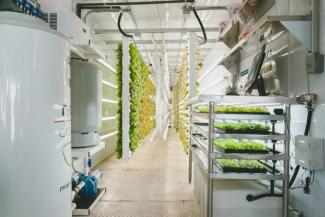
Vertical Roots aeroponics system (Photo: Vertical Roots).
Wednesday, April 4, 2018

Our cities are booming in both population and area. This uncontrolled land expansion, known as urban sprawl, results from several factors including transportation technology, income, consumer preference, and housing pressures. Unfortunately, urban sprawl can negatively impact the most vulnerable communities. The same factors that bring about sprawl also combine to produce “food deserts,” the lack of fresh quality food in an urban setting. For example, a 2014 John Hopkins University study showed that access to both healthy food and the number of supermarkets decreased in poor and minority communities when compared to their counterparts. Moreover, a 2016 Landscape and Urban Planning journal article shows that as low-wage jobs are generated in the areas of new urban growth, low-income communities in urban centers face increased difficulty finding entry-level jobs.

Urban agriculture has had moderate success addressing these challenges. In particular, one emerging method known as “aeroponics” may provide a more sustainable solution to expand access to local produce in the urban core while simultaneously providing stable employment opportunities for community members.

Conservative Conservation: Bipartisan Environmentalism in the Trump Era
Blue heron are among the species benefiting from bipartisan conservation efforts
Wednesday, March 21, 2018

“Anti-environmentalism is a mark of identity,” says Fred Rich, author of Getting to Green: Saving Nature: A Bipartisan Solution. “It is a mark of what it is to be a conservative.” With fossil fuel companies continuing to fund GOP politicians and a president who has called global warming a “hoax,” there are legitimate concerns that environmental issues will continue to polarize. The Republican 2016 Party platform described the United Nations’ Intergovernmental Panel on Climate Change as “a political mechanism,” rejecting the “agendas” of the Kyoto Protocol and Paris Agreement. In spite of this political climate, several politicians, from congressmen to state governors, and city mayors, are making bipartisan efforts to combat climate change. In doing so, they are not only showing that environmental sustainability and economic growth can go hand-in-hand, but that these measures receive support from voters across the political spectrum.

Measuring Up: Smart Meter Lessons From the United Kingdom
Smart meters can bring many benefits for both energy utilities and consumers (
Monday, February 12, 2018

Smart meters—small, electronic devices that track and record energy consumption and communicate information back to the electrical utility—can reduce energy use by empowering consumers with the ability to monitor energy use and make better choices. Smart meters are an upgrade to outdated analog meters because they automatically record information in real time instead of requiring someone to manually record and transmit the collected data.

Of Frogs and Men
Are frogs better than humans at responding to slow threats?
Wednesday, February 7, 2018

In An Inconvenient Truth, Al Gore famously used the example of a slowly boiled frog as a metaphor for climate change. That turns out not to be accurate, as biologists say the frog is smart enough to jump out of the pot long before it becomes frog soup. But the problem Gore described is real enough.

Public Health Consequences of Hurricane Harvey Continue to Unfold
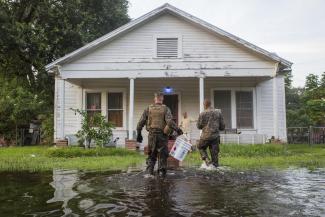
Hurricane Harvey poses health risks, even after floodwaters have subsided (DoD).
Monday, February 5, 2018

Just over five months have elapsed since Hurricane Harvey battered the Texas Coast, dropping more than 50 inches of rain on parts of the Houston area. The storm’s devastation was swift, killing 88 people and displacing many thousands. Yet, Harvey’s full impacts continue to unfold. Beyond imposing huge material losses, the storm has taken a significant toll on the health of those in its wake. It may be wise to understand storm events like Harvey not only as short-term physical disruptors, but as public health crises that will likely unfold over many years, long after media attention and political will to respond may have cooled.