
Going for Gold, and for Green: Olympics Offer Paris and Los Angeles the Chance to Showcase Environmental Leadership

Sustainability will be a key focus of the 2028 Olympic Games in Los Angeles (Pho
Wednesday, August 30, 2017

Paris and Los Angeles are set to host the 2024 and 2028 Olympic Games, respectively. Hosting the games will offer these cities the chance to showcase not only their countries’ finest athletes, but also their technological innovation and cultural vibrancy. However, preparing for the Olympics also presents massive infrastructural, economic, and environmental challenges.
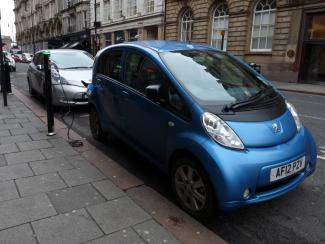

As Nations Shift Toward Low-Emission Vehicles, Roadblocks Remain
An electric car charges at a station in Newcastle, England (Photo: Wikimedia Com
Monday, August 21, 2017

As reported previously in the Environmental Law Reporter's Weekly Update, several countries have expressed their desire to move away from vehicles powered by diesel and gas in recent months. Most recently, the British government committed to ban the sale of diesel and gas vehicles from 2040 to curb rising levels of nitrogen oxide.

Why IBM Stands Firm in Supporting the Paris Climate Agreement
Paris at sunset
Thursday, June 1, 2017

IBM today is reaffirming its support for the Paris Climate Agreement and stating clearly how we will continue our decades-long work to lower greenhouse gas emissions. Our call for an international agreement on this issue is more than a decade old, and we first voiced our support for the Paris Agreement in 2015 when it was negotiated.

FOOD WASTE: Onsite Food Waste Pre-processing Systems: Is Recycling Really Happening?
By Taz [CC BY 2.0 (http:/creativecommons.org/licenses/by/2.0)], via Wikimedia C
Wednesday, May 24, 2017

Recycling food waste through composting and anaerobic digestion has the greatest potential by far to reduce the quantity of food waste going to landfills over the next 15 years relative to food waste reduction and reuse, according to ReFED. However, as more cities and states institute landfill food waste bans and other programs to promote recycling, the demand for centralized organic processing facilities is outpacing the supply. To address the gap, vendors are actively marketing to commercial customers new onsite pre-processing systems, including dehydrators, pulpers, and biodigesters. The systems can save money by reducing or eliminating off-site hauling of food waste and are well suited to facilities short on space and staff time. But the question arises: are the nutrients and energy in food waste really being recycled?  The answer depends upon the next stage of processing.

Trumping Environmental Protection
EPA and Donald Trump
Monday, May 22, 2017

The Trump Administration is clearly hungry for regulatory reform that reduces the cost and process burden of environmental regulation. Those who see a fundamental conflict between environmental protection and economic development welcome this development, as do those concerned that environmental requirements have become so extensive, detailed, and layered as to make compliance an elusive pursuit. Conversely, the shift raises concerns for those who see environmental protection and economic development as fully compatible goals and who fear environmental backsliding.  

TRADE AND ENVIRONMENT: Protecting the Environment in the Context of International Trade
Container Ship
Wednesday, May 17, 2017

Although making no specific commitments, the Trump Administration continues to propose the potential renegotiation of NAFTA. House Democrats, in a Resolution earlier this spring, and a group of 15 environment, labor, and human rights groups, in an Eight-Point Plan, have called for a renegotiation of NAFTA that ensures that regulations protecting the environment are maintained.

In an earlier blog post, I discussed how environmental protection provisions incorporated in trade agreements could help mitigate the adverse environmental impacts of (international) trade. This post explores the inverse topic: how the investment chapters in NAFTA (and other trade agreements) may affect environmental and social protections in parties’ domestic regulation.

Climate Change: An Inside Story
Yellow house
Wednesday, April 26, 2017

Communities throughout the United States are experiencing a variety of conditions associated with a changing climate—hotter summers and heat waves, droughts, intense storms and flooding, increased average precipitation and humidity, and more severe wildfires. Alongside potentially far-reaching environmental and economic impacts, these conditions have direct and indirect effects on human health. In recent years, scientists have begun to shed light on important climate-related health effects that occur indoors, where people spend the vast majority of their time.

Ocean Policy and the Trump Administration
The Great Wave, Hokusai
Monday, April 10, 2017

When it comes to the global commons, President Donald Trump has made his stance on climate change policy pretty clear. What will be his views on ocean policy? Certainly, given the impact of climate change on ocean acidification, last month’s Executive Order on energy independence was not good news for ocean health. But there are a multitude of marine and coastal issues that the Trump Administration will have to face.

The Environmental Forum Reports: News That’s Reused
A tree standing
Wednesday, March 29, 2017

Higher Power: “A Unitarian Universalist church is suing the town of Bedford, Massachusetts, for denying a request to install solar panels on its property,” reports the ThinkProgress website. The church is “arguing that authorities are infringing on the congregation’s right to express their religious belief in clean energy solutions.”

The church applied for a “certificate of appropriateness” that would allow it to install solar panels on its sanctuary, but the town’s Historic District Commission turned it down.