
Research Reports
ELI publishes Research Reports available for free download that present the analysis and conclusions of the policy studies ELI undertakes to improve environmental law and policy. These reports contribute to education of the profession and disseminate diverse points of view and opinions to stimulate a robust and creative exchange of ideas. Those publications, which express opinions of the authors and not necessarily those of the Institute, its Board of Directors, or funding organizations, exemplify ELI’s commitment to dialogue with all sectors.
March 2026
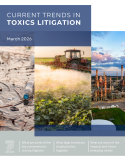
Toxics litigation is a rapidly evolving field, driven by scientific evidence, heightened public awareness, changing regulatory frameworks, and multiple, sometimes overlapping, theories of liability. Over the past several years, litigation strategies have broadened beyond traditional tort law to combine personal injury allegations, environmental contamination theories, consumer protection laws, public nuisance claims, and more, reshaping the legal landscape.
Read More >
September 2025
Local governments are involved with collecting and managing waste, permitting and regulating food service businesses, and addressing food insecurity among residents. Accordingly, food waste and surplus food generation data can help inform municipal food waste reduction efforts.
Read More >
September 2025
Adopting a compost procurement policy can benefit local suppliers, help develop new compost processing businesses, and reduce irrigation and fertilizer costs. The NRDC/ELI Model Resolution to Encourage Municipal Procurement and Use of Compost can be adopted by municipal legislative bodies as a first step toward purchasing finished compost products when appropriate for use in public projects such as landscaping, construction, and stormwater management—provided it is not cost-prohibitive to acquire.
Read More >
September 2025
Pay-As-You-Throw Programs (PAYT) programs establish a system in which households are charged based on the amount of trash they dispose of—and are charged at a higher rate for trash than for recyclables and compostables—rather than paying a flat fee for unlimited trash disposal.
Read More >