

Vibrant Environment
All | Biodiversity | Climate Change and Sustainability | Environmental Justice | Governance and Rule of Law | Land Use and Natural Resources | Oceans and Coasts | Pollution Control
On September 4-6, the Organization of American States (OAS), UN Environment, the Global Judicial Institute on the Environment (GJIE), the World Commission on Environmental Law (WCEL), the Supreme Court of Chile, and other partners convened the 2nd Inter-American Congress on the Environmental Rule of Law in Santiago, Chile.
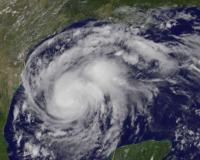
While EPA under Administrator Scott Pruitt seeks to drastically reduce the social cost of carbon (SCC), insurers already know that 2017 delivered the most expensive Atlantic hurricane season ever for insurance companies. Beyond this year, since the 1980s, the annual average losses to insurers have risen, increasing over the last decade from $10 billion to about $50 billion. “Insurers are rightfully worried that, in the long term, climate change could devastate their industry,” reported the Los Angeles Times. While Texas, Florida, and Puerto Rico flood, EPA recalculates, and insurance companies add up their costs.

By ELR Staff
The federal Endangered Species Act (ESA) enjoys considerable popular support and provides enormous ecological and other benefits beyond the protection of particular species. Yet the Act is not without its skeptics—longstanding calls to overhaul the Act have only gained traction in the 115th U.S. Congress and new Donald Trump Administration.

By Azi Akpan
September 22 marked the beginning of fall, and for some, that means it’s officially apple-picking season. Coincidentally, this isn’t the only type of apple officially in season. September 22 also marked the release date of Apple’s iPhone 8. And it’s not too long until you have your pick of a new Apple product with the release of the iPhone X on November 3.
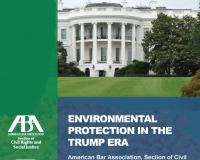
Here at ELI, we’ve seen a growing demand for unbiased answers and analysis on how deregulatory initiatives by the Administration and Congress will impact environmental protection, governance, and the rule of law. To that end, we recently collaborated with the American Bar Association’s Civil Rights and Social Justice Section to publish an ebook to aid understanding of the legal mechanisms that the White House, federal agencies, and Congress are using to change the regulatory approach to environmental, natural resources, and health and safety protections. The book attempts to answer these questions: What are the pathways and potential impacts of these ongoing regulatory changes? What are the opportunities for the public and other stakeholders to engage relative to these initiatives?

By Dave Rejeski
Since the beginning of the Industrial Revolution, coal-fired systems have been emitting a pollutant we did not even know existed . . . until now. In 2014, a team of scientists studying arsenic in the Dan River coal ash spill site in North Carolina discovered a new nano-scale version of titanium oxides that had never been seen before.* What they discovered were titanium suboxides, or so-called Magnéli phases, which were first synthesized in the 1930s. These substances are extremely rare in nature, seen only in rocks having an extraterrestrial origin (meteorites, lunar rocks, and interplanetary dust particles), and at one known point on the earth’s surface—rock formations on the central coast of western Greenland.
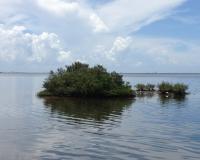
On August 30, the Gulf Coast Ecosystem Restoration Council (the “Council”) announced that it is seeking public comment on a proposal to “approve implementation funding for the Robinson Preserve Wetlands Restoration project” in Florida. If the proposal is approved, the Council will allocate $1,790,546 in RESTORE Act (Pot 2) funds to implement the project, including a “reallocat[ion of] $470,910 from planning [funds] to implementation.” According to the Council, the project will restore approximately 118 acres of habitat, including coastal upland, wetland, and open water habitat types, in the Tampa Bay Watershed.
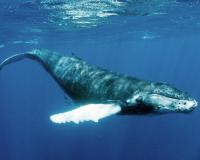
Humans are rapidly increasing their industrial use of the ocean and its resources, resulting in great increases in underwater noise. Commercial shipping, naval sonar, seismic exploration, pile driving, acoustic deterrents for fishing, and seabed mining all produce ocean noise.
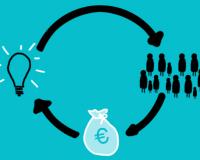
In 2008, as many financial instruments dissolved stranding their investors in seas of debt and spasms of panic, a new instrument appeared at the intersection of the crowd and the web: crowdfunding.

Tribes and Native villages are demonstrating reinvigorated environmental activism as they face increased pressures on natural resource use. Consequently, some of the most significant new developments in environmental law are occurring in Indian country. This month, ELI features a two-part webinar series on “Emerging Environmental Issues in Native Communities.”