

Vibrant Environment
Climate Change And Sustainability
All | Biodiversity | Climate Change and Sustainability | Environmental Justice | Governance and Rule of Law | Land Use and Natural Resources | Oceans and Coasts | Pollution Control
By Jarryd Page
In June, arguments wrapped up in a Montana trial that was both routine and historic—Held v. Montana. Routine, because plaintiffs are calling upon Montana 1st Judicial District Judge Kathy Seeley to determine whether certain provisions of Montana law violate their rights under the state constitution. That will involve statutory interpretation and constitutional law, as applied to the facts—standard fare for a state trial judge of general jurisdiction.

By Peter Lehner
What we grow and consume in America has a profound impact on our lives. It is also directly influenced by federal policy, and most importantly the Farm Bill, a collection of government programs that requires renewal every five years. This sprawling legislation governs initiatives from farm subsidies to low-income nutrition support. In our first blog in this three-part series, we explain the severe environmental and climate impacts of modern industrial agriculture.

By Kristine Perry
By formally recognizing the Right to a Clean, Healthy, and Sustainable Environment through two separate resolutions in 2022, the United Nations has set the stage for a more just and inclusive world. Big headlines like this often overlook all the background work necessary to make it happen. That’s what makes the 2023 UN Human Rights Prize incredibly exciting.

By Jordan Diamond
My youngest child adores the superhero Flash. He slips a felt mask over his eyes and has me run around after him, feigning exhaustion and the inability to keep pace with his three-year-old legs. He is enamored with the idea of superspeed.
After reading the latest report from the Intergovernmental Panel on Climate Change, released in late March, it seems we all must be. The IPCC found as a baseline that we are on track to exceed 2 degrees Celsius warming by the end of the century. How far we exceed it depends on what we do over the next two decades.
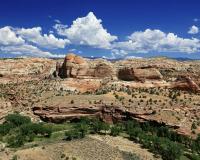
On April 3, 2023, the Department of Interior’s Bureau of Land Management (BLM) proposed regulations that would update how the agency approaches public land management “by prioritizing the health and resilience of ecosystems across those lands.” The updates are important, and have the potential for significant impact, because BLM manages nearly 10% of the United States, or almost 250 million acres.
By C. Scott Fulton
One of my roles as ELI’s International Envoy is serving on the Steering Committee of the new Climate Crisis Commission established by the International Union for the Conservation of Nature (IUCN). For those of you unfamiliar with the IUCN, it is a fairly unique international NGO with an extensive interdisciplinary and cross-sectoral membership base that includes governments, other NGOs, practitioners, academics, and the like.

By Jordan Diamond
Candidly, I gave up making New Year’s resolutions long ago. We all know about the January spike in gym memberships that falls off a cliff come March. On the other hand, I always look forward to spending time in December looking back and pondering priorities for the year to come. Here are a few of the things starting to circle in my mind.

By Tara Righetti
The Inflation Reduction Act’s (IRA’s) increase of the 45Q tax credit has created a bonanza around carbon removal.
By Aïcha Ghmouch
When a colleague asked me what exactly I meant by political ecology during a recent meeting, I was genuinely surprised.
By Akielly Hu
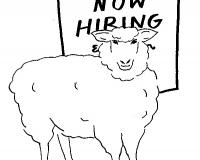
A longstanding problem for solar farms has a surprisingly cute solution. “Sheep are the solar industry’s lawn mowers of choice,” writes Amrith Ramkumar in the Wall Street Journal. Farmers maintaining thousands of acres of panels need to contend with tall grasses, which, unabated, can obstruct sunlight. Enter the star of nursery rhymes and an unexpected hero of renewables. Hard-working flocks are now generating millions of dollars in annual revenue by helping to chomp on pesky weeds.