FOOD WASTE: From The Ground Up: How Cities and States Can Be Leaders in Food Waste Reduction

Food scraps, Tim Jewett
Wednesday, December 14, 2016

In 2015, the U.S. Department of Agriculture and Environmental Protection Agency announced an ambitious goal of reducing food waste in the United States by 50% by 2030. While the change in presidential administrations presents new obstacles for many federal environmental initiatives, reducing food waste continues to offer fertile ground for cooperation.
Trump’s Proposed Environmental Agenda May Be Easier Said (or Tweeted) Than Done
US White House Logo
Monday, December 12, 2016

President-elect Donald Trump's environmental agenda to date has generally been focused on undoing certain specific Obama administration regulations, such as the Clean Power Plan (CPP) or the Waters of the United States (WOTUS) rule, and relaxing restrictions on domestic fossil fuel exploration and production.

Rhetoric or Reality: What Would Withdrawal From the Paris Agreement Require?
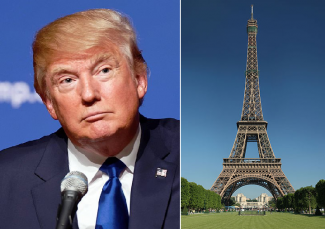
Donald Trump and the Eiffel Tower
Wednesday, November 30, 2016

The annual business meeting of the parties to the United Nations Framework Convention on Climate Change (UNFCCC), the 22d such Conference of the Parties (COP 22), just concluded in Marrakech, Morocco. At the top of the agenda was implementation of the Paris Agreement, which entered into force November 4, 2016, just days before the COP opened and the U.S. election. The latter apparently shifted the focus of hallway conversations as President-elect Donald Trump’s views on climate change and climate treaties were of great interest to participants and observers.

ELI’s Model Law Can Help Countries Implement Their Commitments Under the Paris Agreement
Signing the Paris Agreement
Wednesday, November 2, 2016

As the Paris Agreement enters into force today, it is important to recognize both the significance of this event and the substantial work now required to implement its provisions. While much attention has been given to its goal of limiting the rise in global temperature to “well below 2°C” relative to pre-industrial times, and to pursue efforts to limit warming to a 1.5°C increase, the real significance of the Paris Agreement is that at least 190 countries and the European Union have pledged to reduce their emissions of greenhouse gases (GHGs).

The Paris Agreement is a Miracle
Eiffel Tower
Wednesday, October 12, 2016

Something extraordinary happened last week: the Paris Agreement on climate change became a reality. Fifty-five percent of the world’s countries, and countries responsible for 55% of the world’s greenhouse gas emissions, ratified the accord. The agreement will go into effect on November 4th, far faster than many observers predicted.

Changing Maps, Changing Coastal Laws & Policies
Coastal flooding
Thursday, September 8, 2016

Imagine a map of sea-level rise in the year 2100. You know the ones—they show many of the world’s major coastal cities inundated by blue shading. With the sea predicted to rise one to two meters over that time, those maps are showing the consequences. Billions of people and trillions of dollars will be flooded out.

However, those maps only tell part of the story. Most of the world will not passively await the blue shading to come over them. Instead, local and national governments will adapt to sea-level rise. Through a suite of adaptation strategies, they will try to reduce impacts when possible and manage retreat when required.

Conversation About Climate and Courts
California
Thursday, July 21, 2016

While all eyes are on the challenge to EPA’s Clean Power Plan, currently being briefed in the D.C. Circuit, other forms of climate litigation are slowly gaining traction in courts around the country. In Oregon, where I live, a group of young plaintiffs have invoked the “atmospheric trust” theory in their attempt to compel the state government to regulate greenhouse gases; similar state-law actions are pending in Colorado, Massachusetts, Pennsylvania, and Washington. The Oregon youths have brought an even more ambitious suit against the entire federal government, alleging that its long history of climate change inaction amounts to a violation of their fundamental constitutional rights.

Thanks to Environmental Pioneers in the United States Who Set the Example for the Rest of the World
William Eichbaum, former Vice President World Wildlife Fund
Thursday, May 12, 2016

ELI was founded in 1969—a time when U.S. environmental law was in its infancy and needed a place for cultivation and growth (an imperative that is still incredibly relevant today given the interconnectedness and severity of conservation challenges across the globe). At that moment in time, individuals across the country looked around and saw rivers catching on fire, poor air quality making it hard for children to breathe, and unfettered toxic pollution.