

Vibrant Environment
Governance And Rule Of Law
All | Biodiversity | Climate Change and Sustainability | Environmental Justice | Governance and Rule of Law | Land Use and Natural Resources | Oceans and Coasts | Pollution Control
By Lynn L. Bergeson, By Lorentz Hansen
Many have argued that gender equality and women’s empowerment are essential to advancement in many areas of life, such as business, health, and education. This brief blog post posits that the field of sustainable development and environmental protection are no different. Gender equality and, more particularly, women’s empowerment, are critical to achieving sustainable development across the globe. It is not a one-size-fits-all proposition, and the gender differences and deeply rooted policies that perpetuate inequality differ from region to region.

Any self-respecting environmental lawyer knows, 2019 marks a major anniversary for environmental law: the Cuyahoga River fire of 1969. While we note the anniversary today, I doubt onlookers in Cleveland appreciated at the time that it would give rise to a five-decade era of environmental lawmaking.

By Kasantha Moodley , By George Wyeth
In ways that did not exist even ten years ago, everyday people are acting as scientists: contributing their time and data to make notable discoveries, answer lingering questions, and develop awareness. Motivated by technology innovations, public concern, and limited institutional capacity, citizen science is gently reshaping the conventional systems that address human health and environmental protection.
By C. Scott Fulton
“For everything there is a season,” says the old Pete Seeger song, quoting the much older still book of Ecclesiastes. It seems that we are currently in the season of walls. The physical manifestation of this particular period may be the issue of the wall on our southern border. But there are other walls, and some of them have law as their concrete or steel.

By ELR Staff
Climate policy has again risen to the top of the national agenda. Although the current Administration has taken actions such as withdrawing from the Paris Agreement or relaxing regulations on vehicle and power plant emissions, members of Congress are formulating progressive proposals to mitigate climate change, and states have taken ambitious steps to reduce carbon emissions. A carbon tax proposal has gained traction among conservative think-tanks and politicians, House Speaker Nancy Pelosi has formed a Select Committee on the Climate Crisis, and the Green New Deal has sparked a robust debate on pathways to a more sustainable future.

By Loyti Cheng, By Michael Comstock
PFAS is a catch-all term for the chemical compounds per- and polyfluoroalkyls (including PFOA, PFOS, and replacements such as GenX). Seemingly overnight, these substances have gone from something talked about mainly by environmental lawyers and advocates to something that the public is increasingly focused on. The reasons for this shift include EPA’s and the states’ move to regulate these substances, recent lawsuits targeting PFAS manufacturers, and a better understanding of the way these substances may persist in the environment and harm human health. Because the future costs and obligations regarding the cleanup of, and human exposure to, PFAS are uncertain and likely significant, they present a challenge for environmental attorneys and their clients when performing deal diligence and negotiating contracts.

By C. Scott Fulton
I write this column on a plane returning from Beijing and an ELI convening called the China International Business Dialogue on Environmental Governance (CIBDEG). This is an innovative project brought to ELI by Leadership Council member Paul Davies of Latham’s London office. The heart of the idea is for ELI and a Chinese partner entity (the Policy Research Center on Environment and Economy (PRCEE)) to broker a conversation between Chinese regulators and multinational companies that are either trying to make a go of it in China or deeply reliant on supply chains that originate in China. This is a project in which I am personally involved, mainly because of my relationships with Chinese regulators from my days doing international work at EPA.
By Cynthia R. Harris
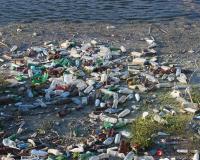
The world is waking up to the growing problem of plastic waste contaminating our ocean and terrestrial environments. Local governments—lauded as laboratories of innovation—have begun enacting bans and fees on single-use plastics, reducing the amount entering the waste stream in the first place. Businesses are stepping up; national and multinational governance bodies are adopting laws cutting down on the manufacture and distribution of single-use plastics. In the United States, California, the District of Columbia, Hawaii, and Maine have initiated statewide restrictions, while Oregon and Washington are considering similar measures.

By Amy L. Edwards
When I was a child, my father would repeatedly remind me (and my siblings) to “turn off the lights—money doesn’t grow on trees”. Was it because he was concerned about the environment? No, not really—it was because we were relatively poor. But I am pretty good now about remembering to turn off the lights (and I get pretty annoyed when others don’t—especially when the lights are “supposed” to go off automatically but don’t).
Now, as the current chair of the ABA Section of Environment, Energy and Resources (SEER), I have the ability and privilege to oversee many exciting initiatives.
By Taylor Lilley, By Avital Li, By Jessica Foster
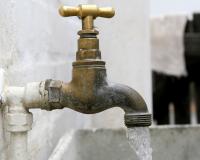
Lack of access to safe wastewater management infrastructure and improved sanitation is a global challenge that affects over 2 billion people worldwide. While large-scale wastewater treatment plants are common throughout the world, off-grid communities that exist outside of areas covered by centralized water infrastructure are often geographically isolated or economically marginalized, making these services not only unaffordable but inaccessible. In the absence of these networks, many communities have chosen to adapt. Although it is typically considered to be unlawful or illegitimate by their national governments, communities have begun to build decentralized systems to treat and reuse wastewater for agricultural purposes.