
Vibrant Environment
All | Biodiversity | Climate Change and Sustainability | Environmental Justice | Governance and Rule of Law | Land Use and Natural Resources | Oceans and Coasts | Pollution Control
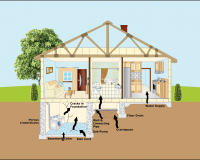
January is National Radon Action Month, a good time for policymakers to consider what action they can take to address one of the most important—and preventable—indoor health risks facing their constituents. Radon is responsible for around 21,000 lung cancer deaths in the United States each year. That makes it the second leading cause of lung cancer overall and the leading cause among non-smokers, according to EPA.

Flushable wipes have proven to not be so flushable and are wreaking havoc on some of the world’s major cities. Municipalities like New York City, spend millions of dollars to remedy clogging issues the wipes cause. New York City officials said in 2015 that "wipe-related equipment problems," have cost the city more than $18 million since 2010.
By ELR Staff
Federal public lands account for 47% of the American West, and more than 90% of all federal land is found in the 11 westernmost states and Alaska. Between them, the U.S. Forest Service and Bureau of Land Management administer about 34% of the western landscape, including almost 85% of Nevada; more than 50% of Idaho, Oregon, and Utah; and more than 40% of the land in four other western states. The appropriate use, management, and ownership of these lands have been the subject of heated debate since they were first established, and the debate has anything but waned since President Trump took office.

At James W. Rubin’s memorial service on November 4, 2017, a vast network of friends and colleagues remembered him for his brilliant mind, relentless spirit, infectious sense of humor, and unwavering dedication to his family. The four of us consider ourselves fortunate to have worked closely with Jim at the U.S. Department of Justice in the Environment and Natural Resources Division (ENRD) and to be his friends.
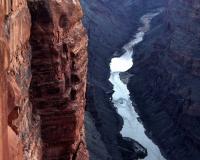
Following President Trump’s announcement that he was reducing the size of the Bears Ears and Grand Staircase-Escalante National Monuments, there have been questions as to the extent of the executive branch’s power to manage federal lands. The announcement has put the Antiquities Act, which grants the president the authority to protect federal lands, under a microscope. Recently, two cases concerning the U.S.

Tropical forest ecosystems are globally recognized for their carbon sequestration capacities. Past research has estimated that tropical forests on average sequester a net 1400 teragrams of carbon per year, the equivalent of taking approximately 1 billion passenger vehicles off the road. International governing bodies, national governments, and nonprofit organizations have attempted to capitalize on the carbon sequestration services provided by tropical forests in an increasingly carbon rich atmosphere. Programs such as REDD+ (Reducing Emissions from Deforestation and forest Degradation + enhancing forest carbon stocks) have resulted in significant expenditures of efforts and resources into developing frameworks for preserving tropical forests.

The 1906 Antiquities Act grants presidents the authority to protect historic landmarks, historic and prehistoric structures, and other objects of historic or scientific interest. Yet, last April, more than a century after the passage of the Antiquities Act and more than 50 years since the last alteration of national monument boundaries, President Donald Trump issued an Executive Order instructing Secretary of the Interior Ryan Zinke to undertake a broad review of national monuments created since 1996 under the Antiquities Act and that span at least 100,000 acres. On December 4, 2017, acting on Secretary Zinke’s recommendations, President Trump issued two proclamations significantly reducing the acreage and perimeters of Grand Staircase-Escalante and Bears Ears National Monuments.

December 10, 2018, will mark the 70th anniversary of the U.N. General Assembly’s adoption of the Universal Declaration of Human Rights in 1948. The Declaration outlines inalienable rights entitled to every human being, regardless of race, ethnicity, religion, sex, language, political or other affiliation, social or national origin, birth, or other status.

By ELR Staff
Last month, Trump Administration officials attended the latest round of U.N. climate negotiations in Bonn, Germany, but they weren’t there to discuss reducing emissions. Rather, they touted the promises of nuclear energy, natural gas, “clean coal,” and carbon capture. This is not surprising, given the President’s views on climate policy and his decision to withdraw the United States from the Paris Agreement. But even had Trump decided otherwise, the current Agreement does not do enough to reduce the risk of catastrophic climate change.
By ELI Ocean Program Staff
November has been a busy month for Gulf restoration.