
Vibrant Environment
Ocean Talk
All | Biodiversity | Climate Change and Sustainability | Environmental Justice | Governance and Rule of Law | Land Use and Natural Resources | Oceans and Coasts | Pollution Control
By Teresa Chan
Note: This blog was cross-posted from ELI's Gulf-specific website, where you can find information on everything you need to know about Gulf restoration.
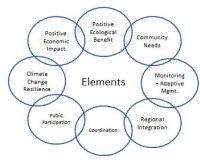
In June, the ELI Gulf Team released a survey on priorities for Gulf restoration in the wake of the Deepwater Horizon oil spill. It was designed to understand what elements our partners and collaborators think are most important to good restoration projects. We started with a list of eight project elements:
By David Roche
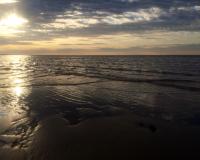
Climate change and sea-level rise are reshaping the coastline along the Gulf of Mexico. Land is being lost at an alarming rate, especially in Louisiana, where subsidence is compounding the effects of sea-level rise. Across the Gulf Coast, communities are increasingly vulnerable as the seas rise, land subsides, saltwater intrudes, and marshes retreat. In the face of such monumental change, it is essential for communities to plan and adapt.
By Xiao Recio-Blanco
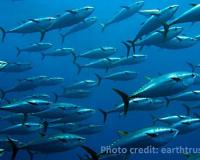
The 2016 Resumed Review Conference relating to the Conservation and Management of Straddling Fish Stocks and Highly Migratory Fish Stocks (UNFSA) took place at U.N. Headquarters in Manhattan from May 23-27, 2016. The outcome document serves as an example of the challenges and limitations of international ocean governance.
In the years since the 2010 Resumed Review Conference, there has been positive news in the field of international conservation of the marine environment. Chile, Palau, and the United States have created new Marine Protected Areas (MPAs) in their Exclusive Economic Zones. In early 2015, representatives of 104 nations began drafting a legally enforceable international treaty, which is still under negotiation, for the protection of biodiverse areas beyond national jurisdiction (ABNJ). The treaty would limit unregulated activities on the High Seas and lead to the creation of a global MPA network.
By Teresa Chan
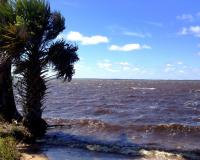
Earlier this month, the Deepwater Horizon trustees quietly released their Standard Operating Procedures (SOPs), which set out how the natural resource restoration monies totaling up to $8.8 billion will be “manage[d], implement[ed], and administ[ered]” over the long term. The SOPs therefore provide important details about how the restoration program will operate moving forward. The trustees approved these procedures on May 4, 2016.
By ELI Ocean Program Staff
As we prepare to mark six years since the start of the Deepwater Horizon disaster, another important milestone has been reached in Gulf restoration: the court has now entered the consent decree among the federal government, five Gulf states, and BP. This puts to an end years of speculation and disputes regarding how much BP will pay in civil penalties and natural resource damages.
Some of the more significant facts and figures about the consent decree are summarized below:
Now that the proposed consent decree among the United States, five Gulf states, and BP has been released, there is greater certainty about the amount of funding that will flow to the Gulf for restoration and recovery efforts.
By ELI Ocean Program Staff
On October 5, 2015, a historic milestone was reached in Gulf restoration: the terms to settle the United States’ and five Gulf states’ remaining claims against BP were announced. Along with separate agreements with local government entities, these settlements total $20.8 billion. This amount includes:

By ELI Ocean Program Staff
On August 13, 2015, another important milestone in Gulf restoration was reached: the Gulf Coast Ecosystem Restoration Council released its draft Initial Funded Priorities List (“Draft FPL”). The Draft FPL proposes approximately $139.6 million worth of projects and programs, which will be funded with monies from the Transocean settlement, about $240 million of which were allocated to the Council (note that the much larger settlement with BP is not yet final, so the Council has yet to receive any of that funding).
By ELI Ocean Program Staff
On July 2, 2015, a monumental announcement was made: an agreement in principle has been reached to settle all federal and state claims against BP arising from the Deepwater Horizon oil spill for $18.732 billion (see BP’s press release here). This amount includes:
