
Vibrant Environment
Ocean Talk
All | Biodiversity | Climate Change and Sustainability | Environmental Justice | Governance and Rule of Law | Land Use and Natural Resources | Oceans and Coasts | Pollution Control
By Taylor Lilley
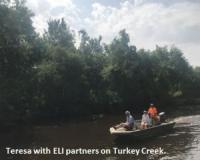
On November 12th, I traveled to Mississippi for a week with fellow ELI Gulf Team members Amy Streitwieser and Sofia Yazykova. We went to attend the 2018 Mississippi Restoration Summit, hosted by the Mississippi Department of Environmental Quality (MDEQ), but also planned to use the trip as a “listening tour,” meeting with representatives of local governments and historically marginalized communities to learn more about their environmental priorities.
By Amy Reed
Last month, fellow ELI Gulf Team member Teresa Chan and I travelled to Mississippi to attend two public events hosted by the Deepwater Horizon natural resource damage assessment (NRDA) trustees: a community education workshop in Gulfport, and the Trustee Council’s annual public meeting in Long Beach.

By Azi Akpan
This conversation with Danny Le, BPSOS, is part of the ELI Gulf of Mexico team’s “Why I Participate in Gulf Restoration” blog series. The series aims to highlight the views of community members impacted by the BP oil spill, and provide a glimpse of some challenges and successes they face in getting involved in the restoration processes.

By Azi Akpan
Historically, the Gulf Coast region has produced more seafood than anywhere else in the continental U.S., both in volume and dollar value. Before the BP oil spill, in 2009, the Gulf seafood industry provided over 213,000 full- and part-time jobs. The oil spill has had a devastating impact on people working in the Gulf’s seafood industry. As a result of the BP oil spill, over 88,000 square miles of the Gulf’s federal waters—nearly 37%—were closed to fishing. There were also fishing closures in the state waters of Alabama (40% closed), Florida (2% closed), Louisiana (55% closed), and Mississippi (95% closed). Fishermen are still facing financial instability years after the spill, and have observed significant declines in landings and stock quality. Here, we highlight one Gulf fisherman’s perspective.
By ELI Ocean Program Staff
November has been a busy month for Gulf restoration.
By Amy Reed, By Teresa Chan, By Xiao Recio-Blanco
On August 30, the Gulf Coast Ecosystem Restoration Council (the “Council”) announced that it is seeking public comment on a proposal to “approve implementation funding for the Robinson Preserve Wetlands Restoration project” in Florida. If the proposal is approved, the Council will allocate $1,790,546 in RESTORE Act (Pot 2) funds to implement the project, including a “reallocat[ion of] $470,910 from planning [funds] to implementation.” According to the Council, the project will restore approximately 118 acres of habitat, including coastal upland, wetland, and open water habitat types, in the Tampa Bay Watershed.
By Amy Reed
In mid-July, I traveled to Louisiana with fellow ELI Gulf Team member Teresa Chan to host three workshops with the Restore the Mississippi River Delta coalition. Held in three different parishes, these workshops were intended to help the community meaningfully participate in the “scoping” process for the Mid-Barataria Sediment Diversion by providing some background on the project, explaining what scoping is, and discussing how the public can participate. Nearly 60 people attended the workshops, where there were lots of lively discussions!
Charting the Course: A Survey on Public Engagement in the Natural Resource Damage Assessment Process
By Teresa Chan, By Amy Reed
Public participation and engagement are easy values to talk about generally, but are difficult to implement meaningfully. In Gulf restoration, the natural resource damage assessment (NRDA) process provides the federal government, states, and the public with an unprecedented opportunity to pursue the difficult actions that put these values into practice.
By Xiao Recio-Blanco
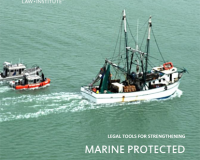
At the 2016 Our Ocean Conference, nearly 20 countries announced the creation of new Marine Protected Areas (MPAs) or the expansion of existing ones. This is an important step in the right direction, but creating new MPAs will not make a significant difference if new and old MPAs are not effectively enforced. Through the release of its report, Legal Tools for Strengthening Marine Protected Area Enforcement: A Handbook for Developing Nations, the Environmental Law Institute’s (ELI’s) Ocean Program is playing its part to assist countries in ensuring that MPAs are effectively implemented and enforced, delivering positive conservation outcomes.
By David Roche
On August 23, 2016, the Gulf Coast Ecosystem Restoration Council (Council) released its draft Comprehensive Plan Update. This plan “is intended to provide strategic guidance” to the Council in order to “improve Council decisions…” No projects or programs are proposed in the plan. The public has until October 7, 2016 to comment on the plan. If the plan is approved, it will “supersede[] the Initial Plan approved by the Council in August 2013.”
This post highlights some of the key features of the plan, including where it fits into Gulf restoration, what’s in the plan, and what questions remain.