
Vibrant Environment
All
All | Biodiversity | Climate Change and Sustainability | Environmental Justice | Governance and Rule of Law | Land Use and Natural Resources | Oceans and Coasts | Pollution Control
By Miriam Aczel
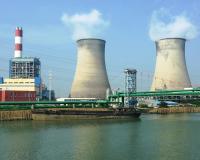
Recent strategies and policies to phase out coal in China have led to an increase in demand for natural gas. In October 2017, China’s Ministry of Environmental Protection unveiled plans to cut harmful air pollution, especially the particularly damaging fine particulate matter known as PM2.5. The plan, or “Coal Ban,” has set strict targets on air quality levels in addition to a ban on burning coal in 28 of its northern cities, including Beijing. However, while the air quality improved significantly in Beijing this past winter, the rapid ban on coal burning and the transition to natural gas has left thousands without heat.
By Azi Akpan
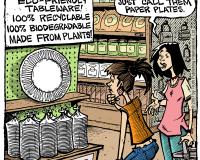
Businesses historically have had a complicated relationship with the natural environment. The Industrial Revolution, marked by the boom of economic development and birth of modern business, emerged at the expense of natural resources and public health. Historical and current business activities continue to contribute to some of our most pressing global challenges, including climate change, resource scarcity, and social inequality. Concepts such as corporate social responsibility and environmental social governance attempt to establish a new relationship between business, the environment, and communities. These principles aspire to synergize business prosperity, sustainability, and social equity.
By Azi Akpan
Businesses historically have had a complicated relationship with the natural environment. The Industrial Revolution, marked by the boom of economic development and birth of modern business, emerged at the expense of natural resources and public health. Historical and current business activities continue to contribute to some of our most pressing global challenges, including climate change, resource scarcity, and social inequality. Concepts such as corporate social responsibility and environmental social governance attempt to establish a new relationship between business, the environment, and communities. These principles aspire to synergize business prosperity, sustainability, and social equity.
By Nina Pusic
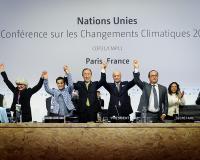
Uneasy tensions rest at the crossroads between democratic theory and contemporary climate change mitigation policy. The connection between human activity and the pending climate consequences caused by lack of emissions mitigation is clear. For decades, we’ve known that climate change is both anthropogenic and will cause considerable harm to the global public good, including increased intensity of natural disasters, food insecurity, drought, and sea-level rise.
By Nina Pusic
Uneasy tensions rest at the crossroads between democratic theory and contemporary climate change mitigation policy. The connection between human activity and the pending climate consequences caused by lack of emissions mitigation is clear. For decades, we’ve known that climate change is both anthropogenic and will cause considerable harm to the global public good, including increased intensity of natural disasters, food insecurity, drought, and sea-level rise.

By Brian W. Boose, CEP, By Brian P. Kennedy, AICP
On May 10, 2018, the Environmental Law Institute (ELI) and the law firm Arnold and Porter hosted a day-long conference in Washington, D.C., entitled Infrastructure Review and Permitting: Is Change in the Wind? Alex Hergott, Associate Director for Infrastructure for the White House Council on Environmental Quality (CEQ), provided the afternoon keynote. He asked the distinguished audience whether any of us thought that the NEPA process, and specifically the environmental impact statement (EIS) process, couldn’t be delivered faster, at lower cost, and with fewer pages of documentation, without forsaking environmental protections. He went on to provide many good points and examples in support of answering his own question.

By Ian Hardman, By Carol Adaire Jones
With the U.S. Senate voting on July 31 to join the House of Representatives in conference on their respective Farm Bills, the two houses face major challenges to resolve the wide gaps in many elements. Reauthorized every 5 years or so, the Farm Bill is a comprehensive piece of legislation that affects all facets of the American food supply.
By Ian Hardman, By Carol Adaire Jones
With the U.S. Senate voting on July 31 to join the House of Representatives in conference on their respective Farm Bills, the two houses face major challenges to resolve the wide gaps in many elements. Reauthorized every 5 years or so, the Farm Bill is a comprehensive piece of legislation that affects all facets of the American food supply.
By Avital Li
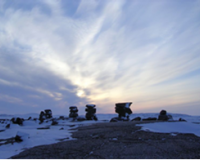
As pristine landscapes become a relic of the past, the icy tundras and taigas of the Arctic polar regions are becoming prized destinations for high-end adventure travelers who want to see the region before it’s gone forever. The perverse consequence of this kind of “last-chance” tourism in the Arctic is that, done carelessly, it will almost certainly accelerate the destruction and damage of the precise attractions that it so fetishizes, people and landscapes included.
By Avital Li
As pristine landscapes become a relic of the past, the icy tundras and taigas of the Arctic polar regions are becoming prized destinations for high-end adventure travelers who want to see the region before it’s gone forever. The perverse consequence of this kind of “last-chance” tourism in the Arctic is that, done carelessly, it will almost certainly accelerate the destruction and damage of the precise attractions that it so fetishizes, people and landscapes included.