
Vibrant Environment
All
All | Biodiversity | Climate Change and Sustainability | Environmental Justice | Governance and Rule of Law | Land Use and Natural Resources | Oceans and Coasts | Pollution Control
By Caroline McHugh
Picture the American West.
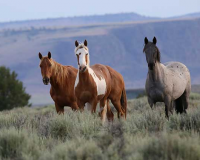
What do you see? Does a herd of wild mustangs galloping across a sagebrush expanse come to mind? For many, romantic images of the western landscape celebrated in popular culture symbolize American ideals of rugged individualism and freedom. Although first introduced to North America by European colonists, wild horses came to represent those important American themes in our images of the West. Now, the iconic symbols pose a threat to western ecosystems.
By Caroline McHugh
Picture the American West.
What do you see? Does a herd of wild mustangs galloping across a sagebrush expanse come to mind? For many, romantic images of the western landscape celebrated in popular culture symbolize American ideals of rugged individualism and freedom. Although first introduced to North America by European colonists, wild horses came to represent those important American themes in our images of the West. Now, the iconic symbols pose a threat to western ecosystems.
By Caroline McHugh
Picture the American West.
What do you see? Does a herd of wild mustangs galloping across a sagebrush expanse come to mind? For many, romantic images of the western landscape celebrated in popular culture symbolize American ideals of rugged individualism and freedom. Although first introduced to North America by European colonists, wild horses came to represent those important American themes in our images of the West. Now, the iconic symbols pose a threat to western ecosystems.

By ELR Staff
The retirement of Justice Anthony Kennedy this past July is arguably a pivotal point for U.S. Supreme Court decisions on environmental law. Justice Kennedy was a crucial swing vote on a variety of environmental issues still relevant today, particularly cases involving regulation of greenhouse gas emissions and the reach of the Clean Water Act. His vote in the 5-4 decision in Massachusetts v. EPA upheld EPA’s power to limit greenhouse gas emissions. In Rapanos v. United States, Justice Kennedy’s controlling opinion held that a wetland falls within the scope of the Clean Water Act’s jurisdiction if it bears a “significant nexus” to a traditional navigable waterway.
By Lovinia Reynolds
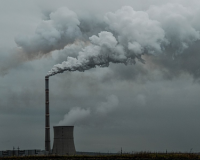
Over 30 years ago, Toxic Wastes and Race in the United States confirmed that race was the primary factor in determining the location of siting toxic wastes. Published by the United Church of Christ, the report’s release set in motion a movement addressing environmental health and social justice now known as environmental justice (EJ). In the decades to follow, EJ became institutionalized in our government agencies with the formation of the Environmental Equity Working Group at EPA in 1990 and Executive Order No. 12898 signed in 1994. Outside of government, the report catalyzed the formation of grassroots groups to address issues of environment health in their communities. The EJ movement also reorients the mainstream definition of environment. It frames the environment as not simply the woods, mountains, and ocean, but as our neighborhoods, our workplaces, and our homes.
By Lovinia Reynolds
Over 30 years ago, Toxic Wastes and Race in the United States confirmed that race was the primary factor in determining the location of siting toxic wastes. Published by the United Church of Christ, the report’s release set in motion a movement addressing environmental health and social justice now known as environmental justice (EJ). In the decades to follow, EJ became institutionalized in our government agencies with the formation of the Environmental Equity Working Group at EPA in 1990 and Executive Order No. 12898 signed in 1994. Outside of government, the report catalyzed the formation of grassroots groups to address issues of environment health in their communities. The EJ movement also reorients the mainstream definition of environment. It frames the environment as not simply the woods, mountains, and ocean, but as our neighborhoods, our workplaces, and our homes.
By Sam Koenig
What would you do if your job was to manage a small coastal community besieged by job loss, irate voters, hurricanes, oil spills, and hipsters? Here’s a way to find out: boot up your laptop or tablet and check out ELI’s new “serious game,” Digital Cards Against Calamity.
In the wake of Hurricanes Maria, Irma, Harvey, and Florence, which have resulted in an estimated total of over 3,200 deaths and more than $375 billion in damage, finding ways to increase a community’s “resilience IQ” should be a national priority.
By Sam Koenig
What would you do if your job was to manage a small coastal community besieged by job loss, irate voters, hurricanes, oil spills, and hipsters? Here’s a way to find out: boot up your laptop or tablet and check out ELI’s new “serious game,” Digital Cards Against Calamity.
In the wake of Hurricanes Maria, Irma, Harvey, and Florence, which have resulted in an estimated total of over 3,200 deaths and more than $375 billion in damage, finding ways to increase a community’s “resilience IQ” should be a national priority.

By C. Scott Fulton
These past months have been turbulent times for my old agency, EPA. Shortly before this writing, Scott Pruitt resigned in a cloud of allegations about ethical and judgment lapses, proving once again that, in Washington, D.C., process fouls are often more undoing than policy choices. And, of course, if your policy choices are provocative, all the greater the need to, as my mother would say, “Keep your nose clean,” as the sharp knives will no doubt be out, ready to slice and dice if the opportunity is presented.
By Hannah Dale
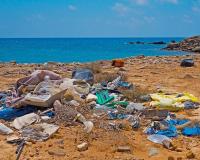
It is hard to ignore the pervasiveness of waste in our daily lives and around the world. Whether it is mounds of garbage piling onto beaches in the Dominican Republic, the enormous amounts of plastic that marine animals accidentally consume, pollution from industries and transportation in our air and water, or daily individual waste, we cannot look past the impacts of generating unnecessary waste.