

Vibrant Environment
All
All | Biodiversity | Climate Change and Sustainability | Environmental Justice | Governance and Rule of Law | Land Use and Natural Resources | Oceans and Coasts | Pollution Control
By Hannah Dale
California is often considered a leader in environmental issues and has made strides to become a more environmentally conscious state. Through state and local policies, the state has banned certain plastic products, such as bags and straws, and in 2011 it implemented a Low Carbon Fuel Standard (LCFS) program to curb greenhouse gas pollution. The California Air Resources Board (CARB) implemented this cap-and-trade program to ensure that automakers gradually increase gas mileage on their vehicles and reduce carbon intensity 10 percent by 2020. The state has even sought to extend the LCFS program, with a new goal of 20 percent reduction by 2030. These standards are stricter than the nationwide fuel standards, and while the initiative has received some legal pushback from the agricultural and ethanol industries, even companies in the transportation sector have become accustomed to California’s standards.
California has enjoyed the ability to tackle its own carbon pollution for several years. Now, however, their fuel standards are in danger.

By Laura Goldman
The Environmental Law Institute’s 2018 Award Dinner was a star-studded event. Nearly 750 environmental leaders from across multiple sectors—one of the highest attendances in ELI Dinner history—arrived at the Omni Shoreham Hotel in Washington, D.C., to hear remarks from this year’s distinguished honoree, Lisa Jackson, Vice President of Apple’s Environment, Policy, and Social Initiatives and former U.S. EPA Administrator.

By Sofia O'Connor
As the effects of climate change become more prominent, countries in various parts of the world begin to consider ways to incorporate climate change adaptation into their legal frameworks. Unlike provisions related to climate change mitigation, which usually set requirements for greenhouse gas emissions, statutory provisions addressing climate change adaptation can be wide-ranging and intricate.
By Sofia O'Connor
As the effects of climate change become more prominent, countries in various parts of the world begin to consider ways to incorporate climate change adaptation into their legal frameworks. Unlike provisions related to climate change mitigation, which usually set requirements for greenhouse gas emissions, statutory provisions addressing climate change adaptation can be wide-ranging and intricate.

By Hannah Dale
In the Alaskan Arctic, Inupiat hunt bearded seals for food and blubber—a tradition spanning generations, and based on hunters’ extensive knowledge of the weather, ice, seal habitats, and how to prepare and pay respects to the animal after killing it. But over the past few generations, their ability to harvest seals has been significantly affected with the warming oceans, melting ice, and changing patterns of marine animals in the Bering Sea. Last spring, hunters in Unalakleet, Alaska, could not participate in the harvest because there was little ice cover. Since seals use ice pans as a place to rest above water, reduced ice cover impedes hunters’ ability to find and hunt the animals. Inupiat worry about what these environmental changes will mean for future generations.
By Hannah Dale
In the Alaskan Arctic, Inupiat hunt bearded seals for food and blubber—a tradition spanning generations, and based on hunters’ extensive knowledge of the weather, ice, seal habitats, and how to prepare and pay respects to the animal after killing it. But over the past few generations, their ability to harvest seals has been significantly affected with the warming oceans, melting ice, and changing patterns of marine animals in the Bering Sea. Last spring, hunters in Unalakleet, Alaska, could not participate in the harvest because there was little ice cover. Since seals use ice pans as a place to rest above water, reduced ice cover impedes hunters’ ability to find and hunt the animals. Inupiat worry about what these environmental changes will mean for future generations.
By Hannah Dale
In the Alaskan Arctic, Inupiat hunt bearded seals for food and blubber—a tradition spanning generations, and based on hunters’ extensive knowledge of the weather, ice, seal habitats, and how to prepare and pay respects to the animal after killing it. But over the past few generations, their ability to harvest seals has been significantly affected with the warming oceans, melting ice, and changing patterns of marine animals in the Bering Sea. Last spring, hunters in Unalakleet, Alaska, could not participate in the harvest because there was little ice cover. Since seals use ice pans as a place to rest above water, reduced ice cover impedes hunters’ ability to find and hunt the animals. Inupiat worry about what these environmental changes will mean for future generations.

By Hannah Dale
The Endangered Species Act (ESA) and the Convention on International Trade in Endangered Species of Wild Flora and Fauna (CITES) are seminal pieces of legislation that have governed species conservation in the United States for over 40 years. The ESA dictates a regulatory framework for identifying and protecting threatened species and provides funding and incentives to states to reach this goal. CITES is an international agreement signed by 183 nations that seeks to regulate and restrict the international trade of endangered wildlife. The adoption of this agreement gives party states some authority over species conservation in other parts of the world. The ESA acknowledges and works to cooperate with international species conservation policies like CITES, and it even includes provisions for executing CITES policies. Together, CITES and the ESA operate at state, national, and international scales, making use of agency, intergovernmental, and nonprofit partnerships to work toward species conservation.
By Hannah Dale
The Endangered Species Act (ESA) and the Convention on International Trade in Endangered Species of Wild Flora and Fauna (CITES) are seminal pieces of legislation that have governed species conservation in the United States for over 40 years. The ESA dictates a regulatory framework for identifying and protecting threatened species and provides funding and incentives to states to reach this goal. CITES is an international agreement signed by 183 nations that seeks to regulate and restrict the international trade of endangered wildlife. The adoption of this agreement gives party states some authority over species conservation in other parts of the world. The ESA acknowledges and works to cooperate with international species conservation policies like CITES, and it even includes provisions for executing CITES policies. Together, CITES and the ESA operate at state, national, and international scales, making use of agency, intergovernmental, and nonprofit partnerships to work toward species conservation.
By Ryan Belyea
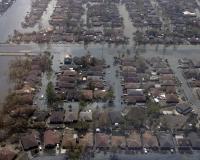
The usefulness of Unmanned Aerial Systems (UAS) and Unmanned Aerial Vehicles (UAV) as an emergency response tool has received abundant public attention through intense media coverage of recent hurricane impacts and their aftermath. The dramatic imagery captured by UAS in the wake of Hurricanes Florence and Michael exemplifies how effective these devices are in capturing images and information from hard-to-reach or dangerous areas that are inaccessible to ground personnel. These situations make it important to understand the rules and regulations for operating a UAS, especially in the aftermath of a natural disaster. Unauthorized use of UAS in these areas may hinder search and recovery efforts and should be avoided in these areas. Operating a safe UAS program offers the benefit of instant visualization and mapping to a wide variety of response efforts.