
Vibrant Environment
All
All | Biodiversity | Climate Change and Sustainability | Environmental Justice | Governance and Rule of Law | Land Use and Natural Resources | Oceans and Coasts | Pollution Control
By Hannah Dale
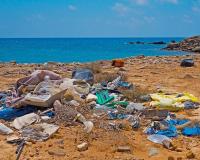
It is hard to ignore the pervasiveness of waste in our daily lives and around the world. Whether it is mounds of garbage piling onto beaches in the Dominican Republic, the enormous amounts of plastic that marine animals accidentally consume, pollution from industries and transportation in our air and water, or daily individual waste, we cannot look past the impacts of generating unnecessary waste.

By Hannah Dale
The dusky gopher grog is a little-known endangered species only found in a few isolated pond habitats of southern Mississippi. This playful amphibian is apparently rather shy, covering its eyes and playing dead when held by a human. Unfortunately, the species has been struggling to survive for decades, encountering threats such as habitat loss, drought, and disease decimating its fragile population.
By Hannah Dale
The dusky gopher grog is a little-known endangered species only found in a few isolated pond habitats of southern Mississippi. This playful amphibian is apparently rather shy, covering its eyes and playing dead when held by a human. Unfortunately, the species has been struggling to survive for decades, encountering threats such as habitat loss, drought, and disease decimating its fragile population.
By Hannah Dale
The dusky gopher grog is a little-known endangered species only found in a few isolated pond habitats of southern Mississippi. This playful amphibian is apparently rather shy, covering its eyes and playing dead when held by a human. Unfortunately, the species has been struggling to survive for decades, encountering threats such as habitat loss, drought, and disease decimating its fragile population.
By Cynthia R. Harris
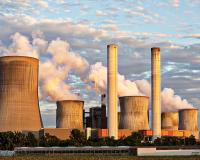
In Part One of this two-part blog, we looked at EPA's recently proposed Affordable Clean Energy (ACE) Rule and how it generally compares with the Obama Administration's Clean Power Plan (CPP) Rule. But with many environmental lawyers being closet economists, no contemplation of new environmental regulation is complete without a discussion of cost-benefit analysis.
By Cynthia R. Harris
In Part One of this two-part blog, we looked at EPA's recently proposed Affordable Clean Energy (ACE) Rule and how it generally compares with the Obama Administration's Clean Power Plan (CPP) Rule. But with many environmental lawyers being closet economists, no contemplation of new environmental regulation is complete without a discussion of cost-benefit analysis.
By Cynthia R. Harris
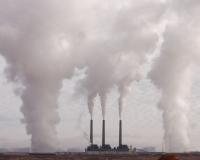
On August 21, EPA introduced its much-anticipated Affordable Clean Energy (ACE) Rule to replace the Barack Obama Administration’s Clean Power Plan (CPP) Rule for regulating carbon dioxide (CO2) emissions from our nation’s aging fleet of power plants. This proposal checks off another item on the Donald Trump Administration’s deregulatory agenda and elicits a number of profound questions. What are the main differences between the ACE and the CPP? What are the implications for public health, the environment, and the electric power sector? More philosophically, why, in the 21st century, do we continue relying on a Victorian-era source of energy to power our cell phones?
By Cynthia R. Harris
On August 21, EPA introduced its much-anticipated Affordable Clean Energy (ACE) Rule to replace the Barack Obama Administration’s Clean Power Plan (CPP) Rule for regulating carbon dioxide (CO2) emissions from our nation’s aging fleet of power plants. This proposal checks off another item on the Donald Trump Administration’s deregulatory agenda and elicits a number of profound questions. What are the main differences between the ACE and the CPP? What are the implications for public health, the environment, and the electric power sector? More philosophically, why, in the 21st century, do we continue relying on a Victorian-era source of energy to power our cell phones?
By Cynthia R. Harris
On August 21, EPA introduced its much-anticipated Affordable Clean Energy (ACE) Rule to replace the Barack Obama Administration’s Clean Power Plan (CPP) Rule for regulating carbon dioxide (CO2) emissions from our nation’s aging fleet of power plants. This proposal checks off another item on the Donald Trump Administration’s deregulatory agenda and elicits a number of profound questions. What are the main differences between the ACE and the CPP? What are the implications for public health, the environment, and the electric power sector? More philosophically, why, in the 21st century, do we continue relying on a Victorian-era source of energy to power our cell phones?

By Eleanor King , By Sally Vivian
When the Modern Slavery Act of 2015 went into effect in the United Kingdom, businesses were challenged to better understand their own supply chains. The Act applies to any commercial organization that does business in the United Kingdom (U.K.), and not just for its U.K.-based operations. The Act requires businesses with an annual turnover of more than £36 (USD $46.5) million to declare to the public their efforts to increase supply chain transparency and reduce the risk of environmental and social exploitation in their operations. Since the Act’s passage, there has been a marked increase in the urgency of efforts to improve Environmental and Social Governance (ESG) in businesses across all sectors. Despite this, research by the Chartered Institute of Procurement and Supply (CIPS) shows that over one-third of businesses covered by the Act are still not meeting the requirements.