

Vibrant Environment
All
All | Biodiversity | Climate Change and Sustainability | Environmental Justice | Governance and Rule of Law | Land Use and Natural Resources | Oceans and Coasts | Pollution Control
By ELR Staff
An increasingly fast-paced technological world requires a restructuring in environmental protection strategy. In A New Environmentalism: The Need for a Total Strategy for Environmental Protection, ELI President Scott Fulton and Dave Rejeski, Director of ELI’s Technology, Innovation, and Environment Program, discuss how environmental protection could be organized and implemented in the future.
By ELR Staff
An increasingly fast-paced technological world requires a restructuring in environmental protection strategy. In A New Environmentalism: The Need for a Total Strategy for Environmental Protection, ELI President Scott Fulton and Dave Rejeski, Director of ELI’s Technology, Innovation, and Environment Program, discuss how environmental protection could be organized and implemented in the future.

By Miriam Aczel
On Tuesday, August 28, French environment minister Nicolas Hulot announced he was quitting Emmanuel Macron’s government—on live radio. During his interview with France Inter, a frustrated Hulot explained, “I don’t want to give the illusion that my presence in government means we’re answering these issues properly—and so I have decided to leave the government.”
By Miriam Aczel
On Tuesday, August 28, French environment minister Nicolas Hulot announced he was quitting Emmanuel Macron’s government—on live radio. During his interview with France Inter, a frustrated Hulot explained, “I don’t want to give the illusion that my presence in government means we’re answering these issues properly—and so I have decided to leave the government.”
By Sierra Killian
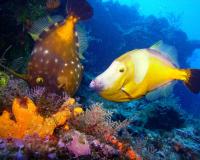
According to the World Bank, small-scale fisheries (SSF) in developing countries produce over one-half of total fish catch and employ almost 90 percent of part- and full-time fishers. Despite the subsector’s clear importance to food security and the financial sustainability of fisheries-dependent communities around the world, there are considerable gaps in both knowledge of and management strategies for small-scale fisheries. Because fishers in the SSF subsector are widely dispersed, it is difficult for governing bodies to collect data and make management decisions based on incomplete information. Given the precarious state of global fisheries, one-third of which are fished beyond biological sustainability, managing SSF despite the lack of data is a crucial component of sustainably feeding the world into the future.
By Sierra Killian
According to the World Bank, small-scale fisheries (SSF) in developing countries produce over one-half of total fish catch and employ almost 90 percent of part- and full-time fishers. Despite the subsector’s clear importance to food security and the financial sustainability of fisheries-dependent communities around the world, there are considerable gaps in both knowledge of and management strategies for small-scale fisheries. Because fishers in the SSF subsector are widely dispersed, it is difficult for governing bodies to collect data and make management decisions based on incomplete information. Given the precarious state of global fisheries, one-third of which are fished beyond biological sustainability, managing SSF despite the lack of data is a crucial component of sustainably feeding the world into the future.

By Hunter Jones
On August 16, 2018, a federal district court in Charleston, South Carolina, enjoined EPA’s rule suspending implementation of the Waters of the United States Rule (WOTUS Rule), which was finalized by the Agency in 2015 under the Barack Obama Administration. The WOTUS Rule was enacted to clarify that wetlands, seasonal streams, and tributaries qualify as “waters of the United States” under the Clean Water Act (CWA), replacing a 1980s regulation that included interstate waters and wetlands adjacent to those waters as “waters of the United States,” but specifically excluded “waters that are themselves wetlands.” The suspension rule, which was finalized in February of this year, effectively delayed the WOTUS Rule until 2020 and reinstated the definition of “waters of the United States” under the 1980s regulation.
By Hunter Jones
On August 16, 2018, a federal district court in Charleston, South Carolina, enjoined EPA’s rule suspending implementation of the Waters of the United States Rule (WOTUS Rule), which was finalized by the Agency in 2015 under the Barack Obama Administration. The WOTUS Rule was enacted to clarify that wetlands, seasonal streams, and tributaries qualify as “waters of the United States” under the Clean Water Act (CWA), replacing a 1980s regulation that included interstate waters and wetlands adjacent to those waters as “waters of the United States,” but specifically excluded “waters that are themselves wetlands.” The suspension rule, which was finalized in February of this year, effectively delayed the WOTUS Rule until 2020 and reinstated the definition of “waters of the United States” under the 1980s regulation.
By Miriam Aczel
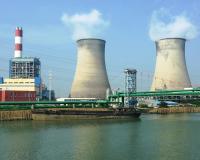
Recent strategies and policies to phase out coal in China have led to an increase in demand for natural gas. In October 2017, China’s Ministry of Environmental Protection unveiled plans to cut harmful air pollution, especially the particularly damaging fine particulate matter known as PM2.5. The plan, or “Coal Ban,” has set strict targets on air quality levels in addition to a ban on burning coal in 28 of its northern cities, including Beijing. However, while the air quality improved significantly in Beijing this past winter, the rapid ban on coal burning and the transition to natural gas has left thousands without heat.
By Miriam Aczel
Recent strategies and policies to phase out coal in China have led to an increase in demand for natural gas. In October 2017, China’s Ministry of Environmental Protection unveiled plans to cut harmful air pollution, especially the particularly damaging fine particulate matter known as PM2.5. The plan, or “Coal Ban,” has set strict targets on air quality levels in addition to a ban on burning coal in 28 of its northern cities, including Beijing. However, while the air quality improved significantly in Beijing this past winter, the rapid ban on coal burning and the transition to natural gas has left thousands without heat.