
Vibrant Environment
All
All | Biodiversity | Climate Change and Sustainability | Environmental Justice | Governance and Rule of Law | Land Use and Natural Resources | Oceans and Coasts | Pollution Control
By Avital Li, By Taylor Lilley, By Jessica Foster
The global community of agencies and NGOs working in the field of environmental compliance and enforcement has grown substantially in recent years, yet many practitioners remain isolated from others working in the field.
As our understanding of the underlying drivers of environmental compliance and non-compliance deepens, a need arises for creative and unconventional collaboration tools. The recently released UN First Global Report on the Environmental Rule of Law examining the current status of environmental laws highlights...
By Avital Li, By Taylor Lilley, By Jessica Foster
The global community of agencies and NGOs working in the field of environmental compliance and enforcement has grown substantially in recent years, yet many practitioners remain isolated from others working in the field.
As our understanding of the underlying drivers of environmental compliance and non-compliance deepens, a need arises for creative and unconventional collaboration tools. The recently released UN First Global Report on the Environmental Rule of Law examining the current status of environmental laws highlights...

By ELR Staff
“Corporate social responsibility” (CSR) has had a mixed reputation on its efforts to achieve environmental protection. Some view the rise of interest in CSR positively, especially as traditional methods of government regulation are hampered by political gridlock and not always up to date with the fast-paced development of current technologies. Others view CSR as “greenwashing,” allowing businesses to reap the benefits of being “green” without actually delivering positive impact for the environment.
By ELR Staff
“Corporate social responsibility” (CSR) has had a mixed reputation on its efforts to achieve environmental protection. Some view the rise of interest in CSR positively, especially as traditional methods of government regulation are hampered by political gridlock and not always up to date with the fast-paced development of current technologies. Others view CSR as “greenwashing,” allowing businesses to reap the benefits of being “green” without actually delivering positive impact for the environment.
By Hunter Jones
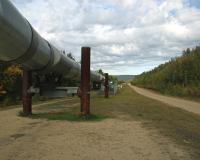
On December 13, 2018, the U.S. Court of Appeals for the Fourth Circuit vacated permits issued by the U.S. Forest Service authorizing a pipeline, known as the Atlantic Coast Pipeline, to be constructed across two national forests and the Appalachian Trail. The Atlantic Coast Pipeline is a proposed 604-mile natural gas pipeline that would stretch from West Virginia to North Carolina.
By Hunter Jones
On December 13, 2018, the U.S. Court of Appeals for the Fourth Circuit vacated permits issued by the U.S. Forest Service authorizing a pipeline, known as the Atlantic Coast Pipeline, to be constructed across two national forests and the Appalachian Trail. The Atlantic Coast Pipeline is a proposed 604-mile natural gas pipeline that would stretch from West Virginia to North Carolina.
By Stephen R. Dujack
“In 1969 the signs of . . . concern were everywhere,” writes John Quarles, EPA’s first deputy administrator, in the opening chapter of his invaluable memoir Cleaning Up America. These signs “were manifest in the outcry against the Santa Barbara oil spill,” which happened on January 28, 1969, just eight days after Richard Nixon’s ascent to the White House. There followed in close order a series of epochal events every month of that year. “Suddenly, in cities across the country, citizen environmentalists campaigned. . . . People were demanding a change in the old policy toward the nation’s resources.”
By Stephen R. Dujack
“In 1969 the signs of . . . concern were everywhere,” writes John Quarles, EPA’s first deputy administrator, in the opening chapter of his invaluable memoir Cleaning Up America. These signs “were manifest in the outcry against the Santa Barbara oil spill,” which happened on January 28, 1969, just eight days after Richard Nixon’s ascent to the White House. There followed in close order a series of epochal events every month of that year. “Suddenly, in cities across the country, citizen environmentalists campaigned. . . . People were demanding a change in the old policy toward the nation’s resources.”

By Taylor Lilley
Alanderia Whitlock is a journalist and community activist from Gulfport, Mississippi, who recently founded Gulf Voices, a social media platform for residents of the Gulf Coast. Through Gulf Voices, Alanderia seeks to help members of her community actively engage in the restoration processes and other social justice initiatives.
By Taylor Lilley
Alanderia Whitlock is a journalist and community activist from Gulfport, Mississippi, who recently founded Gulf Voices, a social media platform for residents of the Gulf Coast. Through Gulf Voices, Alanderia seeks to help members of her community actively engage in the restoration processes and other social justice initiatives.