

Vibrant Environment
All
All | Biodiversity | Climate Change and Sustainability | Environmental Justice | Governance and Rule of Law | Land Use and Natural Resources | Oceans and Coasts | Pollution Control
By Akielly Hu
Environmental justice (EJ) in federal policy to date has mostly involved conducting more public participation—a “process without substance,” as EJ pioneer Charles Lee puts it. In this month’s issue of ELR—The Environmental Law Reporter, Lee offers a road map for government agencies to effectively address EJ issues by developing an understanding of disproportionate impacts based on rigorous, holistic data, and operationalizing this analysis with a spectrum of policy actions.

By Zack Schiffer
The agricultural industry is developing fast. With new and emerging technologies on the rise, industrial agriculture continually strives to incorporate sustainability and efficiency into its operations. Although the industry produces significant pollutants, including animal waste, chemical fertilizers, pesticides, and other agricultural inputs and byproducts, incorporating new technologies, such as drones, helps to mitigate the hazardous pollutants associated with industrial agriculture. In addition to mitigating environmental harm, incorporating sustainable technology into agricultural practices can improve water conservation and bolster efficiency.
By Zack Schiffer
The agricultural industry is developing fast. With new and emerging technologies on the rise, industrial agriculture continually strives to incorporate sustainability and efficiency into its operations. Although the industry produces significant pollutants, including animal waste, chemical fertilizers, pesticides, and other agricultural inputs and byproducts, incorporating new technologies, such as drones, helps to mitigate the hazardous pollutants associated with industrial agriculture. In addition to mitigating environmental harm, incorporating sustainable technology into agricultural practices can improve water conservation and bolster efficiency.
By Zack Schiffer
The agricultural industry is developing fast. With new and emerging technologies on the rise, industrial agriculture continually strives to incorporate sustainability and efficiency into its operations. Although the industry produces significant pollutants, including animal waste, chemical fertilizers, pesticides, and other agricultural inputs and byproducts, incorporating new technologies, such as drones, helps to mitigate the hazardous pollutants associated with industrial agriculture. In addition to mitigating environmental harm, incorporating sustainable technology into agricultural practices can improve water conservation and bolster efficiency.

By Tobie Bernstein, By Jessica Sugarman
Per- and polyfluoroalkyl substances, a class of toxic synthetic chemicals collectively known as PFAS, are all around us—in the environment and in our bodies. According to the Agency for Toxic Substances and Disease Registry, most people in the United States have PFAS in their blood. Scientific studies have shown that exposure to these “forever chemicals” can lead to a variety of adverse health effects, including increased cholesterol, pregnancy complications, and kidney and testicular cancers; recent studies also suggest that PFAS may reduce resistance to infectious diseases such as COVID-19 and may reduce antibody responses to vaccines.
By Tobie Bernstein, By Jessica Sugarman
Per- and polyfluoroalkyl substances, a class of toxic synthetic chemicals collectively known as PFAS, are all around us—in the environment and in our bodies. According to the Agency for Toxic Substances and Disease Registry, most people in the United States have PFAS in their blood. Scientific studies have shown that exposure to these “forever chemicals” can lead to a variety of adverse health effects, including increased cholesterol, pregnancy complications, and kidney and testicular cancers; recent studies also suggest that PFAS may reduce resistance to infectious diseases such as COVID-19 and may reduce antibody responses to vaccines.
By Jarryd Page
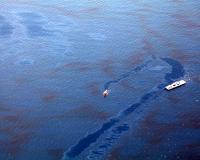
The Deepwater Horizon exploded in the Gulf of Mexico more than 10 years ago. Yet hundreds of individuals across the Gulf coast are still battling BP in court for damages related to a host of ailments arising from exposure to oil, dispersants, or both. A recent order out of the Northern District of Florida (N.D. Fla.) granting BP’s summary judgment motion as to one set of plaintiffs may be a sign of things to come. Regardless of this ruling, the sheer volume of these cases may occupy dockets for months or years.
By Jarryd Page
The Deepwater Horizon exploded in the Gulf of Mexico more than 10 years ago. Yet hundreds of individuals across the Gulf coast are still battling BP in court for damages related to a host of ailments arising from exposure to oil, dispersants, or both. A recent order out of the Northern District of Florida (N.D. Fla.) granting BP’s summary judgment motion as to one set of plaintiffs may be a sign of things to come. Regardless of this ruling, the sheer volume of these cases may occupy dockets for months or years.
By Jarryd Page
The Deepwater Horizon exploded in the Gulf of Mexico more than 10 years ago. Yet hundreds of individuals across the Gulf coast are still battling BP in court for damages related to a host of ailments arising from exposure to oil, dispersants, or both. A recent order out of the Northern District of Florida (N.D. Fla.) granting BP’s summary judgment motion as to one set of plaintiffs may be a sign of things to come. Regardless of this ruling, the sheer volume of these cases may occupy dockets for months or years.
By Jarryd Page
The Deepwater Horizon exploded in the Gulf of Mexico more than 10 years ago. Yet hundreds of individuals across the Gulf coast are still battling BP in court for damages related to a host of ailments arising from exposure to oil, dispersants, or both. A recent order out of the Northern District of Florida (N.D. Fla.) granting BP’s summary judgment motion as to one set of plaintiffs may be a sign of things to come. Regardless of this ruling, the sheer volume of these cases may occupy dockets for months or years.