FOOD WASTE: Onsite Food Waste Pre-processing Systems: Is Recycling Really Happening?
By Taz [CC BY 2.0 (http:/creativecommons.org/licenses/by/2.0)], via Wikimedia C
Wednesday, May 24, 2017

Recycling food waste through composting and anaerobic digestion has the greatest potential by far to reduce the quantity of food waste going to landfills over the next 15 years relative to food waste reduction and reuse, according to ReFED. However, as more cities and states institute landfill food waste bans and other programs to promote recycling, the demand for centralized organic processing facilities is outpacing the supply. To address the gap, vendors are actively marketing to commercial customers new onsite pre-processing systems, including dehydrators, pulpers, and biodigesters. The systems can save money by reducing or eliminating off-site hauling of food waste and are well suited to facilities short on space and staff time. But the question arises: are the nutrients and energy in food waste really being recycled?  The answer depends upon the next stage of processing.

Trumping Environmental Protection
EPA and Donald Trump
Monday, May 22, 2017

The Trump Administration is clearly hungry for regulatory reform that reduces the cost and process burden of environmental regulation. Those who see a fundamental conflict between environmental protection and economic development welcome this development, as do those concerned that environmental requirements have become so extensive, detailed, and layered as to make compliance an elusive pursuit. Conversely, the shift raises concerns for those who see environmental protection and economic development as fully compatible goals and who fear environmental backsliding.  

A Problem in Small-Scale Fisheries Management in Spain and a Need to Rethink Implementation of the EU’s Common Fisheries Policy
ACERGA fishing skipper Marcos Alfeirán during the protest camp in late 2015, NOS
Wednesday, May 31, 2017

The Galician Association of Purse-Seine Vessel Owners (ACERGA by its acronym in Galician) is the largest association of purse-seine vessel owners in Spain. Over a year ago, ACERGA fishers and many members of their families camped in front of the main building of the government of Galicia (northwestern Spain), demanding that their voice be heard in the regulatory process for determining Spain’s annual fishing quota distribution of mackerel and horse mackerel.

TRADE AND ENVIRONMENT: Protecting the Environment in the Context of International Trade
Container Ship
Wednesday, May 17, 2017

Although making no specific commitments, the Trump Administration continues to propose the potential renegotiation of NAFTA. House Democrats, in a Resolution earlier this spring, and a group of 15 environment, labor, and human rights groups, in an Eight-Point Plan, have called for a renegotiation of NAFTA that ensures that regulations protecting the environment are maintained.

In an earlier blog post, I discussed how environmental protection provisions incorporated in trade agreements could help mitigate the adverse environmental impacts of (international) trade. This post explores the inverse topic: how the investment chapters in NAFTA (and other trade agreements) may affect environmental and social protections in parties’ domestic regulation.

FOOD WASTE: “Smart Technology” Promises to Revolutionize Recycling
Enevo Sensor System
Wednesday, April 19, 2017

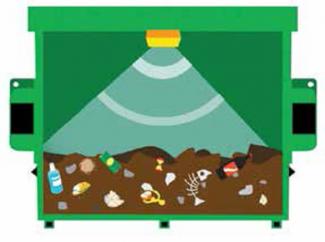
Imagine the dumpsters behind restaurant row in your community signaling their hauling company to come pick them up because they are full and about to overflow, or their food is rotting and about to stink up the neighborhood. Such are the promises for waste management of new “smart technologies,” based on sensors, radio frequency identification (RFID) tags, big data, and social networks.

The Ecological Impacts of a Border Wall
Rio Grande River
Monday, April 3, 2017

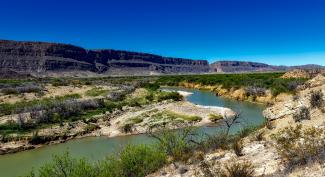
Often lost in discussions of efficacy and payment relating to the proposed U.S.-Mexico border wall is what would happen to the environment if a concrete divider were placed across a nearly-2,000 mile swath of habitat. While wall-like barriers already stand on hundreds of miles of the U.S.-Mexico border, expanding to a full-border wall would constitute a massive transformation of the rest of the United States’ southern borderlands, posing substantial threats to the wildlife that roam the area.

Environmental Whistleblowing in the Federal Government
The Office of the Whistleblower Symbol
Monday, March 13, 2017

With the change in the administration there is renewed interest in whistleblower protections by federal employees. Federal employees who are troubled by what is occurring within their agency should take a moment to better understand their rights and consult with lawyers who are knowledgeable about these complex laws before taking action that could result in adverse employment actions. What turns out to be protected or not protected may surprise you. The starting point to understand federal employee whistleblower rights and some things to watch out for are outlined below.

TRADE & ENVIRONMENT: Why Include Environmental Provisions in International Trade Agreements
World airline route map, 2009, Jpatokal
Monday, March 6, 2017

Rising levels of global consumption are having significant impacts on biodiversity worldwide. The world is facing its sixth extinction, a massive loss of biodiversity, with extinctions occurring at 100-1,000 times pre-human levels. International trade increases these threats. A Nature article documenting the impacts of trade in thousands of commodity chains concluded that 30% of threats to threatened and endangered species globally were due to international trade. It found that while wealthy countries drive most consumption, the greatest threats to species are found further down the supply chain, in the developing countries that produce the commodities sought after by the richer nations.