England's Second Fracking Site Given Green Light
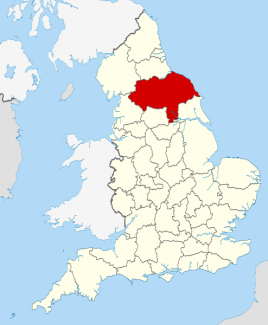
North Yorkshire County, Nilfanion
Wednesday, January 18, 2017

The controversial technology of fracking, or hydraulic fracturing, just had another victory in the North of England. As of last month, fracking may now move forward at the United Kingdom’s second fracking site, Kirby Misperton, following a UK High Court ruling that dismissed environmentalists’ legal challenges.”

Fracking has rapidly expanded in the United States. In 2000, there were 26,000 hydraulically fracked wells, which comprised roughly 7% of the U.S. total gas production, while in 2015, the number of wells had increased to 300,000, or 67% of the country’s gas output. This growth has prompted the U.K., along with other countries, to look into exploiting their own shale gas deposits.

FOOD WASTE: From The Ground Up: How Cities and States Can Be Leaders in Food Waste Reduction
Food scraps, Tim Jewett
Wednesday, December 14, 2016

In 2015, the U.S. Department of Agriculture and Environmental Protection Agency announced an ambitious goal of reducing food waste in the United States by 50% by 2030. While the change in presidential administrations presents new obstacles for many federal environmental initiatives, reducing food waste continues to offer fertile ground for cooperation.

Understanding the Business of Water
The Business of Water, ELI Forum
Wednesday, December 7, 2016

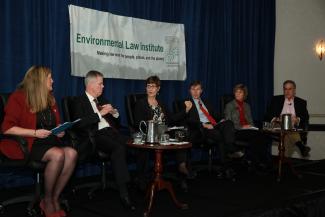
Prior to the 2016 ELI Award Dinner, ELI convened an expert panel of business leaders, legal minds, and nongovernmental advocates to discuss “The Business of Water.” This conversation was particularly timely, because as climate change alters global weather patterns and the Earth’s population continues to grow and urbanize, water resources are poised to become an ever-increasing point of contention, even in regions where water scarcity has not historically been an issue. Water law and policy is complex, varying regionally, country by country, and even within national borders. As more stakeholders compete for water resources, businesses around the world are changing the way they value water within their business models, and policymakers are looking at new levers to ensure responsible use of this increasingly precious resource.

Thanks to Environmental Pioneers in the United States Who Set the Example for the Rest of the World
William Eichbaum, former Vice President World Wildlife Fund
Thursday, May 12, 2016

ELI was founded in 1969—a time when U.S. environmental law was in its infancy and needed a place for cultivation and growth (an imperative that is still incredibly relevant today given the interconnectedness and severity of conservation challenges across the globe). At that moment in time, individuals across the country looked around and saw rivers catching on fire, poor air quality making it hard for children to breathe, and unfettered toxic pollution.