
Vibrant Environment
All
All | Biodiversity | Climate Change and Sustainability | Environmental Justice | Governance and Rule of Law | Land Use and Natural Resources | Oceans and Coasts | Pollution Control
By Greta Swanson
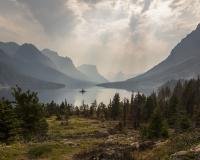
Well before the world’s atmospheric level of carbon dioxide reached 400 ppm, residents and scientists in the Arctic were documenting dramatic changes taking place in the Arctic environment, which is warming at twice the rate as lower latitudes. The Arctic has seen loss and deterioration of summer and fall sea ice, melting of permafrost, migration of shrubby plants into the region, fires, and changes in the phenology of birds, animals, insects, and plants such that their seasonal cycles have become out of sync.
By ELR Staff
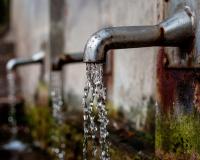
Lead exposure from drinking water is a deeply rooted regulatory, economic, and environmental justice problem in the United States. Tragic stories from Washington, D.C. in the early 2000s, Flint, Michigan in 2014, and most recently in Newark, New Jersey, expose on the national stage the most extreme cases of drinking water contamination. But it is also an everyday reality that falls disproportionately on many low-income and minority communities across the United States.
By ELR Staff
Lead exposure from drinking water is a deeply rooted regulatory, economic, and environmental justice problem in the United States. Tragic stories from Washington, D.C. in the early 2000s, Flint, Michigan in 2014, and most recently in Newark, New Jersey, expose on the national stage the most extreme cases of drinking water contamination. But it is also an everyday reality that falls disproportionately on many low-income and minority communities across the United States.
By ELR Staff
Lead exposure from drinking water is a deeply rooted regulatory, economic, and environmental justice problem in the United States. Tragic stories from Washington, D.C. in the early 2000s, Flint, Michigan in 2014, and most recently in Newark, New Jersey, expose on the national stage the most extreme cases of drinking water contamination. But it is also an everyday reality that falls disproportionately on many low-income and minority communities across the United States.
By Sahara Khan
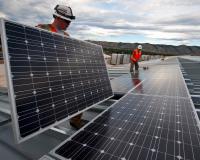
Solar panels, wildlife observatories, and rain barrels, oh my! How can the Environmental Law Institute’s Blight Revitalization Initiative for Green, Healthy Towns (BRIGHT) Area-Wide Planning Guide help your community implement green infrastructure? The BRIGHT guide compiles research on brownfields revitalization to empower communities and municipalities with some helpful tools to turn a brownfield into an economic opportunity. BRIGHT recognizes the economic and community-building potential that green infrastructure development can have for a community.
By Sahara Khan
Solar panels, wildlife observatories, and rain barrels, oh my! How can the Environmental Law Institute’s Blight Revitalization Initiative for Green, Healthy Towns (BRIGHT) Area-Wide Planning Guide help your community implement green infrastructure? The BRIGHT guide compiles research on brownfields revitalization to empower communities and municipalities with some helpful tools to turn a brownfield into an economic opportunity. BRIGHT recognizes the economic and community-building potential that green infrastructure development can have for a community.
By Taylor Lilley
On November 12th, I traveled to Mississippi for a week with fellow ELI Gulf Team members Amy Streitwieser and Sofia Yazykova. We went to attend the 2018 Mississippi Restoration Summit, hosted by the Mississippi Department of Environmental Quality (MDEQ), but also planned to use the trip as a “listening tour,” meeting with representatives of local governments and historically marginalized communities to learn more about their environmental priorities.
By Taylor Lilley
On November 12th, I traveled to Mississippi for a week with fellow ELI Gulf Team members Amy Streitwieser and Sofia Yazykova. We went to attend the 2018 Mississippi Restoration Summit, hosted by the Mississippi Department of Environmental Quality (MDEQ), but also planned to use the trip as a “listening tour,” meeting with representatives of local governments and historically marginalized communities to learn more about their environmental priorities.
By Sierra Killian, By Rebecca L. Kihslinger
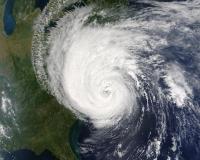
In 2017, almost eight percent of the American population was affected by natural disasters. Hurricanes Harvey, Irma, and Maria swept through Florida, Georgia, Texas, Puerto Rico, and the U.S. Virgin Islands, leading to billions of dollars of federal disaster assistance. The 2018 hurricane season was another year of devastating destruction, most recently seen in the aftermath of Hurricanes Florence and Michael in the Southeast, severely affecting the citizens of Alabama, Florida, Georgia, North Carolina, South Carolina, and Virginia. With climate change likely to amplify the impacts of hurricanes, hurricane season will continue to strain communities, infrastructure, and federal disaster programs into the future.
By Sierra Killian, By Rebecca L. Kihslinger
In 2017, almost eight percent of the American population was affected by natural disasters. Hurricanes Harvey, Irma, and Maria swept through Florida, Georgia, Texas, Puerto Rico, and the U.S. Virgin Islands, leading to billions of dollars of federal disaster assistance. The 2018 hurricane season was another year of devastating destruction, most recently seen in the aftermath of Hurricanes Florence and Michael in the Southeast, severely affecting the citizens of Alabama, Florida, Georgia, North Carolina, South Carolina, and Virginia. With climate change likely to amplify the impacts of hurricanes, hurricane season will continue to strain communities, infrastructure, and federal disaster programs into the future.