

Vibrant Environment
All
All | Biodiversity | Climate Change and Sustainability | Environmental Justice | Governance and Rule of Law | Land Use and Natural Resources | Oceans and Coasts | Pollution Control
By Taylor Lilley
Alanderia Whitlock is a journalist and community activist from Gulfport, Mississippi, who recently founded Gulf Voices, a social media platform for residents of the Gulf Coast. Through Gulf Voices, Alanderia seeks to help members of her community actively engage in the restoration processes and other social justice initiatives.
By Sierra Killian
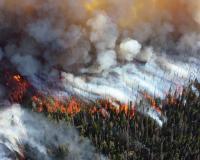
Months after the devastating Camp, Woolsey, and Hill fires in California, the fallout of the blazes continues to rock the state. In the past month, PG&E, the state’s largest electric utility, transitioned out several top executives, had its credit rating downgraded to junk status, and was mandated to inspect its entire electric grid in a sharply worded court order. Last week, the company announced plans to file for bankruptcy by January 29. Citizens, insurance companies, and the state government are also feeling the heat as expected damage costs rise and climate change intensifies the frequency of wildfires. The strain on California’s public and private institutions foreshadows the difficult decisions to come across the fire-prone American West.
By Sierra Killian
Months after the devastating Camp, Woolsey, and Hill fires in California, the fallout of the blazes continues to rock the state. In the past month, PG&E, the state’s largest electric utility, transitioned out several top executives, had its credit rating downgraded to junk status, and was mandated to inspect its entire electric grid in a sharply worded court order. Last week, the company announced plans to file for bankruptcy by January 29. Citizens, insurance companies, and the state government are also feeling the heat as expected damage costs rise and climate change intensifies the frequency of wildfires. The strain on California’s public and private institutions foreshadows the difficult decisions to come across the fire-prone American West.
By Sierra Killian
Months after the devastating Camp, Woolsey, and Hill fires in California, the fallout of the blazes continues to rock the state. In the past month, PG&E, the state’s largest electric utility, transitioned out several top executives, had its credit rating downgraded to junk status, and was mandated to inspect its entire electric grid in a sharply worded court order. Last week, the company announced plans to file for bankruptcy by January 29. Citizens, insurance companies, and the state government are also feeling the heat as expected damage costs rise and climate change intensifies the frequency of wildfires. The strain on California’s public and private institutions foreshadows the difficult decisions to come across the fire-prone American West.
By Amy M. Marshall
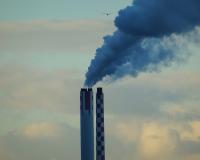
The regulations, guidance documents, and policy memos that implement the Clean Air Act (CAA) have gotten longer and more complicated over the decades. This increased complexity has created greater compliance burdens for the regulated community, and the argument persists that it has stifled economic growth and not produced health benefits that equal or surpass the burdens imposed. Air quality has dramatically improved over the past 40 years, yet many current air quality standards are now at levels approaching the ambient background.
By Amy M. Marshall
The regulations, guidance documents, and policy memos that implement the Clean Air Act (CAA) have gotten longer and more complicated over the decades. This increased complexity has created greater compliance burdens for the regulated community, and the argument persists that it has stifled economic growth and not produced health benefits that equal or surpass the burdens imposed. Air quality has dramatically improved over the past 40 years, yet many current air quality standards are now at levels approaching the ambient background.

By ELR Staff
Natural resource mitigation—avoiding impacts to important species and habitat, minimizing impacts, and then providing offsets for remaining, residual impacts—is a valuable tool for developers and agencies to comply with the requirements of the National Environmental Policy Act, a variety of federal statutes that regulate impacts to important wildlife species and habitat, and/or public land management statutes requiring that uses of public lands be balanced with protection and conservation.
By ELR Staff
Natural resource mitigation—avoiding impacts to important species and habitat, minimizing impacts, and then providing offsets for remaining, residual impacts—is a valuable tool for developers and agencies to comply with the requirements of the National Environmental Policy Act, a variety of federal statutes that regulate impacts to important wildlife species and habitat, and/or public land management statutes requiring that uses of public lands be balanced with protection and conservation.
By C. Scott Fulton
There has been a good deal of focus of late on the role of independent oversight in the administration of government operations. Sometimes oversight mechanisms are created in an ad hoc manner in response to particular issues, as with the appointment of an independent counsel. More often it proceeds under the established system of checks built into law to help ensure transparent, effective, and ethical effectuation of government authorities and duties.

By Avital Li
On the campaign trail, Brazilian President Jair Bolsonaro promised to eliminate existing protections of the Amazon. Despite some restrictions on his power to fulfill those promises, his administration will have a huge role to play in determining the delicate future of the earth’s largest rainforest, 65% of which is located within Brazil’s borders. Indeed, limiting the ability of agencies to enforce existing laws is more than sufficient to enable the proliferation of illegal logging, farming, and mining in the rainforest.