

Vibrant Environment
All
All | Biodiversity | Climate Change and Sustainability | Environmental Justice | Governance and Rule of Law | Land Use and Natural Resources | Oceans and Coasts | Pollution Control
By Patree (Well) Witoonchart
Does “meat” have to come from a living, breathing animal? According to proponents of cellular agriculture, this may not always be the case. This new industry aims to produce “meat” by growing animal cells outside of a living body, envisioning a future where humans can consume beef, pork, chicken, and seafood without having to slaughter a single animal. The process of producing such cell-based food involves taking cells from a live animal and using a growth medium to grow the cells into large, edible tissue. In recent years, this technology has generated public excitement, attention, and, most importantly, investment. However, regardless of what the products of cellular agriculture look like or when this technology will be fully developed, naming this product is much more complicated.
By Shehla Chowdhury
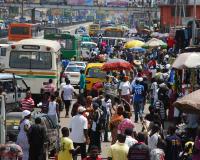
Over the last several decades, many countries have sought to decrease their carbon footprint by creating stricter emissions standards for motor vehicles. However, once these standards are in place, a serious question arises: what should be done with older, “dirtier” vehicles? Often, the answer has been to export them to regions with less strict vehicle standards.
By Shehla Chowdhury
Over the last several decades, many countries have sought to decrease their carbon footprint by creating stricter emissions standards for motor vehicles. However, once these standards are in place, a serious question arises: what should be done with older, “dirtier” vehicles? Often, the answer has been to export them to regions with less strict vehicle standards.
By Shehla Chowdhury
Over the last several decades, many countries have sought to decrease their carbon footprint by creating stricter emissions standards for motor vehicles. However, once these standards are in place, a serious question arises: what should be done with older, “dirtier” vehicles? Often, the answer has been to export them to regions with less strict vehicle standards.

By ELR Staff
Carbon capture and storage (CCS) is a hot-button topic as a strategy to mitigate climate change and reduce greenhouse gas emissions. CCS entails capturing carbon dioxide from the atmosphere and industrial plants at the source, then injecting the captured carbon dioxide into underground geologic formations for storage. Much research has focused on sequestering carbon dioxide onshore, in depleted oil and gas reservoirs or deep saline aquifers. Offshore CCS also may be feasible, but presents several governance and legal challenges.
By ELR Staff
Carbon capture and storage (CCS) is a hot-button topic as a strategy to mitigate climate change and reduce greenhouse gas emissions. CCS entails capturing carbon dioxide from the atmosphere and industrial plants at the source, then injecting the captured carbon dioxide into underground geologic formations for storage. Much research has focused on sequestering carbon dioxide onshore, in depleted oil and gas reservoirs or deep saline aquifers. Offshore CCS also may be feasible, but presents several governance and legal challenges.
By ELR Staff
Carbon capture and storage (CCS) is a hot-button topic as a strategy to mitigate climate change and reduce greenhouse gas emissions. CCS entails capturing carbon dioxide from the atmosphere and industrial plants at the source, then injecting the captured carbon dioxide into underground geologic formations for storage. Much research has focused on sequestering carbon dioxide onshore, in depleted oil and gas reservoirs or deep saline aquifers. Offshore CCS also may be feasible, but presents several governance and legal challenges.
By ELR Staff
Carbon capture and storage (CCS) is a hot-button topic as a strategy to mitigate climate change and reduce greenhouse gas emissions. CCS entails capturing carbon dioxide from the atmosphere and industrial plants at the source, then injecting the captured carbon dioxide into underground geologic formations for storage. Much research has focused on sequestering carbon dioxide onshore, in depleted oil and gas reservoirs or deep saline aquifers. Offshore CCS also may be feasible, but presents several governance and legal challenges.

By Cindy Starrett, By Kristina Wyatt, By Jennifer Roy, By Samantha Seikkula, By Melanie Hess
Climate change threatens to dramatically increase inequality and create greater hardships for women and girls, in large part because of their disproportionately vulnerable economic, social, and political positions worldwide. Food shortages disproportionately affect the health of women and girls, and in many regions, women are more directly dependent on natural resources threatened by climate change for their livelihoods. For instance, a U.N. report observed that in developing countries, women account for 45-80% of all food production, and about two-thirds of the female labor force is engaged in agricultural work. In such developing regions, women face unique vulnerabilities from the increasing unpredictability of food sources as well as the loss of income or jobs if agricultural resources are impacted by climate change.
By Cindy Starrett, By Kristina Wyatt, By Jennifer Roy, By Samantha Seikkula, By Melanie Hess
Climate change threatens to dramatically increase inequality and create greater hardships for women and girls, in large part because of their disproportionately vulnerable economic, social, and political positions worldwide. Food shortages disproportionately affect the health of women and girls, and in many regions, women are more directly dependent on natural resources threatened by climate change for their livelihoods. For instance, a U.N. report observed that in developing countries, women account for 45-80% of all food production, and about two-thirds of the female labor force is engaged in agricultural work. In such developing regions, women face unique vulnerabilities from the increasing unpredictability of food sources as well as the loss of income or jobs if agricultural resources are impacted by climate change.