Traditional Ecological Knowledge in the United States: Contributions to Climate Adaptation and Natural Resource Management (Part I)

Landscape
Monday, December 10, 2018

Well before the world’s atmospheric level of carbon dioxide reached 400 ppm, residents and scientists in the Arctic were documenting dramatic changes taking place in the Arctic environment, which is warming at twice the rate as lower latitudes. The Arctic has seen loss and deterioration of summer and fall sea ice, melting of permafrost, migration of shrubby plants into the region, fires, and changes in the phenology of birds, animals, insects, and plants such that their seasonal cycles have become out of sync.


Getting the Lead Out: A New Strategy for Eliminating Toxic Lead in Drinking Water
Tap water pouring from faucets
Wednesday, December 5, 2018

Lead exposure from drinking water is a deeply rooted regulatory, economic, and environmental justice problem in the United States. Tragic stories from Washington, D.C. in the early 2000s, Flint, Michigan in 2014, and most recently in Newark, New Jersey, expose on the national stage the most extreme cases of drinking water contamination. But it is also an everyday reality that falls disproportionately on many low-income and minority communities across the United States.

Traditional Ecological Knowledge and the Law: The Canadian Case (Part II)
Canadian landscape
Wednesday, December 12, 2018

Continuing from ELI’s December 10 post on the legal authorization and applications of TEK in the United States, today, we explore incorporation of TEK into Canadian law.

Around the world, decisions impacting indigenous peoples’ traditional territories historically have been made without the participation, input, and consent of the indigenous communities themselves. Natural resource management relied solely on Western science, excluding rich knowledge gained over centuries of direct experience and practice.

Before Disaster Strikes: Pre-Disaster Mitigation Funding
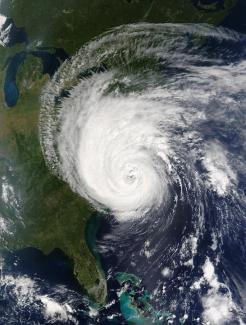
Satellite photo of hurricane
Wednesday, November 28, 2018

In 2017, almost eight percent of the American population was affected by natural disasters. Hurricanes Harvey, Irma, and Maria swept through Florida, Georgia, Texas, Puerto Rico, and the U.S. Virgin Islands, leading to billions of dollars of federal disaster assistance. The 2018 hurricane season was another year of devastating destruction, most recently seen in the aftermath of Hurricanes Florence and Michael in the Southeast, severely affecting the citizens of Alabama, Florida, Georgia, North Carolina, South Carolina, and Virginia. With climate change likely to amplify the impacts of hurricanes, hurricane season will continue to strain communities, infrastructure, and federal disaster programs into the future.

Is Offshore Wind About to Take Off?
Offshore Wind Farm
Monday, November 19, 2018

It’s all happening,” declared a June 2018 article about offshore wind development in the United States. Indeed, the National Renewable Energy Laboratory has identified a trend toward a viable U.S. offshore wind industry that is gaining momentum. Despite this trend, it has been 17 years since the first offshore wind project was proposed, and the 30-megawatt (MW) Block Island Wind Farm is still the only operating project. Has the time finally arrived for this industry?

An American (State) in Paris – Can States Commit to the Paris Agreement?
Paris at sunset
Monday, November 12, 2018

The United States’ decision to withdraw from the Paris Agreement was a shock to environmentalists and the international community. In response, individual U.S. states took it upon themselves to pledge their commitment to the Paris Agreement without federal support. However, some scholars observed that state involvement in the Paris Agreement may be unconstitutional, a potential violation of the Supremacy Clause, Treaty Clause, and Compact Clause.

In An American (State) in Paris: The Constitutionality of U.S. States’ Commitments to the Paris Agreement, the winner of ELI’s 2017-2018 Henry L. Diamond Constitutional Environmental Law Writing Competition, Kristen McCarthy argues that states’ involvement does not violate the U.S. Constitution. Moreover, she writes, it also may set a precedent for state involvement in future environmental international agreements.

A Mission to Reduce Emissions: California’s Fight to Maintain Their Fuel Standards
California highway traffic
Wednesday, November 7, 2018

California is often considered a leader in environmental issues and has made strides to become a more environmentally conscious state. Through state and local policies, the state has banned certain plastic products, such as bags and straws, and in 2011 it implemented a Low Carbon Fuel Standard (LCFS) program to curb greenhouse gas pollution. The California Air Resources Board (CARB) implemented this cap-and-trade program to ensure that automakers gradually increase gas mileage on their vehicles and reduce carbon intensity 10 percent by 2020. The state has even sought to extend the LCFS program, with a new goal of 20 percent reduction by 2030. These standards are stricter than the nationwide fuel standards, and while the initiative has received some legal pushback from the agricultural and ethanol industries, even companies in the transportation sector have become accustomed to California’s standards.

California has enjoyed the ability to tackle its own carbon pollution for several years. Now, however, their fuel standards are in danger.

The Rise of Climate Change Adaptation Law
Wednesday, October 31, 2018

As the effects of climate change become more prominent, countries in various parts of the world begin to consider ways to incorporate climate change adaptation into their legal frameworks. Unlike provisions related to climate change mitigation, which usually set requirements for greenhouse gas emissions, statutory provisions addressing climate change adaptation can be wide-ranging and intricate.

ESA and CITES: Avenues for the Future of Species Conservation and Legislation
wild cat
Wednesday, October 24, 2018

The Endangered Species Act (ESA) and the Convention on International Trade in Endangered Species of Wild Flora and Fauna (CITES) are seminal pieces of legislation that have governed species conservation in the United States for over 40 years. The ESA dictates a regulatory framework for identifying and protecting threatened species and provides funding and incentives to states to reach this goal. CITES is an international agreement signed by 183 nations that seeks to regulate and restrict the international trade of endangered wildlife. The adoption of this agreement gives party states some authority over species conservation in other parts of the world. The ESA acknowledges and works to cooperate with international species conservation policies like CITES, and it even includes provisions for executing CITES policies. Together, CITES and the ESA operate at state, national, and international scales, making use of agency, intergovernmental, and nonprofit partnerships to work toward species conservation.

Trotting Toward Trouble: The State of the Bureau of Land Management’s Wild Horse and Burro Program
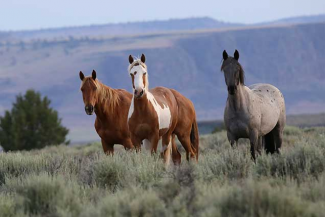
Wild Horses
Wednesday, October 17, 2018

Picture the American West.

What do you see? Does a herd of wild mustangs galloping across a sagebrush expanse come to mind? For many, romantic images of the western landscape celebrated in popular culture symbolize American ideals of rugged individualism and freedom. Although first introduced to North America by European colonists, wild horses came to represent those important American themes in our images of the West. Now, the iconic symbols pose a threat to western ecosystems.