

Vibrant Environment
All
All | Biodiversity | Climate Change and Sustainability | Environmental Justice | Governance and Rule of Law | Land Use and Natural Resources | Oceans and Coasts | Pollution Control
By ELR Staff
Last month, Trump Administration officials attended the latest round of U.N. climate negotiations in Bonn, Germany, but they weren’t there to discuss reducing emissions. Rather, they touted the promises of nuclear energy, natural gas, “clean coal,” and carbon capture. This is not surprising, given the President’s views on climate policy and his decision to withdraw the United States from the Paris Agreement. But even had Trump decided otherwise, the current Agreement does not do enough to reduce the risk of catastrophic climate change.
By ELI Ocean Program Staff
November has been a busy month for Gulf restoration.

By Tim Briscoe
In December 2016, President Barack Obama issued a presidential Memorandum withdrawing about 128 million acres of federally owned underwater land in the Arctic and Atlantic Oceans from disposition for oil and gas leasing. Obama invoked a presidential power granted by Congress in the Outer Continental Shelf Lands Act (OCSLA).
By ELI Ocean Program Staff
November has been a busy month for Gulf restoration.
By Scott W. Badenoch, Jr., Esq., MDR
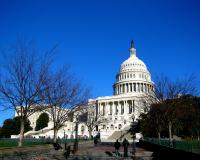
On October 24, 2017, Sen. Cory Booker (D-NJ) and Rep. Raul Ruiz, M.D. (D-CA) announced The Environmental Justice Act of 2017 (EJA), S. 1996, H.R. 4114, a bill focused on strengthening legal protections against environmental harms for communities of color, low-income communities, and indigenous communities. The EJA would be the first federal law of its kind, and follows in a 25 year legacy of legislative efforts, starting with the great Rep. John Lewis (D-GA) in the 1990s, to codify environmental justice (EJ) once and for all.
By Scott W. Badenoch, Jr., Esq., MDR
On October 24, 2017, Sen. Cory Booker (D-NJ) and Rep. Raul Ruiz, M.D. (D-CA) announced The Environmental Justice Act of 2017 (EJA), S. 1996, H.R. 4114, a bill focused on strengthening legal protections against environmental harms for communities of color, low-income communities, and indigenous communities. The EJA would be the first federal law of its kind, and follows in a 25 year legacy of legislative efforts, starting with the great Rep. John Lewis (D-GA) in the 1990s, to codify environmental justice (EJ) once and for all.

By Emmett McKinney, By JoAnne Berkenkamp, By Linda Breggin
Some say leftovers are the best part of Thanksgiving. While that may be true, the rest of the year, there are ample missed opportunities to donate surplus prepared foods from institutions and restaurants. Realizing these opportunities is an important way to waste less food and feed more people, because up to 40% of food (along with the water, energy, and land used in production) goes to waste every year in the United States. At the same time, over 13% of Americans—one in eight—experience food insecurity.
By Emmett McKinney, By JoAnne Berkenkamp, By Linda Breggin
Some say leftovers are the best part of Thanksgiving. While that may be true, the rest of the year, there are ample missed opportunities to donate surplus prepared foods from institutions and restaurants. Realizing these opportunities is an important way to waste less food and feed more people, because up to 40% of food (along with the water, energy, and land used in production) goes to waste every year in the United States. At the same time, over 13% of Americans—one in eight—experience food insecurity.

By Nora Moraga-Lewy
Houston’s 160-acre Buffalo Bayou Park was designed to flood. The park is lined with native vegetation and landscaped to channel runoff and maximize floodwater transport capacity. Dog-walkers, joggers, bikers, and picnickers frequent the park, which also serves as habitat for native plant and animal species and has features that help filter pollutants from stormwater runoff that would otherwise flow directly into the waterway.
By Patricia J. Beneke
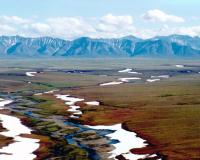
Many of the provisions in the tax legislation being considered by Congress this month (H.R. 1 “The Tax Cuts and Jobs Act” and related Senate legislation) as part of the Budget Reconciliation process are getting substantial attention: the reduction in corporate tax rates, elimination of the estate tax, consolidation of individual income tax brackets, elimination of medical and state and local tax deductions, and modification of the mortgage interest deduction. However, one key matter in the package is only now beginning to receive notable public attention: the long and hard-fought legislation to open the Coastal Plain of the Arctic National Wildlife Refuge (Arctic Refuge) to oil and gas leasing and development.