

Vibrant Environment
All
All | Biodiversity | Climate Change and Sustainability | Environmental Justice | Governance and Rule of Law | Land Use and Natural Resources | Oceans and Coasts | Pollution Control
By Dave Rejeski
Since the beginning of the Industrial Revolution, coal-fired systems have been emitting a pollutant we did not even know existed . . . until now. In 2014, a team of scientists studying arsenic in the Dan River coal ash spill site in North Carolina discovered a new nano-scale version of titanium oxides that had never been seen before.* What they discovered were titanium suboxides, or so-called Magnéli phases, which were first synthesized in the 1930s. These substances are extremely rare in nature, seen only in rocks having an extraterrestrial origin (meteorites, lunar rocks, and interplanetary dust particles), and at one known point on the earth’s surface—rock formations on the central coast of western Greenland.
By Amy Reed, By Teresa Chan, By Xiao Recio-Blanco
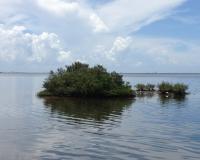
On August 30, the Gulf Coast Ecosystem Restoration Council (the “Council”) announced that it is seeking public comment on a proposal to “approve implementation funding for the Robinson Preserve Wetlands Restoration project” in Florida. If the proposal is approved, the Council will allocate $1,790,546 in RESTORE Act (Pot 2) funds to implement the project, including a “reallocat[ion of] $470,910 from planning [funds] to implementation.” According to the Council, the project will restore approximately 118 acres of habitat, including coastal upland, wetland, and open water habitat types, in the Tampa Bay Watershed.
By Amy Reed, By Teresa Chan, By Xiao Recio-Blanco
On August 30, the Gulf Coast Ecosystem Restoration Council (the “Council”) announced that it is seeking public comment on a proposal to “approve implementation funding for the Robinson Preserve Wetlands Restoration project” in Florida. If the proposal is approved, the Council will allocate $1,790,546 in RESTORE Act (Pot 2) funds to implement the project, including a “reallocat[ion of] $470,910 from planning [funds] to implementation.” According to the Council, the project will restore approximately 118 acres of habitat, including coastal upland, wetland, and open water habitat types, in the Tampa Bay Watershed.

By Greta Swanson
Humans are rapidly increasing their industrial use of the ocean and its resources, resulting in great increases in underwater noise. Commercial shipping, naval sonar, seismic exploration, pile driving, acoustic deterrents for fishing, and seabed mining all produce ocean noise.
By Greta Swanson
Humans are rapidly increasing their industrial use of the ocean and its resources, resulting in great increases in underwater noise. Commercial shipping, naval sonar, seismic exploration, pile driving, acoustic deterrents for fishing, and seabed mining all produce ocean noise.

By Lorentz Hansen, By Dave Rejeski, By Jessye Waxman
In 2008, as many financial instruments dissolved stranding their investors in seas of debt and spasms of panic, a new instrument appeared at the intersection of the crowd and the web: crowdfunding.

By Cynthia R. Harris
Tribes and Native villages are demonstrating reinvigorated environmental activism as they face increased pressures on natural resource use. Consequently, some of the most significant new developments in environmental law are occurring in Indian country. This month, ELI features a two-part webinar series on “Emerging Environmental Issues in Native Communities.”

By Robert Kelsey
On August 8, 2017, the D.C. Circuit held in Mexichem Fluor, Inc. v. EPA, No. 15-1328 (D.C. Cir. Aug. 8, 2017), that EPA overstepped its authority under the CAA when it banned the use of hydrofluorocarbons (HFCs) in products. HFCs were adopted as alternatives to ozone-depleting substances (ODSs) in the 1990s under the Montreal Protocol. Their adoption was encouraged through application of EPA's Significant New Alternatives Policy (SNAP) Program, which was created to help implement U.S.

By Howard Nelson, By Kenneth M. Minesinger, By Gus Howard
Last month, the D.C. Circuit held in a 2-1 opinion that FERC was required to consider the downstream emissions created by power plants to be served by a proposed pipeline in Florida. The case not only raises questions about the scope of FERC’s NEPA review for new natural gas pipeline projects, but also about the application of the U.S. Supreme Court’s decision in Department of Transportation v. Public Citizen, 541 U.S. 752 (2004).

By ELR Staff
In 2010, two sisters—ages 1 and 4—died after licensed exterminators misapplied pesticides too close to their home. In 2011, roughly 60 dead mammals and migratory birds were found on and near a private hunting preserve after pesticides were unlawfully applied in hopes of killing coyotes. And in 2015, an entire family was hospitalized, and now suffers from neurological damage, following the improper pesticide fumigation of their house. Yet, the perpetrators in each of these cases were only charged with misdemeanors.