

Vibrant Environment
All
All | Biodiversity | Climate Change and Sustainability | Environmental Justice | Governance and Rule of Law | Land Use and Natural Resources | Oceans and Coasts | Pollution Control
By Emmett McKinney
Paris and Los Angeles are set to host the 2024 and 2028 Olympic Games, respectively. Hosting the games will offer these cities the chance to showcase not only their countries’ finest athletes, but also their technological innovation and cultural vibrancy. However, preparing for the Olympics also presents massive infrastructural, economic, and environmental challenges.
By Amy Reed
In mid-July, I traveled to Louisiana with fellow ELI Gulf Team member Teresa Chan to host three workshops with the Restore the Mississippi River Delta coalition. Held in three different parishes, these workshops were intended to help the community meaningfully participate in the “scoping” process for the Mid-Barataria Sediment Diversion by providing some background on the project, explaining what scoping is, and discussing how the public can participate. Nearly 60 people attended the workshops, where there were lots of lively discussions!

By Robert Kelsey
As reported previously in the Environmental Law Reporter's Weekly Update, several countries have expressed their desire to move away from vehicles powered by diesel and gas in recent months. Most recently, the British government committed to ban the sale of diesel and gas vehicles from 2040 to curb rising levels of nitrogen oxide.
By Amy Reed
In mid-July, I traveled to Louisiana with fellow ELI Gulf Team member Teresa Chan to host three workshops with the Restore the Mississippi River Delta coalition. Held in three different parishes, these workshops were intended to help the community meaningfully participate in the “scoping” process for the Mid-Barataria Sediment Diversion by providing some background on the project, explaining what scoping is, and discussing how the public can participate. Nearly 60 people attended the workshops, where there were lots of lively discussions!

By Dave Rejeski
What is the most valuable crop in California? It isn’t almonds ($5.3 billion), strawberries ($1.8 billion), or grapes ($1.3 billion), but cannabis, now worth around $17 billion annually. In fact, cannabis is presently the fastest growing industry in the United States with over 30 percent per year compound growth according to preliminary 2016 revenues reported in Colorado by the Marijuana Enforcement Division.

By Ian Faucher
Even after lawmakers leave the capital for their August recess, there’s still a summer buzz in the air at ELI’s offices in Washington, D.C. From June through August, nearly every open desk is filled by a volunteer, intern, or law clerk working to further ELI’s mission and support its many programs around the world. This summer, I was fortunate enough to spend a brief three months in the nation’s capital as one of those students. My fellow interns and law clerks hailed from as far as U.C.

By ELR Staff
When a public company describes the impact of a proposed regulation, it must consider two audiences: regulators and financial markets. It would like to sway the regulator by emphasizing how stringent regulations could cause job losses or reduce investment. But it may wish to convince investors that the company will thrive in the face of any plausible regulatory outcome.

By Ian Faucher
In response to reputational pressures and economic incentives, many companies tailor their product design, purchasing decisions, and management systems to reflect environmental considerations. Because consumers usually can’t observe these benefits in a company’s products or services, firms increasingly turn to environmental certification schemes or “ecolabels” to highlight their achievements.

By Dave Rejeski, By John Hare-Grogg
ELI’s Technology, Innovation and the Environment project targets the market for serious games with our new game, Cards Against Calamity, a multiplayer board game that explores coastal communities’ resilience to crises. Cards Against Calamity was developed in collaboration with 1st Playable Productions and funded by the National Oceanic and Atmospheric Administration (NOAA).
By Zhou Jinfeng, By Huang Shuya , By Linda Wong, By Xiao Recio-Blanco
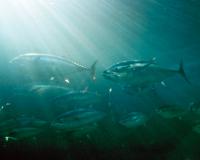
Bluefin tuna, the general group name of several species that belong to subgenus of true tunas Thunnus (Thunnus), are the largest of all tunas and have a natural lifespan of over 50 years. Reaching over two meters in length and weighing 200 kilograms as adults, the species is at the top of the marine food chain. But for great white sharks, bluefin tunas have few natural enemies. Sadly, in the last few decades, a new enemy has appeared: humans.