
Vibrant Environment
All
All | Biodiversity | Climate Change and Sustainability | Environmental Justice | Governance and Rule of Law | Land Use and Natural Resources | Oceans and Coasts | Pollution Control
By Carol Adaire Jones
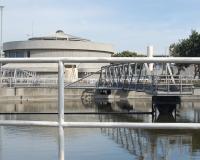
The wastewater sector’s “Utility of the Future” (UOTF) initiative envisions the sector’s transformation from managing waste to recovering and recycling valuable resources, thereby creating financial benefits for utilities, as well as environmental and economic development benefits for communities.
By Carol Adaire Jones
The wastewater sector’s “Utility of the Future” (UOTF) initiative envisions the sector’s transformation from managing waste to recovering and recycling valuable resources, thereby creating financial benefits for utilities, as well as environmental and economic development benefits for communities.
By ELR Staff
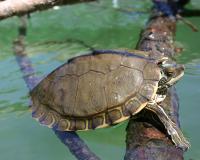
The Pearl River map turtle, found only in Louisiana and Mississippi, has been described as the least-known species of the least-studied turtle genus in North America. Sadly, it may become extinct before it becomes known. While the species is recognized internationally and by the state of Mississippi, the U.S. government does not acknowledge it, and that obscurity is harming its existence. In the March issue of ELR’s News & Analysis, Kristina Alexander explains why listing under the Endangered Species Act (ESA) may be the only way to save it from extinction.

By Amy Reed
Earlier this year, the New York City Council took a notable step forward in addressing common indoor environmental health hazards. The Council passed Law 2018/055, which amends the city’s housing maintenance code to require private landlords to prevent and remediate indoor asthma triggers in their multifamily residential buildings.
By Amy Reed
Earlier this year, the New York City Council took a notable step forward in addressing common indoor environmental health hazards. The Council passed Law 2018/055, which amends the city’s housing maintenance code to require private landlords to prevent and remediate indoor asthma triggers in their multifamily residential buildings.
By Miriam Aczel
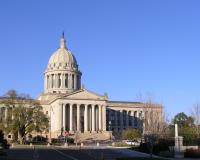
After a slew of earthquakes triggered from shale oil and gas operations, the Oklahoma Corporation Commission (OCC), the state’s oil and gas regulator, released new rules designed to reduce seismic activity. Hydraulic fracturing—fracking—is being used in combination with horizontal drilling to extract shale oil and gas in what has been called the “US’s hottest new area for horizontal development” in the state’s SCOOP [1] and STACK [2] shale plays, located in the Anadarko Basin.
By Miriam Aczel
After a slew of earthquakes triggered from shale oil and gas operations, the Oklahoma Corporation Commission (OCC), the state’s oil and gas regulator, released new rules designed to reduce seismic activity. Hydraulic fracturing—fracking—is being used in combination with horizontal drilling to extract shale oil and gas in what has been called the “US’s hottest new area for horizontal development” in the state’s SCOOP [1] and STACK [2] shale plays, located in the Anadarko Basin.
By Azi Akpan
Historically, the Gulf Coast region has produced more seafood than anywhere else in the continental U.S., both in volume and dollar value. Before the BP oil spill, in 2009, the Gulf seafood industry provided over 213,000 full- and part-time jobs. The oil spill has had a devastating impact on people working in the Gulf’s seafood industry. As a result of the BP oil spill, over 88,000 square miles of the Gulf’s federal waters—nearly 37%—were closed to fishing. There were also fishing closures in the state waters of Alabama (40% closed), Florida (2% closed), Louisiana (55% closed), and Mississippi (95% closed). Fishermen are still facing financial instability years after the spill, and have observed significant declines in landings and stock quality. Here, we highlight one Gulf fisherman’s perspective.
By Azi Akpan
Historically, the Gulf Coast region has produced more seafood than anywhere else in the continental U.S., both in volume and dollar value. Before the BP oil spill, in 2009, the Gulf seafood industry provided over 213,000 full- and part-time jobs. The oil spill has had a devastating impact on people working in the Gulf’s seafood industry. As a result of the BP oil spill, over 88,000 square miles of the Gulf’s federal waters—nearly 37%—were closed to fishing. There were also fishing closures in the state waters of Alabama (40% closed), Florida (2% closed), Louisiana (55% closed), and Mississippi (95% closed). Fishermen are still facing financial instability years after the spill, and have observed significant declines in landings and stock quality. Here, we highlight one Gulf fisherman’s perspective.
By Stephen R. Dujack
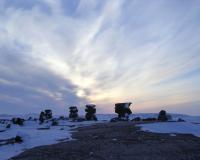
I went to the North Pole in April, the favored month for travel in the High Arctic. That was 16 years ago. According to the 2017 National Climate Assessment, the region’s warming began accelerating around the time of my visit. It is no longer the same frozen ecology and economy I had seen.