
Vibrant Environment
All
All | Biodiversity | Climate Change and Sustainability | Environmental Justice | Governance and Rule of Law | Land Use and Natural Resources | Oceans and Coasts | Pollution Control
By Christina Libre
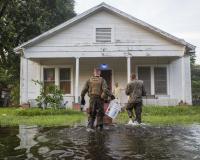
Just over five months have elapsed since Hurricane Harvey battered the Texas Coast, dropping more than 50 inches of rain on parts of the Houston area. The storm’s devastation was swift, killing 88 people and displacing many thousands. Yet, Harvey’s full impacts continue to unfold. Beyond imposing huge material losses, the storm has taken a significant toll on the health of those in its wake. It may be wise to understand storm events like Harvey not only as short-term physical disruptors, but as public health crises that will likely unfold over many years, long after media attention and political will to respond may have cooled.
By Miriam Aczel
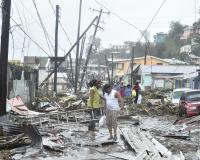
Four months after Category 5 Hurricane Maria swept through Puerto Rico causing catastrophic damage, much of the island is still without power, food, and water. The storm knocked out power to almost all the commonwealth—homes, schools, hospitals, and other critical services and infrastructure were left without power. Even now, over one-third of the island is still without electricity, and many are left without access to food and running water.

By Serena Choi
With the Paris Climate Agreement’s goal to keep average global temperature from rising more than 2 degrees Celsius above pre-industrial levels, governments across the world are struggling to reduce carbon dioxide (CO2) emissions voluntarily and collectively. Some have described this challenge as a prisoner’s dilemma. Removing carbon from the atmosphere may be the key to escape.

By Dave Rejeski
In a not-so-far-away future, environmental management will be done largely by algorithm. Here is how that could happen . . . .
In 2015, two graduates from Stanford business school, William Glass and Eden Kropski, founded a firm to produce and sell high-performance sportswear made entirely of synthetic fibers bioengineered from yeast microbes. The product was a runaway success and low-impact, but shipping it around the planet wasn’t.
By Dave Rejeski
In a not-so-far-away future, environmental management will be done largely by algorithm. Here is how that could happen . . . .
In 2015, two graduates from Stanford business school, William Glass and Eden Kropski, founded a firm to produce and sell high-performance sportswear made entirely of synthetic fibers bioengineered from yeast microbes. The product was a runaway success and low-impact, but shipping it around the planet wasn’t.
By Miriam Aczel
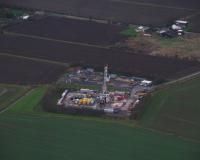
The U.K. government cites shale gas as a “safe and environmentally sound” source of new energy and is actively promoting development of the fossil resource—using hydraulic fracturing and horizontal drilling—in hopes of emulating the United States’ shale gas “revolution.”
By Miriam Aczel
The U.K. government cites shale gas as a “safe and environmentally sound” source of new energy and is actively promoting development of the fossil resource—using hydraulic fracturing and horizontal drilling—in hopes of emulating the United States’ shale gas “revolution.”
By Tobie Bernstein
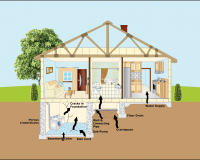
January is National Radon Action Month, a good time for policymakers to consider what action they can take to address one of the most important—and preventable—indoor health risks facing their constituents. Radon is responsible for around 21,000 lung cancer deaths in the United States each year. That makes it the second leading cause of lung cancer overall and the leading cause among non-smokers, according to EPA.
By Tobie Bernstein
January is National Radon Action Month, a good time for policymakers to consider what action they can take to address one of the most important—and preventable—indoor health risks facing their constituents. Radon is responsible for around 21,000 lung cancer deaths in the United States each year. That makes it the second leading cause of lung cancer overall and the leading cause among non-smokers, according to EPA.

By Robert Kelsey
Flushable wipes have proven to not be so flushable and are wreaking havoc on some of the world’s major cities. Municipalities like New York City, spend millions of dollars to remedy clogging issues the wipes cause. New York City officials said in 2015 that "wipe-related equipment problems," have cost the city more than $18 million since 2010.