
Vibrant Environment
All
All | Biodiversity | Climate Change and Sustainability | Environmental Justice | Governance and Rule of Law | Land Use and Natural Resources | Oceans and Coasts | Pollution Control
By Dave Rejeski
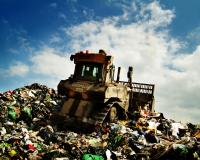
After almost getting hit by an Amazon Prime truck as I wandered around Greenwich Village, I started to look around at what was piling up in the foyers of posh condos and on the steps of the venerable brownstones. Maybe lying under these mountains of cardboard was a first edition of The Call of the Wild off eBay, but I doubted it.
By ELR Staff
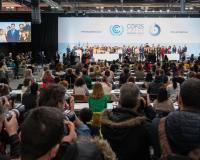
In early December, delegates from around the world convened in Madrid for the 25th Conference of the Parties to the UNFCCC (COP 25). They celebrated the 2nd meeting of the parties to the Paris Agreement, aiming to complete the Paris Agreement rulebook. As the parties struggled and ultimately failed to come to a decision regarding global carbon markets, the goal of limiting global warming to 2 degrees appears increasingly unlikely, and the prospect of climate engineering (CE), once an abstract debate, inches closer to becoming a reality.

By Dava Kaitala
The passage of the National Environmental Policy Act (NEPA) was a seminal moment in the history of U.S. environmental federal policy, advancing protection of the environment in decisionmaking. Unfortunately, the process has become increasingly cumbersome, lengthy, and frustrating to many parties. Moving forward, an improved focus on the quality and alignment of decisions is needed.

By C. Scott Fulton
The Environmental Law Institute’s 50th anniversary on December 22 occured during a record-breaking year in terms of the sheer number of ELI educational and convening programs, which have been organized around the themes that continue to animate the work of environmental protection after half a century.

By Brenda Mallory
January 1, 2020, will mark the 50th anniversary of the National Environmental Policy Act and the launch of modern environmental law. In 1970, NEPA represented great hope and promise for a sustainable environment; it provided an environmental vision for a federal decisionmaking process grounded in thoughtful, science-based analysis of impacts, broad public engagement, careful consideration of alternatives, and mitigation to avoid the worst effects.
By Jessica Oo
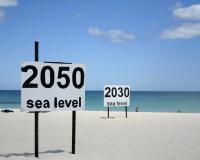
In the past, some domestic and international attempts to alleviate the burdens of migrant populations and establish legal protections for them have been implemented, but many of these protections are not specific enough and lack legally binding measures adequate to ensure that peoples displaced by weather-related disasters are protected on a global scale. International norms are important, as they can at least symbolically set a standard that national governments can follow.
By Jessica Oo
In the past, some domestic and international attempts to alleviate the burdens of migrant populations and establish legal protections for them have been implemented, but many of these protections are not specific enough and lack legally binding measures adequate to ensure that peoples displaced by weather-related disasters are protected on a global scale. International norms are important, as they can at least symbolically set a standard that national governments can follow.
By Jessica Oo
In the past, some domestic and international attempts to alleviate the burdens of migrant populations and establish legal protections for them have been implemented, but many of these protections are not specific enough and lack legally binding measures adequate to ensure that peoples displaced by weather-related disasters are protected on a global scale. International norms are important, as they can at least symbolically set a standard that national governments can follow.
By Jessica Oo
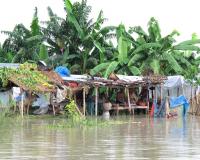
Countries around the world are slowly sinking and the list of vulnerable communities is only getting longer. According to the International Displacement Monitoring Center, 28 million people in 2018 were displaced from their homes due to regional conflict, violence, and environmental disasters.
By Jessica Oo
Countries around the world are slowly sinking and the list of vulnerable communities is only getting longer. According to the International Displacement Monitoring Center, 28 million people in 2018 were displaced from their homes due to regional conflict, violence, and environmental disasters.