

Vibrant Environment
All
All | Biodiversity | Climate Change and Sustainability | Environmental Justice | Governance and Rule of Law | Land Use and Natural Resources | Oceans and Coasts | Pollution Control
By C. Scott Fulton
It’s amazing how quickly humanity’s concern can shift when circumstances demand it, and the coronavirus pandemic has riveted our attention. Even today, Earth Day, talking about anything else risks seeming detached or indifferent to the enormous suffering, disruption, and dislocation that the COVID-19 virus has unleashed on the world. But I need to alert you to a new ELI report analyzing the other major challenge that will be waiting for us on the other side of our current crisis, one that, like the pandemic, is deeply informed by science.
By C. Scott Fulton
It’s amazing how quickly humanity’s concern can shift when circumstances demand it, and the coronavirus pandemic has riveted our attention. Even today, Earth Day, talking about anything else risks seeming detached or indifferent to the enormous suffering, disruption, and dislocation that the COVID-19 virus has unleashed on the world. But I need to alert you to a new ELI report analyzing the other major challenge that will be waiting for us on the other side of our current crisis, one that, like the pandemic, is deeply informed by science.
By Zhuoshi Liu, By Cynthia R. Harris, By Akielly Hu
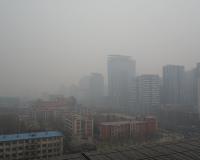
Nearly four billion people worldwide are under government mandates to socially distance themselves from one another in order to “flatten the curve” of COVID-19. Non-essential workers are hunkering down at home, bringing the daily commute and air travel to a virtual halt. The resulting decline in air pollution is stunning, visible even in satellite images.
By Zhuoshi Liu, By Cynthia R. Harris, By Akielly Hu
Nearly four billion people worldwide are under government mandates to socially distance themselves from one another in order to “flatten the curve” of COVID-19. Non-essential workers are hunkering down at home, bringing the daily commute and air travel to a virtual halt. The resulting decline in air pollution is stunning, visible even in satellite images.

By Micah Bradley, By Linda Breggin
In “Animal Agriculture Liability for Climatic Nuisance: A Path Forward for Climate Change Litigation?,” Prof. Daniel E. Walters lays out a new path for climate litigation: environmental litigators should bring federal public nuisance suits to remedy environmental harms caused by animal agriculture.
By Micah Bradley, By Linda Breggin
In “Animal Agriculture Liability for Climatic Nuisance: A Path Forward for Climate Change Litigation?,” Prof. Daniel E. Walters lays out a new path for climate litigation: environmental litigators should bring federal public nuisance suits to remedy environmental harms caused by animal agriculture.
By Micah Bradley, By Linda Breggin
In “Animal Agriculture Liability for Climatic Nuisance: A Path Forward for Climate Change Litigation?,” Prof. Daniel E. Walters lays out a new path for climate litigation: environmental litigators should bring federal public nuisance suits to remedy environmental harms caused by animal agriculture.
By ELR Staff
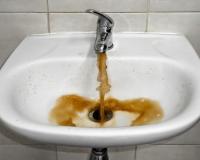
Drinking water contamination in Flint, Michigan, has garnered nationwide attention, but it is neither isolated, nor a primarily urban problem. As Madeline Kane explains in the April issue of ELR—The Environmental Law Reporter, a hidden water crisis is straining thousands of smaller communities that share Flint’s risk factors—shrinking populations, social marginalization, and deficient funds.
By ELR Staff
Drinking water contamination in Flint, Michigan, has garnered nationwide attention, but it is neither isolated, nor a primarily urban problem. As Madeline Kane explains in the April issue of ELR—The Environmental Law Reporter, a hidden water crisis is straining thousands of smaller communities that share Flint’s risk factors—shrinking populations, social marginalization, and deficient funds.
By ELR Staff
Drinking water contamination in Flint, Michigan, has garnered nationwide attention, but it is neither isolated, nor a primarily urban problem. As Madeline Kane explains in the April issue of ELR—The Environmental Law Reporter, a hidden water crisis is straining thousands of smaller communities that share Flint’s risk factors—shrinking populations, social marginalization, and deficient funds.