
Vibrant Environment
All
All | Biodiversity | Climate Change and Sustainability | Environmental Justice | Governance and Rule of Law | Land Use and Natural Resources | Oceans and Coasts | Pollution Control
By Anna Beeman
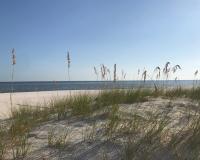
The Gulf Coast region historically is known for producing more seafood than anywhere else in the continental U.S., both in volume and dollar value. However, since Hurricane Katrina in 2005 and the Deepwater Horizon oil spill in April 2010, fishing communities along the coast who depend upon healthy and vibrant marine habitats have experienced significant financial instability.
By Anna Beeman
The Gulf Coast region historically is known for producing more seafood than anywhere else in the continental U.S., both in volume and dollar value. However, since Hurricane Katrina in 2005 and the Deepwater Horizon oil spill in April 2010, fishing communities along the coast who depend upon healthy and vibrant marine habitats have experienced significant financial instability.
By Anna Beeman
The Gulf Coast region historically is known for producing more seafood than anywhere else in the continental U.S., both in volume and dollar value. However, since Hurricane Katrina in 2005 and the Deepwater Horizon oil spill in April 2010, fishing communities along the coast who depend upon healthy and vibrant marine habitats have experienced significant financial instability.
By Mackenzie Allen
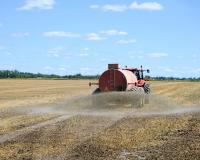
Present-day food consumption relies on high-yielding crops, and these high-yielding crops rely on nitrogen to be able to deliver 40-60% of the world’s food supply. Typically, synthetic nitrogen is provided to crops through the use of fertilizers. In 2015, an estimated 3.54 billion people were fed by synthetic nitrogen fertilizers.
By Mackenzie Allen
Present-day food consumption relies on high-yielding crops, and these high-yielding crops rely on nitrogen to be able to deliver 40-60% of the world’s food supply. Typically, synthetic nitrogen is provided to crops through the use of fertilizers. In 2015, an estimated 3.54 billion people were fed by synthetic nitrogen fertilizers.

By Dominic Scicchitano
During the 19th century’s period of rapid population growth, America’s wetlands were largely considered to be an eyesore and an obstacle to development. These were bodies of water that needed to be drained in order to make way for agriculture, buildings, and major roadways. The successive Swamp Land Acts of 1849, 1850, and 1860 turned titles of federally owned swamp and “overflowed” land over to states, who in turn agreed to drain the land to make it fit for cultivation.
By Dominic Scicchitano
During the 19th century’s period of rapid population growth, America’s wetlands were largely considered to be an eyesore and an obstacle to development. These were bodies of water that needed to be drained in order to make way for agriculture, buildings, and major roadways. The successive Swamp Land Acts of 1849, 1850, and 1860 turned titles of federally owned swamp and “overflowed” land over to states, who in turn agreed to drain the land to make it fit for cultivation.
By Dominic Scicchitano
During the 19th century’s period of rapid population growth, America’s wetlands were largely considered to be an eyesore and an obstacle to development. These were bodies of water that needed to be drained in order to make way for agriculture, buildings, and major roadways. The successive Swamp Land Acts of 1849, 1850, and 1860 turned titles of federally owned swamp and “overflowed” land over to states, who in turn agreed to drain the land to make it fit for cultivation.

By Stephen R. Dujack
The New York Times reported on a conference of prominent lawyers to address the following question, “Do people have a constitutional right to freedom from air pollution and other environmental hazards and annoyances?”
What was an “unusual meeting” in the Times’s phrasing was held not last month but a half century ago at a rural conference center known as Airlie House just outside Warrenton, Virginia. The venerability of that clipping can be seen by the newspaper’s citing “the new field of ‘environmental law.’”
By Kieran Minor
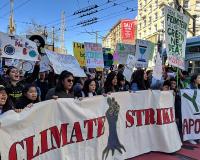
Greta Thunberg’s arrival in New York last month was highly publicized. So was her choice to travel via a “zero-emissions” yacht and her speech before the U.N. General Assembly. What many missed was that she also filed a complaint against five countries over their climate negligence during her visit. But before Greta, there was (is) Juliana (well, Kelsea). Kelsea Cascadia Rose Juliana is the leading plaintiff in Juliana v. United States, otherwise known as the Youth Climate Case. Supported by the nonprofit organization Our Children’s Trust, Juliana and 20 other youth plaintiffs sued the U.S. government in 2015 over its lack of action to combat climate change. Greta and Juliana’s cases are among a small but growing docket of climate-related litigation around the globe, cases that may become the Marbury v. Madison of climate case law.