
Vibrant Environment
All
All | Biodiversity | Climate Change and Sustainability | Environmental Justice | Governance and Rule of Law | Land Use and Natural Resources | Oceans and Coasts | Pollution Control
By Anna Beeman
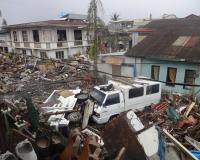
Japan has been no stranger to large environmental and natural disasters over the last decade: the country has experienced several typhoons with flooding, earthquakes, heat waves, as well as the infamous Fukushima Daiichi nuclear disaster in 2011. In September, Typhoon Faxai hit Tokyo and Chiba prefecture; its strong winds and rains halted train service, damaged buildings, and took down power lines. It left three dead and dozens injured. Only a few weeks later, Typhoon Hagibis tore through the Kanto and Tohoku regions. The typhoon was so strong that three days after reaching Japan, the National Weather Service in Anchorage, Alaska, reported remnants of the typhoon had reached the other side of the Pacific.
By Mark Rokoff, By John Priebe, By Dave Cox
Although it may not be a trending cocktail party topic, coal ash compliance activities are certainly well-known in the legal and environmental risk management community. Billions of dollars are at stake for the owners and operators of coal power plants impacted by the 2015 Disposal of Coal Combustion Residuals (CCR) rule.
By Mark Rokoff, By John Priebe, By Dave Cox
Although it may not be a trending cocktail party topic, coal ash compliance activities are certainly well-known in the legal and environmental risk management community. Billions of dollars are at stake for the owners and operators of coal power plants impacted by the 2015 Disposal of Coal Combustion Residuals (CCR) rule.

By Donald W. Stever
My initial thought about this blog was to address a technical chemical regulatory topic, something like “why did it take 40 years for environmental regulators to figure out that perfluorinated compounds contaminate groundwater and don’t degrade over time?” However, this is ELI’s 50th anniversary year, and so I shall talk instead about the work I did over the course of about 15 years with ELI to address chemical regulatory and hazardous waste strategies both in the United States and abroad.

By C. Scott Fulton
Some months back, I received a visit from two leaders in the climate science and sustainable energy arena: the former president of Climate Central, Paul Hanle, and David van Hoogstraten, who had just left his position as director of federal environmental regulatory affairs at BP America.
By C. Scott Fulton
Some months back, I received a visit from two leaders in the climate science and sustainable energy arena: the former president of Climate Central, Paul Hanle, and David van Hoogstraten, who had just left his position as director of federal environmental regulatory affairs at BP America.
By Avital Li
The public health dangers posed by lead exposure have been recognized and documented since the mid-20th century. Despite the pervasiveness of lead-based paint in buildings, including homes and schools, experience has shown that laws can effectively address the issue by phasing out lead paint.
By Avital Li
The public health dangers posed by lead exposure have been recognized and documented since the mid-20th century. Despite the pervasiveness of lead-based paint in buildings, including homes and schools, experience has shown that laws can effectively address the issue by phasing out lead paint.

By Michael J. Bean
Another member of the “Class of ‘67” has matriculated. On October 9, 2019, the Kirtland’s warbler, a colorful songbird, was declared by the U.S. Fish and Wildlife Service to have recovered and was taken off the federal endangered species list. The warbler is a member of the “Class of ’67,” a reference to the very first official list of endangered species published on March 11, 1967. It joins such fellow classmates as the American alligator, bald eagle, Delmarva fox squirrel, Aleutian Canada goose, Columbian white-tail deer, and gray wolf in having achieved this milestone.
By Anna Beeman
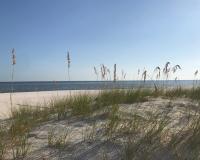
The Gulf Coast region historically is known for producing more seafood than anywhere else in the continental U.S., both in volume and dollar value. However, since Hurricane Katrina in 2005 and the Deepwater Horizon oil spill in April 2010, fishing communities along the coast who depend upon healthy and vibrant marine habitats have experienced significant financial instability.